Our Top Picks
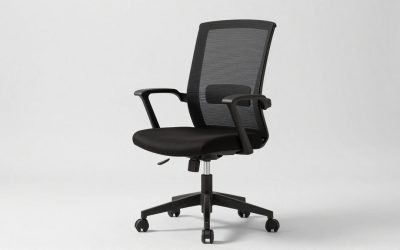
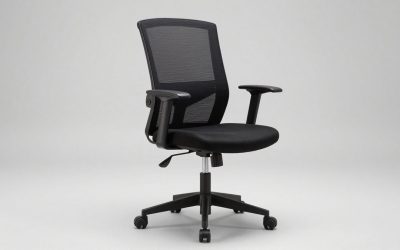
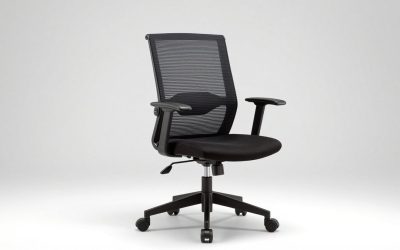
 GTPOFFICE Executive Office Chair with Comfortable Lumbar Support24.4 x 18.5 x 41.7 inches18.5 x 24.4 x 41.7 inches18 PoundsCheck on Amazon
 GTPLAYER Big and Tall Gaming Chair 400lbs HeavyBig and Tall22.05 x 31.5 x 40 inches41.5 poundsCheck on Amazon

Back pain from sitting isn’t really about the chair’s price tag. It’s about three things: whether your lumbar spine gets supported in its natural curve, whether the seat pan fits your thigh length, and whether you actually adjust the thing instead of leaving it on factory settings. we’ve compared chairs from $150 to $1,400, and the correlation between price and back relief flattens out fast once you clear a basic adjustability threshold.
What actually matters for lower back support
Lumbar support only works if it hits the right spot: roughly the curve just above your belt line, not your mid-back. A chair with a fixed lumbar bump in the wrong place can be worse than no lumbar support at all, because it pushes your spine into extension instead of letting it settle into its natural S-curve. If you’re taller than 6’1″ or shorter than 5’3″, generic lumbar placement is a coin flip. That’s the single biggest reason expensive chairs disappoint people: they bought a chair sized for an average torso and their torso isn’t average.
Seat depth matters almost as much and gets ignored constantly. Sit back fully and you should have 2-3 fingers of space between the seat edge and the back of your knee. Too deep, and the edge cuts into your calves, which makes people scoot forward and lose lumbar contact entirely. Too shallow, and your thighs lack support, which loads the lower back to compensate.
Adjustable lumbar vs. fixed-curve mesh
There are two real design philosophies here, and neither is objectively better.
| Feature | Adjustable lumbar (pad or dial) | Fixed-curve mesh back |
|---|---|---|
| Setup effort | You dial it in once, 5-10 minutes | None, but shape must suit your spine |
| Multi-user households | Good, each person resets it | Poor, fits one body type well |
| Failure mode | Pad placed wrong, you ignore it | Curve doesn’t match your lower back |
| Price range | $150-$500 typical | $300-$1,400 typical |
| Best for | Known lumbar issues, shared desks | Average-build users, warm climates |
If you’ve had disc issues or sciatica, go adjustable. You need to move the support point as pain shifts through the day, and a fixed curve can’t do that. If your back is generally fine and you just want to prevent future strain, a well-shaped mesh back chair is lower maintenance and breathes better in a hot office.
Where the budget tier is genuinely fine
Below $150, you’re mostly buying a seat and a backrest with minimal adjustment range. That’s acceptable if you sit less than 4-5 hours a day and don’t have an existing back condition. The failure mode shows up at hour six or seven: the foam compresses unevenly, the lumbar bump (if any) migrates as the frame flexes, and recline tension is usually a single fixed setting that’s either too loose or too stiff. For light use, a budget option in the ergonomic office chair with lumbar support range is a reasonable starting point, and I wouldn’t talk anyone with an 8-to-5 desk job and no diagnosed back issue into spending more just yet.
The jump that actually buys you something is $300-$600. In that range you typically get independent seat depth adjustment, a lumbar mechanism you can move up/down and in/out, and adjustable armrests on more than one axis. That range is where most people with chronic low-grade back pain see real improvement, because the chair can finally be shaped to them instead of the other way around.
Above $800, you’re paying for build quality, warranty length (10-12 years vs. 3-5), and marginal comfort refinements like better armrest padding or a wider recline range. The back support itself rarely improves much past the $600 mark unless you’re buying a chair specifically engineered around a condition, like a chair designed for herniated discs or kyphosis.
If you have a diagnosed condition
Generic ergonomic advice stops being useful once you have a specific diagnosis. A few patterns I’ve seen hold up:
Herniated or bulging discs (lumbar) usually respond better to a chair with a strong, deep recline (past 120 degrees) plus adjustable lumbar, because periodically opening the hip angle unloads disc pressure. Sciatica sufferers often do better with a slightly firmer seat pan and a waterfall front edge that doesn’t press into the back of the thigh, since compression there aggravates nerve symptoms. If you’re dealing with either, it’s worth looking specifically at a office chair for lower back pain with adjustable lumbar rather than a generic “ergonomic” listing, since that phrasing filters toward chairs with real lumbar mechanisms instead of a sewn-in foam bump.
For upper back and neck strain that radiates down, the chair itself matters less than monitor height and headrest presence. A headrest that lets you rest your skull without tilting your chin down is worth more here than any lumbar feature. Look at a office chair with adjustable headrest and lumbar support if neck fatigue is part of the picture.
Setup mistakes that waste a good chair
Even a well-chosen chair fails if it’s set up wrong. The most common mistakes: seat height left too high so feet dangle and thighs lose contact with the seat pan, armrests set so high they shrug your shoulders up, and lumbar depth never touched after unboxing. Spend the first week adjusting one thing at a time, not all at once; it takes a few days to notice whether a change helped or just felt different. If you’re still in pain after three weeks of real adjustment effort, the issue probably isn’t the chair, and that’s worth a conversation with a physical therapist rather than a second chair purchase.