Key takeaways
- Best Overall: BestOffice Big and Tall Mesh Chair (400 lbs listed), for a balanced mix of wide seat, lumbar and adjustable arms.
- Best Value: AnyGod Big and Tall Mesh Chair (400 lbs listed), for flip-up arms and a wide seat at a mid-range tier.
- Best Budget: Hramk Big and Tall Mesh Chair (500 lbs listed), for the lowest cost of entry into the 500 lbs class.
- Best Premium: Serta Fairbanks Big and Tall Executive Chair (350 lbs listed), for a known brand, leather and a headrest.
- Best for a 500 lbs Rating: Cloomey Big and Tall Chair, for an extra wide seat, thick armrest pads and a heavy-duty base.
- Best for Adjustable Arms: DUMOS Big and Tall Mesh Chair (500 lbs listed), for 4D armrests and lumbar support.
The best desk chair for a heavy person is a wide-seat chair whose stated weight rating sits comfortably above your body weight, and in this guide the BestOffice Big and Tall chair is the top pick, with the AnyGod mesh chair as the runner-up. The BestOffice lists a 400 lbs rating, a wide seat, lumbar support and adjustable arms on a mesh high back; the AnyGod lists the same 400 lbs rating with flip-up armrests in a mesh design. If you need a rating of 500 lbs, the Cloomey and DUMOS chairs list it, and the Hramk is the lowest-cost route to a 500 lbs listing. This guide is research-based: we did not personally use these chairs, and every figure comes from the listing or the maker. A weight rating is the maker’s claim, not a guarantee, so leave yourself a margin.
Most advice for larger buyers stops at “buy a big and tall chair”, which hides the details that decide whether a chair works: seat width in inches, seat depth, what the base and gas lift are made of, how thick the foam is and whether the armrests leave room for your hips. We organize the picks by weight band, give you the measurements to compare, and flag where the listings are silent. For a different take focused on the 500 lbs class alone, see our separate guide on big and tall chairs for 500 lbs; this article compares the full 350 to 500 lbs range and helps you choose a band first.
Top Picks at a Glance
- Best Overall: BestOffice Big and Tall Mesh Chair (400 lbs listed), for a balanced mix of wide seat, lumbar and adjustable arms.
- Best Value: AnyGod Big and Tall Mesh Chair (400 lbs listed), for flip-up arms and a wide seat at a mid-range tier.
- Best Budget: Hramk Big and Tall Mesh Chair (500 lbs listed), for the lowest cost of entry into the 500 lbs class.
- Best Premium: Serta Fairbanks Big and Tall Executive Chair (350 lbs listed), for a known brand, leather and a headrest.
- Best for a 500 lbs Rating: Cloomey Big and Tall Chair, for an extra wide seat, thick armrest pads and a heavy-duty base.
- Best for Adjustable Arms: DUMOS Big and Tall Mesh Chair (500 lbs listed), for 4D armrests and lumbar support.
Comparison Table
| Product | Best for | Key specs (per listing) | Watch for | Price tier |
|---|---|---|---|---|
| BestOffice Big and Tall Chair | All-round daily use | 400 lbs, wide seat, lumbar support, adjustable arms, mesh high back | Seat width in inches not in the title | Mid-range |
| AnyGod Big and Tall Chair | Shared or flexible seating | 400 lbs, wide mesh seat, lumbar support, flip-up armrests | Arms adjust by height only | Mid-range |
| Hramk Big and Tall Chair | Lowest cost for 500 lbs | 500 lbs, wide mesh chair, flip-up armrests | Fewer adjustments listed | Budget |
| DUMOS Big and Tall Chair | Fit-tuning with 4D arms | 500 lbs, heavy duty mesh, 4D armrests, lumbar support | Seat depth not listed | Mid-range |
| Cloomey Big and Tall Chair | Highest rating with wide seat | 500 lbs, extra wide seat, thick armrest pad, heavy duty base, upgraded wheels | Lumbar is a fixed or lightly adjustable design | Mid-range |
| Serta Fairbanks Executive Chair | Executive look, headrest | 350 lbs, leather, headrest, lumbar support | Lower rating than the others | Premium |
Choosing a Weight Band Before a Chair
Start with your weight and add a margin. A common rule of thumb in furniture shopping is to pick a rating at least 50 to 100 lbs above your weight, so a person near 300 lbs looks at 400 lbs chairs, and someone near 400 lbs looks at 500 lbs chairs or higher. That margin covers the dynamic load that comes from sitting down quickly, leaning back or shifting, which is higher than the static number on the box. The table below turns that rule into practical bands.
| Your weight | Rating band to shop | Seat width to look for | Chairs in this guide |
|---|---|---|---|
| Up to about 250 lbs | 350 lbs | 19-21 in | Serta Fairbanks |
| 250-320 lbs | 400 lbs | 20-22 in | BestOffice, AnyGod |
| 320-420 lbs | 500 lbs | 21-24 in | Hramk, DUMOS, Cloomey |
| Over about 420 lbs | 600 lbs or higher | 22-26 in | See Also Consider |
Treat the seat widths above as typical ranges, not promises: many listings do not give seat dimensions in the title, and the safest move is to read the maker’s specification page and measure your own hips while seated. Add 2 inches to your hip width as a minimum clearance between the arms.
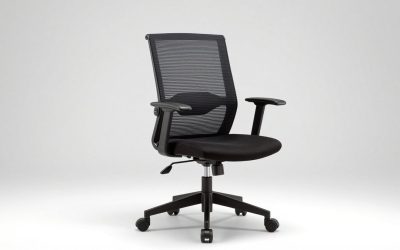
1. BestOffice Big and Tall Chair: Best Overall
- 400 lbs rating, per the listing
- Wide seat
- Lumbar support
- Adjustable arms
- Mesh high back with rolling swivel base
Best for: people up to roughly 300 lbs who want an adjustable chair with a breathable back. Skip if: you want the highest rating or a leather look.
BestOffice is a familiar budget-to-mid name in office chairs, and this model combines the features that matter most for larger users: a wider seat than a standard task chair, lumbar support and arms you can adjust. The mesh high back lets heat escape, which is useful because larger users tend to run warmer in a foam-backed chair. Adjustable arms are valuable for another reason: they let you set the arm width and height so they do not press into the hips, which is a frequent complaint with chairs whose arms sit too close together.
The 400 lbs listing places this chair in the middle band. That is a good fit for many buyers, but if you are near the upper edge of the band, step up to a 500 lbs model so you are not riding the limit every day. The maker’s page is the place to confirm seat dimensions, which are not in the title (not listed).
Pros: Wide seat; lumbar support; adjustable arms; breathable mesh. Cons: Seat dimensions not listed; mid-range tier; 400 lbs ceiling.
2. AnyGod Big and Tall Chair: Best Value
- 400 lbs heavy duty rating, per the listing
- Comfy mesh desk chair with a wide seat
- Lumbar support
- Flip-up armrests
- Swivel executive base
Best for: households where several people use the chair, or buyers who like to pull in close to a table. Skip if: you need arms that adjust in several directions.
The AnyGod lists the same 400 lbs rating as the BestOffice, plus flip-up armrests. Flip-up arms help in two ways for larger users: they make it easier to get in and out of the seat, and they stop arms from pinching at the hip. Because the arms flip, you can also sit sideways or cross-legged on occasion. The trade-off is that flip-up arms offer simpler adjustment than 3D or 4D arms.
The mesh seat and back are described as comfortable. A mesh seat spreads weight across tensioned fabric and avoids the foam compression that gradually flattens cheaper seats under higher loads. Some larger users find mesh seats less cushioned, though, so if you prefer a padded feel, look at the Cloomey or Serta instead.
Pros: 400 lbs rating; flip-up arms; wide mesh seat; mid-range tier. Cons: Basic arm adjustment; seat dimensions not listed; mesh is firmer than foam.
3. Hramk Big and Tall Chair: Best Budget Pick
- 500 lbs rating, per the listing
- Mesh wide office chair for heavy people
- Heavy duty design
- Flip-up armrests
Best for: buyers who need a 500 lbs listing at the lowest cost. Skip if: you want a long list of adjustments or a brand with an established service network.
This chair is the cheapest route to a 500 lbs rating among the options we found. That makes it attractive, but price pressure usually shows up in the details you cannot see in a photo: caster quality, bolt hardware and the thickness of the seat plate. Before you commit, read the maker’s page and check the warranty, and when the chair arrives, inspect the base and wheels before the first use.
A good rule at the budget end is to use the chair as intended: sit down gently, do not rock on the back legs of the base, and tighten the base and arm bolts after the first week. It is also worth checking which floor surface you have; hard casters on hardwood can scratch the finish, and soft rubber casters are a cheap upgrade.
Pros: Lowest cost for a 500 lbs listing; wide mesh design; flip-up arms. Cons: Fewer features listed; build details not listed; support network unknown.
4. DUMOS Big and Tall Chair: Best for Adjustable Arms
- 500 lbs heavy duty rating, per the listing
- Mesh high back
- 4D armrests
- Comfortable lumbar support
- Wide seat
Best for: buyers at 320 to 420 lbs who want to tune arm position precisely. Skip if: you need to confirm seat depth first (not listed).
The 4D armrest is the standout here. Four directions of adjustment, commonly height, depth, width and pivot angle, let you place the arms exactly where your forearms rest at desk height without pushing against your sides. For larger users this is not a luxury: arms that are even an inch too narrow can pinch at the hip or force the chair to ride up. A 4D arm lets you widen the stance.
Because the listing does not state seat depth, check the maker’s page. A deep seat helps taller users but can leave a shorter user perched. Measure from your hip to the back of your knee while seated, and leave two to three finger widths of clearance.
Pros: 500 lbs listed; 4D arms; lumbar support; mesh high back. Cons: Seat depth not listed; mesh may feel firm; mid-range tier.
5. Cloomey Big and Tall Chair: Best for a 500 lbs Rating With a Wide Seat
- 500 lbs rating, per the listing
- Extra wide seat
- Adjustable lumbar support
- Thick armrest pads
- Heavy duty base and upgraded wheels
Best for: larger buyers who want the widest seat and padded arms. Skip if: you prefer a mesh seat that runs cooler.
The Cloomey stands out for the combination of an extra wide seat, thick armrest pads and a heavy duty base with upgraded wheels. The base and the casters are the parts that fail first on heavy-duty chairs in real use, so a listing that calls them out is more informative than one that only quotes a weight number. Steel bases are the norm at this rating; ask the maker for the base material if the listing does not say (not listed).
Thick armrest pads help during long sessions because they spread forearm weight, but thick pads also raise the arm height, so check that your desk edge is not blocked. Wide seats are comfortable but need room: before you order, measure the gap between the legs or drawers of your desk, since a very wide chair may not roll all the way in.
Pros: Extra wide seat; thick pads; heavy base and upgraded wheels; 500 lbs listed. Cons: Takes more floor space; padded seat can run warm; lumbar adjustment may be limited.
6. Serta Fairbanks Executive Chair: Best Premium Pick
- 350 lbs capacity, per the listing
- Leather executive style
- Headrest
- Lumbar support
Best for: people up to roughly 250 lbs who want a recognizable brand and an executive look. Skip if: you need a rating above 350 lbs.
Serta is a mattress and furniture brand whose office chairs are widely stocked, and the Fairbanks is its big and tall executive model. The 350 lbs rating is lower than the others here, which is why it appears for the lightest band. In return you get a more formal look, a headrest and a brand with an established customer service channel, which is worth something when you are buying a chair you want to maintain.
Leather and bonded leather surfaces look sharp but trap heat and can crack or peel with years of use, so keep the chair away from direct sun and heating vents. If you run warm, a mesh chair is the better choice.
Pros: Known brand; headrest; executive look; lumbar support. Cons: 350 lbs rating; leather runs warm; premium tier.
Also Consider
Blue Whale Oversize Mesh Chair
Lists a 500 lbs rating, an oversize mesh back and a wide, thick seat. A direct rival to the Cloomey with a mesh back.
GTPLAYER Big and Tall Chair With Footrest
Lists 400 lbs, a footrest and pocket spring lumbar. It suits users who like to recline and put their feet up; the style leans toward a gaming look.
BLISNEST Big and Tall Mesh Chair
Lists a 700 lbs rating with a wide thick seat cushion and adjustable lumbar. It is one of the higher listed ratings in the store; check the maker’s page for warranty terms.
HESL Executive Chair
Lists 400 lbs, flip-up armrests and breathable PU leather. A mid-tier option for people who prefer a padded executive style.
How We Chose
This guide is research-based. We did not personally use these chairs. We searched the site’s product store for big and tall desk chairs, then read each listing’s title, stated weight rating and feature list, and the maker’s pages where available. We cross-checked the general advice on sizing and posture against ergonomics guidance from the Occupational Safety and Health Administration and university ergonomics resources. We limited each brand to a single main pick and ranked chairs by the details a larger buyer can verify: a stated rating, a wide seat, adjustable arms and a base described as heavy duty.
We did not rank by price, and price tiers here are relative. A rating is a maker’s claim; we do not repeat any claim of safety for any user, and we flag missing numbers as “not listed”. If a model’s listing was too thin to compare, we left it out of the main picks.
Buying Guide: What Matters in a Desk Chair for a Heavy Person
Weight rating and margin
Choose a rating that exceeds your weight by at least 50 to 100 lbs. Ratings vary in how they are measured, and a chair used daily takes more wear than one used occasionally. Also remember that a chair is only as strong as its weakest part: the gas lift, the base, the casters and the seat plate all carry load.
Seat width and depth
Measure your hips while seated and add at least 2 inches. Most standard task chairs have seats around 18 to 20 inches wide. Big and tall chairs commonly run wider, around 21 to 24 inches, though listings often leave the number out. Seat depth between 17 and 21 inches suits most people; confirm that you can sit with your back against the backrest and still have two to three finger widths behind your knees.
Base, gas lift and casters
Look for a steel base and a heavy-duty gas lift. Listings sometimes mention a class 4 gas lift, which is the type commonly used on heavier-rated chairs. Replace casters with soft rubber wheels if you have hardwood floors. If a chair squeaks or wobbles after a few weeks, tighten the bolts first; loose hardware is the most common cause.
Arms and hip clearance
Arms that sit too close together can press into your hips. Look for flip-up arms or 3D and 4D arms that widen. Clear space between the arms should exceed your hip width by at least 2 inches.
Seat material and back support
Mesh stays cooler and does not compress; dense foam is softer but flattens over time. Leather looks formal but runs warm. Lumbar support should sit at the curve of your lower back. If you have back, hip or joint pain, consult a doctor or physical therapist, as a chair can add comfort but is not a treatment.
Room and desk fit
A wide chair needs more room. Allow about 36 inches behind the desk, and check that the desk opening is wider than the chair arms. Confirm that the chair’s box will fit through your doorway; wide chair boxes can be 28 inches or more across and weigh 40 to 60 lbs, so plan help with carrying and assembly.
Common Mistakes
- Buying a chair rated exactly at your weight.
- Choosing a chair by the weight rating alone while ignoring seat width.
- Forgetting to measure the desk opening and doorway.
- Skipping bolt checks after the first week.
- Ignoring floor type, which affects both caster choice and rolling noise.
Frequently Asked Questions
What is the best desk chair for a heavy person?
For most buyers under about 300 lbs, the BestOffice or AnyGod 400 lbs mesh chairs are good choices. For higher weights, move to a 500 lbs listing such as the Cloomey or DUMOS and confirm the seat width first.
How much extra weight capacity should I leave?
Aim for at least 50 to 100 lbs above your weight. The margin allows for dynamic loads from sitting down or leaning back.
Are mesh or leather chairs better for heavy users?
Mesh breathes and resists flattening, while leather looks formal but runs warm. Choose based on room temperature and how long you sit.
Do big and tall chairs have wider seats?
Often yes, but not always. Check the seat width in inches on the maker’s page, since many listings do not state it.
What should I look for in the base?
A steel base, heavy-duty casters and a gas lift described as heavy duty. Replace casters if the floor is delicate.
Can the right chair relieve back pain?
A supportive chair may make sitting more comfortable, but it is not a treatment. If you have pain, speak with a doctor or physical therapist.
Will a big and tall chair fit under my desk?
It depends on arm width and the desk opening. Flip-up arms help. Measure the opening and compare it with the chair’s overall width before you buy.
First-Week Setup and Care Checklist
A heavy-duty chair performs best when it is assembled and adjusted carefully. Unbox it on a clear floor, because large chair parts are awkward and the seat plate and base can weigh 40 to 60 lbs together. Fit the gas lift into the base by hand, then press it home by sitting down gently, not by dropping onto the seat. Attach the casters until they click, and check that all of them rotate freely.
- Set the seat height so your feet are flat and your knees are about level with your hips, usually a seat height of 17 to 20 inches for most adults.
- Set the arms so your forearms rest level with the desk and your shoulders stay relaxed.
- Place the lumbar support at the inward curve of your lower back and adjust until it feels supportive, not pushy.
- Choose a tilt tension that lets the back follow you without throwing you backward.
- After one week, tighten every visible bolt on the arms, seat and base, then repeat once a month.
Keep the chair on a chair mat if you have carpet, and avoid standing on the seat or using it as a step stool, since that is outside any weight rating the maker gives. If you notice cracking sounds, a wobbling base or a seat that sinks, stop using the chair and contact the maker under its warranty.
Which One Should You Buy?
Pick your weight band first. If you sit up to about 300 lbs, choose the BestOffice for its adjustable arms or the AnyGod for flip-up arms. If you need the 500 lbs class, choose the Cloomey for a wide padded seat, the DUMOS for 4D arms, or the Hramk if cost matters most. If you want a known brand and a lighter band, the Serta Fairbanks fits. In every case, check the maker’s page for seat width, warranty and any figure marked “not listed”, and inspect the chair when it arrives.
Sources
- Product listings and maker pages for BestOffice, AnyGod, Hramk, DUMOS, Cloomey and Serta
- Occupational Safety and Health Administration, computer workstations eTool
- Cornell University Ergonomics Web, chair guidelines
- BIFMA, office seating standards overview
Last updated: October 2026