Our Top Picks
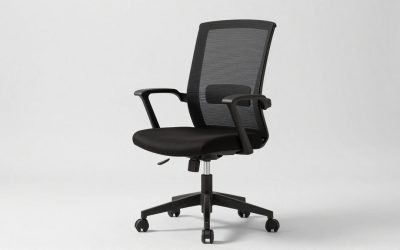
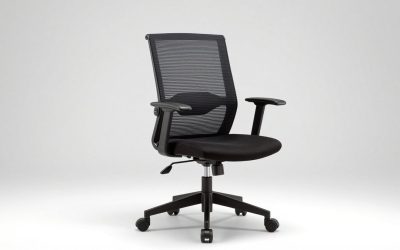
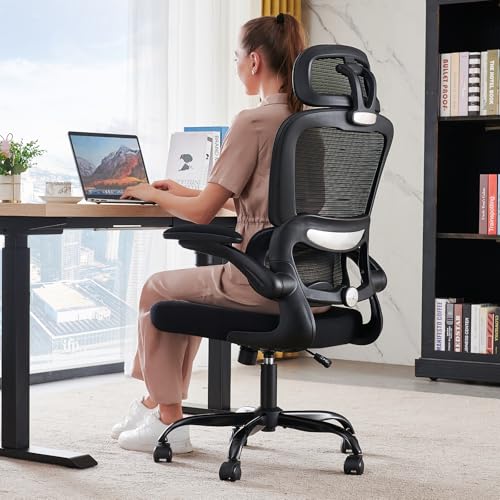 TRALT Office Chair Ergonomic Desk Chair with LumbarPack of 127.6 x 27.6 x 49.2 inches28 poundsCheck on Amazon
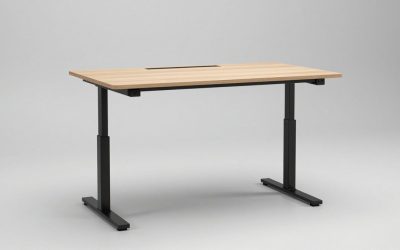
 VIVO Manual Height Adjustable Standing Desk Converter32"31.5 x 31.5 x 31.3 inches26 poundsCheck on Amazon

Back pain and office chairs have a complicated relationship. A chair won’t fix a herniated disc or chronic sciatica, and anyone promising otherwise is selling you something. What a good chair can do is stop a bad sitting posture from making an existing problem worse over an 8-hour day. That’s a narrower, more useful goal, and it’s worth being precise about before you spend $400-$1,500 on a chair.
What actually matters for a bad back
Three things do most of the work: lumbar support that matches your spine’s curve, a seat pan that doesn’t cut off circulation behind your knees, and recline tension you can actually adjust without a tool kit. Everything else — mesh vs. foam, headrests, armrest material — is comfort, not therapy.
Lumbar support is the one people get wrong most often. A fixed lumbar bump in the wrong spot can be worse than no lumbar support at all, because it pushes on a point that isn’t actually your lower back’s natural curve. If you’re short-torsoed or tall, a chair with only one lumbar position is a gamble. Look for chairs with adjustable lumbar height and depth, not just “ergonomic lumbar support” in the marketing copy, which means nothing on its own.
Seat depth matters more than people expect. If the seat pan is too long, it presses into the back of your knees and you end up sliding forward to compensate, which collapses your lower back curve and defeats the lumbar support entirely. If you’re under about 5’4″ or over 6’2″, seat depth adjustment stops being a nice-to-have and becomes a requirement.
Matching the chair to the problem
Different back problems want different things, and this is where a lot of generic “best office chair” lists fall apart.
For lower back pain and lumbar strain, prioritize adjustable lumbar depth and a recline lock around 100-110 degrees — slightly reclined is easier on the lumbar spine than sitting bolt upright for hours. For sciatica, seat pan material and depth matter more than lumbar support, since the issue is often pressure on the sciatic nerve at the seat edge; a waterfall front edge (the seat curves down instead of ending in a hard edge) helps meaningfully. For upper back and neck issues, an adjustable headrest and armrests that move in height, width, and pivot reduce the shoulder shrugging that drags on upper back muscles.
If you’re not sure which category you’re in, a chair with a fully adjustable lumbar system and a waterfall seat edge covers the most ground. Searching something like ergonomic office chair with adjustable lumbar support is a reasonable starting point rather than chasing a single “best” model, since fit varies a lot by body size.
What you’re actually paying for at each price point
There’s a real gap between $150 and $800 chairs, but it’s not a straight line. Here’s roughly where the money goes.
| Price range | What you typically get | Where it falls short |
|---|---|---|
| $120 – $250 | Basic mesh back, single-position lumbar pad, 2D armrests, seat height and recline tension adjustment | No seat depth adjustment; lumbar position often fixed or barely movable; foam flattens in 1-2 years |
| $300 – $600 | Adjustable lumbar height/depth, 4D armrests, seat depth slide, better recline lock range, higher-density foam or better mesh tension | Headrests often still basic; some brands cut costs on the tilt mechanism, which is the first thing to fail |
| $700 – $1,500+ | Dynamic lumbar that moves with recline, more granular seat depth and width adjustment, better warranties (10-12 years), replaceable parts | Diminishing returns past this point for pure back support — you’re paying for build quality and warranty, not more therapeutic benefit |
If your back pain is mild and situational — stiffness after long sits, nothing diagnosed — a $200 chair with adjustable lumbar and seat depth is genuinely fine. You don’t need the $900 chair. If you have a diagnosed condition (herniated disc, spondylolisthesis, chronic sciatica) and you’re sitting 7+ hours a day, the jump to the $500-$800 range tends to pay for itself in reduced flare-ups, mainly because the adjustability lets you fine-tune fit instead of fighting the chair.
Where chairs actually fail people
Most complaints I see about ergonomic chairs aren’t about the chair being bad, they’re about setup. The three most common mistakes: seat height set so feet dangle or knees are above hip height (both wreck pelvic tilt and undo lumbar support), lumbar pad adjusted once and never touched again despite sitting differently in the morning vs. the afternoon, and recline tension left at factory default, which is usually too stiff for anyone under 160 lbs and too loose for anyone over 220.
Mechanically, the parts that fail first are the gas cylinder (sinks over 3-5 years with heavy daily use) and the tilt tension knob, which strips out on cheaper chairs within a year or two of frequent adjustment. If a chair’s warranty excludes the tilt mechanism, that’s a signal about expected durability.
When a kneeling chair or saddle stool makes sense
These get recommended a lot for back pain and they work for a narrower group than the marketing suggests. Kneeling chairs reduce lumbar load by shifting weight to the shins, which helps some lower back pain but is genuinely bad for anyone with knee issues or who needs to sit more than 3-4 hours straight — there’s no back support at all, so your core has to hold posture the whole time. Saddle stools help hip and pelvic alignment issues more than general back pain. Neither replaces a proper ergonomic chair for a full workday; they’re better as a rotation piece, used for an hour or two to break up sitting posture. If you want to try one, ergonomic kneeling chair listings will show the common variations in cushion thickness and seat angle, which matter more than brand name here.
One more honest point: no chair adjustment compensates for sitting still for 8 hours straight. A $1,200 chair with perfect lumbar support and a person who never gets up still ends up stiff and sore. If you’re shopping for a chair because of back pain, pair it with a stand-up break every 45-60 minutes — it does more for most people than the difference between a good chair and a great one. For that reason, a standing desk converter alongside a mid-range ergonomic chair often beats a top-tier chair used without breaks.