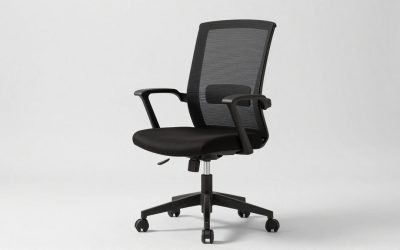
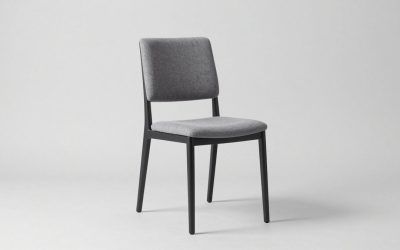
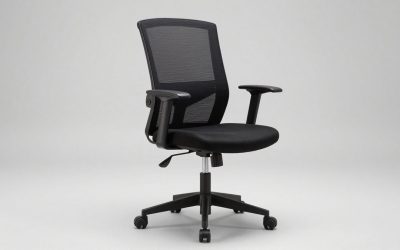
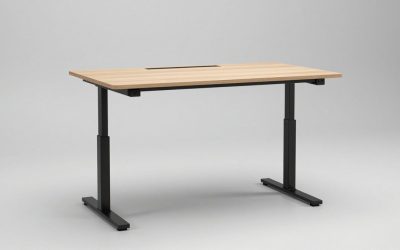
Our Top Picks


Executive chairs get a bad reputation among ergonomics people, and most of the time that reputation is earned. A lot of them are built to look good in a boardroom photo for about eighteen months before the foam flattens and the gas lift starts sinking under its own weight. But a well-built executive chair, used correctly, is a legitimate option for someone sitting eight-plus hours a day — the padding and recline range actually work in your favor for long stretches, more so than some mesh task chairs that are optimized for short, upright sessions.
The trick is separating the chairs built on real mechanisms from the ones that are just a leather shell over a budget tilt mechanism. Here’s what actually matters if you’re sitting in it all day, not just posing in it for a Zoom call.
What makes an executive chair work for long hours
Three things separate a chair that holds up at hour seven from one that leaves you shifting every twenty minutes: the recline mechanism, the lumbar support, and the seat foam density.
Most executive chairs use either a knee-tilt or a synchro-tilt mechanism. Knee-tilt pivots near the front of the seat, so your feet stay planted and your knees don’t lift off the footrest when you lean back — this matters a lot if you recline while reading or thinking, which executive-chair owners tend to do more than task-chair owners. Synchro-tilt moves the seat and back at a coordinated ratio (usually 2:1, back moves twice as much as the seat), which keeps your eyes level with the monitor as you shift position. For pure long-sitting comfort, knee-tilt tends to win. For people who recline and still need to look at a screen, synchro-tilt wins.
Lumbar support in executive chairs is usually built into the shape of the backrest rather than a separate adjustable pad. That’s fine if the chair fits your torso length, and a problem if it doesn’t — there’s no fixing a poorly placed fixed lumbar curve. If you’re above 6’1″ or below 5’4″, look specifically for a model with adjustable (not just fixed) lumbar, or a high-back design with a long recline range that lets the curve meet your spine naturally.
Foam density matters more than it gets credit for. Executive chairs are often cushioned with soft foam for that first-sit-wow feeling in a showroom, and soft foam compresses permanently within a year or two of daily use. Firmer, higher-density foam feels less plush on day one but is still supportive on day 400. If you can find the foam density spec (measured in lb/ft³), anything under 2.5 lb/ft³ in the seat is going to pack out fast under daily 8-hour use.
Leather, mesh, or fabric back
Executive chairs traditionally mean leather or bonded leather, but that’s changing, and for long hours it’s worth reconsidering.
| Material | Comfort over 8+ hrs | Heat retention | Durability | Maintenance |
|---|---|---|---|---|
| Genuine leather | Good once broken in | High — gets warm/sticky | 5-8 years with care | Needs conditioning |
| Bonded leather | Good initially | High | 1-3 years before peeling/cracking | Low, but short lifespan |
| Mesh back | Best for heat, less lumbar precision | Low — breathes well | 5-10 years, mesh rarely fails | Very low |
| Fabric | Good, breathes decently | Medium | 5+ years, watch for wear points | Low, may stain |
Bonded leather is the one to actively avoid for long-hours use. It looks identical to real leather on day one and starts flaking by year two, especially anywhere your arms or lower back make constant contact. If you want the executive look without the failure mode, genuine leather or a mesh-backed executive hybrid are the better bets. A lot of manufacturers now sell “executive mesh” chairs that keep the high back, padded arms, and tilt mechanism of a classic executive chair but swap the backrest material — worth a look if you run warm or work somewhere without great climate control.
What to actually check before buying
Specs that matter more than the marketing photos:
- Weight capacity vs. your actual weight. A chair rated for 250 lbs is engineered to that limit, not a safety margin above it. If you’re near the stated capacity, go up a tier rather than cutting it close — gas cylinders fail early when run near their rated max.
- Armrest adjustability. Height-only adjustable arms are common and fine for most people. If you type a lot, width-adjustable arms matter more than people expect, since fixed-width arms push your shoulders out and cause tension by hour four.
- Seat depth. Executive chairs often run deep (20″+) to look substantial. If you’re under 5’6″, a deep seat means your knees hit the front edge before your back touches the lumbar support, which is a bad trade.
- Gas lift quality. This is the single most common failure point. Cheap cylinders sink a quarter-inch to half-inch over a year of daily use. There’s no way to check this before buying, so stick to brands with a replacement part policy for the cylinder specifically.
When the executive chair isn’t the right call
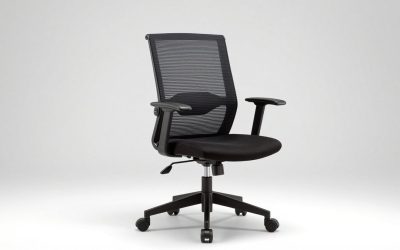
If you’re under 5’5″ or move a lot during the day (adjusting posture, standing up frequently, switching tasks), a mesh task chair will likely serve you better and cost less. Executive chairs are built for people who sit mostly still, in one general posture, for long stretches — if that’s not your work pattern, you’re paying for bulk and padding you won’t use. For that profile, browsing ergonomic mesh task chairs is the more honest starting point.
If you do fit the executive-chair use case, the ones worth comparing are mid-to-high back models with knee-tilt mechanisms and adjustable lumbar, which you can scan through via a search for high-back executive chairs with adjustable lumbar. If heat and long-term durability matter more to you than the leather look, start with executive mesh-back chairs instead — same silhouette, fewer failure points over a few years of daily use.