Our Top Picks
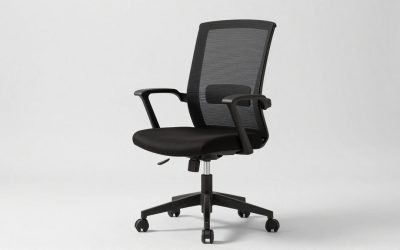
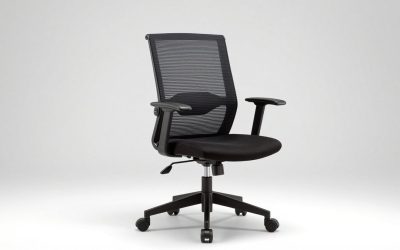
 Marsail Ergonomic Office Chair: Office Desk Chair with46.9" x 24.8" x 24.4"46.9 x 24.8 x 24.4 inches30.42 PoundsCheck on Amazon
Pros & cons
- 3D armrests adjust for multiple working postures
- Supports up to 330 pounds for a wide user range
- Adjustable lumbar moves to match height and body shape
- At over 30 pounds, it is heavier to move around
- Multiple adjustment points add setup complexity
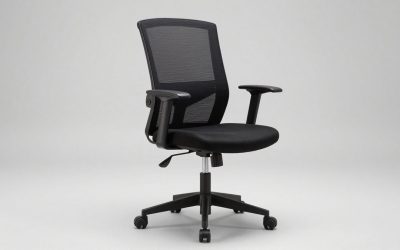
 ErgoSift Ergonomic Office Chair with Adjustable Seat Depth4D+without headrest12.2 x 20.87 x 30.31 inches43.65 PoundsCheck on Amazon

Upper back pain at a desk is almost always a thoracic spine problem caused by rounded shoulders and a forward head, not a lumbar support problem. If you’ve bought a chair with great lower back support and you’re still hurting between your shoulder blades, that’s why. The fix is a chair that keeps your upper spine upright and your shoulders back, not just one with a lumbar bulge.
What’s actually happening
Most upper back pain at a desk comes from one of two postures held for hours: leaning forward toward a monitor that’s too far away or too low, or slumping with shoulders rolled in while typing. Both pull on the rhomboids and mid-trapezius, the muscles between your shoulder blades, which then spasm or ache by mid-afternoon. A chair can’t fix a monitor that’s 30 inches away, but it can stop you from slumping into that position in the first place.
The chair features that matter most for this specific problem are backrest height, upper back/shoulder support, recline tension, and armrest position. Seat cushioning and lumbar support matter for comfort generally, but they don’t directly address thoracic posture.
Features that actually help upper back pain
Backrest height is the big one. A chair with a backrest that stops at mid-back (around 20-22 inches) gives your shoulder blades nothing to rest against. You want a backrest that extends to at least shoulder height, ideally with a headrest, so your upper back has continuous support when you lean back. This is why most ergonomic chairs marketed for back pain are high-back designs.
Recline tension and lock matter more than people expect. If the backrest is too stiff, you fight it all day and end up pulling yourself forward, which reintroduces the slump. If it’s too loose, you overextend and strain the opposite way. You want adjustable tension so you can set it to recline slightly (100-110 degrees) without effort, with a lock so it doesn’t flop back when you reach for something.
Armrests that are too low or too far apart force your shoulders to round forward to reach the keyboard, which directly loads the upper back. 4D armrests, meaning height, width, depth, and pivot adjustment, let you bring the keyboard close without hunching. If you only get one adjustable feature beyond height, this is the one that pays off for upper back pain specifically.
A separate headrest or integrated neck support helps if your pain extends into the neck and traps, which it often does. Not every good chair has one, and not everyone needs one, but if you’re already dealing with tension at the base of the skull, it’s worth prioritizing.
What you get at each price point
| Price range | What’s typically included | Good fit for upper back pain if… |
|---|---|---|
| $150-$250 | Fixed or 2D armrests, basic recline lock, foam seat, mesh or fabric back | Your pain is mild and mostly posture-driven rather than structural; you’re disciplined about posture breaks |
| $300-$500 | 4D armrests, adjustable lumbar, tension-adjustable recline, taller backrest | You sit 6+ hours a day and need the chair to actively correct posture, not just allow good posture |
| $600-$1000+ | Dynamic/synchro-tilt mechanisms, articulating headrest, premium mesh, longer warranties (10-12 years) | You’ve tried a mid-range chair and still have pain, or you have a diagnosed condition like kyphosis or a disc issue |
The jump from $150 to $300 buys real ergonomic range. The jump from $300 to $800 buys mostly materials, warranty length, and refinement, not a fundamentally different mechanism. If you’re not sure your pain is chair-related at all, it’s smarter to try a $200-$250 chair for a month before spending $800 on one.
How to actually choose
If you’ve never had an ergonomic chair and your current one is a basic task chair or a dining chair, start with a mid-range option in the ergonomic office chair with adjustable lumbar support category. That jump alone fixes a lot of upper back pain because it stops the slump that causes it.
If you’ve already got decent lumbar support and the pain is specifically between the shoulder blades or into the neck, look at a high back office chair with headrest instead. The extra backrest height and head support target that exact area.
If your main issue is reaching forward and hunching to type, the cheapest fix isn’t a new chair at all, it’s a 4D adjustable armrest office chair that lets you pull your elbows and keyboard in close enough that your shoulders stop rolling forward.
And if money’s tight, a $150 chair with a tall mesh back and basic adjustability combined with disciplined 50-minute sit, 10-minute stand breaks will outperform an $800 chair used for 9 hours straight without a break. The chair reduces the damage; it doesn’t eliminate the need to move.
Where people go wrong
The most common mistake is buying a chair with a great lumbar pillow and ignoring backrest height entirely, which does nothing for upper back pain and sometimes makes it worse by pushing the lower back forward while the upper back still has no support. The second mistake is setting the recline tension too tight out of habit from using a cheap chair, which keeps people sitting bolt upright and tense instead of actually resting into the backrest. The third is treating armrests as optional; if your current chair’s armrests sit below your elbow height when your forearms are flat on the desk, that mismatch alone can account for a meaningful chunk of your shoulder and upper back tension.