Our Top Picks
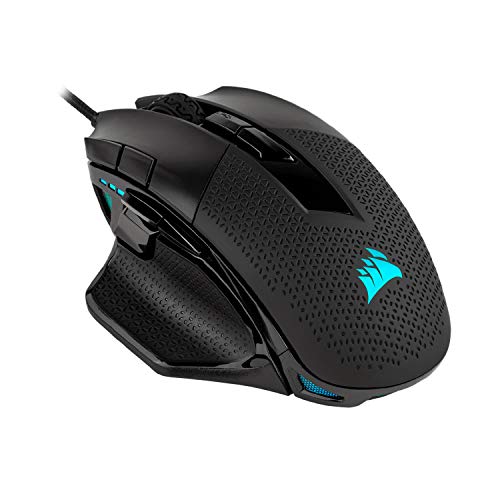 Corsair NIGHTSWORD RGB Adjustable Weight FPS MOBA PC5.08 x 3.38 x 1.71 inches0.3 poundsCheck on Amazon
 Corsair M65 RGB Ultra Wired Adjustable Weight FPS1.2" x 1.5" x 4.6"4.6 x 1.5 x 0.1 inches0.2 poundsCheck on Amazon
 RAGNOK ErgoStrike7: Next-Gen FPS Gaming Mouse with Recoil4.8 x 4.45 x 0.1 inches0.4 poundsCheck on Amazon
Best Gaming Mice for FPS Games
The best gaming mice for FPS games are usually lightweight, symmetrical or ergonomic models with a precise sensor, low click latency, reliable wireless performance, and a flexible cable for charging or wired play; for most players, the Razer Viper V3 Pro is the strongest all-round choice, while the Logitech G PRO X Superlight 2 is a safer pick for a familiar symmetrical shape.
Quick Picks by Playing Style
- Best overall: Razer Viper V3 Pro — a lightweight symmetrical mouse with excellent sensor accuracy, fast wireless performance, and a shape that suits claw and fingertip grips.
- Best familiar shape: Logitech G PRO X Superlight 2 — balanced, comfortable, and easy to adapt to for claw or relaxed claw grip.
- Best ergonomic option: Razer DeathAdder V3 Pro — a right-handed design with strong palm support for larger hands and extended sessions.
- Best value wired option: Endgame Gear XM2we or a comparable lightweight wired mouse — suitable when you want low weight and responsive clicks without paying a premium for wireless hardware.
- Best for users who prefer more control: Zowie EC2-CW — slightly heavier and less feature-focused, but its pronounced ergonomic shape works well for palm and relaxed claw grips.
What Matters Most in an FPS Mouse?
Sensor accuracy
Modern optical sensors from PixArt and major mouse manufacturers are already highly accurate at normal FPS sensitivity settings. A sensor should track consistently without unwanted smoothing, prediction, or spin-outs when you make a rapid flick. Look for a mouse that supports at least 1,000Hz polling, with 2,000Hz, 4,000Hz, or 8,000Hz available on newer models.
Corsair NIGHTSWORD RGB Adjustable Weight FPS MOBA PC Gaming Mouse – Black
Chosen because it specifies Black.
View on AmazonCorsair M65 RGB Ultra Wired Adjustable Weight FPS PC Gaming Mouse – Black
Chosen because it specifies Black.
View on Amazon
SteelSeries Esports FPS Gaming Mouse – Ultra Lightweight 69g – Prime Edition – 5 Programmable Buttons – 18K CPI TrueMove Pro Sensor – Magnetic Optical Switches – Customization - RGB Lighting – PC/Mac
Chosen because it specifies Ultra Lightweight 69g and Prime Edition.
View on AmazonRAGNOK ErgoStrike7: Next-Gen FPS Gaming Mouse with Recoil - Ergonomic Vertical Mice FPS Gun Grip Mouse, Wireless/Wired USB for PC Gamers (Black)
Chosen because it specifies Ergonomic Vertical Mice FPS Gun Grip Mouse and Wireless/Wired USB for PC Gamers (Black).
View on AmazonHigher polling rates can reduce the time between position updates, but they also use more battery and place more demands on the computer. At 1,000Hz, the maximum interval between reports is about 1 millisecond; at 4,000Hz, it is about 0.25 milliseconds. The difference can be measurable, but a stable sensor, comfortable shape, and consistent aim matter more than choosing the largest number.
Weight and balance
Weight affects how easily you start, stop, and redirect the mouse. A mouse weighing 50–65 grams generally feels quick for low-sensitivity tracking and repeated counter-strafing. Models around 65–80 grams can feel more planted, which some players prefer for precise micro-adjustments. Above 80 grams, fatigue and inertia become more noticeable during large arm movements.
Balance matters as much as the number on the scale. A battery or internal component positioned too far toward the rear can make the mouse feel sluggish when lifting and repositioning it. A well-balanced 70-gram mouse may feel faster than a poorly balanced 60-gram design.
| Mouse category | Typical weight | Best suited to | Main trade-off |
|---|---|---|---|
| Ultralight wireless | 50–65 g | Low-sensitivity aim, claw, fingertip, fast flicks | Less mass can feel less stable to palm-grip players |
| Lightweight ergonomic | 60–75 g | Right-handed claw, relaxed claw, and palm grips | Usually wider and less suitable for fingertip control |
| Standard ergonomic | 75–95 g | Large hands, palm grip, deliberate tracking | More inertia during rapid direction changes |
| Wired lightweight | 55–75 g | Players prioritizing value and minimal charging | Cable drag can affect low-sensitivity movement |
Shape and Grip Compatibility
Shape is often more important than a small difference in sensor specifications. Measure from the base of your palm to the tip of your middle finger, then compare that length with the mouse dimensions. As a general guide, hands under about 17 cm often suit compact mice, hands around 17–19.5 cm fit many medium designs, and hands above 19.5 cm may prefer a larger ergonomic model. Width and hump position can matter more than overall length.
- Claw grip: Choose a medium-height rear hump and a narrow waist. The Logitech G PRO X Superlight 2 and Razer Viper V3 Pro are flexible options.
- Fingertip grip: Favor a shorter, lighter mouse with lower rear contact. Compact symmetrical models are generally easier to lift and reposition.
- Palm grip: Look for a longer shell with broad rear support. The Razer DeathAdder V3 Pro and Zowie EC2-CW are better matches than very flat ultralight designs.
- Mixed grip: A medium symmetrical mouse offers the easiest transition between claw and fingertip positions.
Symmetrical does not always mean ambidextrous. Many symmetrical mice place side buttons on only the left side, while a true ambidextrous mouse may have buttons on both sides or removable controls. Check this distinction if you switch hands or rest your thumb in different positions.
Head-to-Head: Leading FPS Mouse Designs
Razer Viper V3 Pro vs. Logitech G PRO X Superlight 2
The Viper V3 Pro is the more aggressively lightweight choice, with a taller rear profile than earlier Viper designs. That added hump gives claw users more support without turning it into a full palm mouse. Its wireless system is designed for competitive play, and the optical switches avoid traditional mechanical contact wear, although switch feel is subjective.
The G PRO X Superlight 2 has a neutral shape that suits a broad range of hand sizes and grip styles. It is not the lightest option, but its simple shell, strong battery life, and predictable handling make it easy to use for long periods. Its main limitation is that players wanting very crisp mechanical-style click feedback may prefer another switch design.
Razer DeathAdder V3 Pro vs. Zowie EC2-CW
Both are right-handed ergonomic mice, but the DeathAdder V3 Pro is considerably lighter and more modern in its wireless and sensor implementation. Its sweeping left side and high rear support suit palm and relaxed claw users, especially with medium-to-large hands.
The EC2-CW is a more conservative choice. Its shape has pronounced side contours and a fuller body, giving the hand a secure anchor during tracking. It is usually heavier and offers fewer software features, but that can be an advantage for players who want a focused competition mouse without extensive lighting or configuration.
Click Response, Wireless Performance, and Cable Flexibility
Click response includes switch latency, debounce behavior, actuation force, and how quickly a button resets for repeated shots. Optical switches can reduce problems associated with physical contact wear, while mechanical switches may provide a more familiar tactile feel. Neither switch type automatically improves aim. The best choice is the one that lets you fire without accidental clicks or excessive finger effort.
For wireless FPS play, prioritize a stable 2.4GHz receiver rather than Bluetooth. Place the receiver on the desk or use an extension adapter so it is within roughly 30–60 cm of the mouse. This reduces the chance of interference from a desktop computer, monitor, or other wireless devices. Battery life varies with polling rate; high polling modes can shorten runtime substantially, so a practical mouse should still offer a dependable lower-rate mode.
USB-C charging is preferable because the connector is widely available and easier to replace than a proprietary cable. During wired play, the cable should bend easily and remain low on the desk. A stiff braided cable can pull against the mouse during a low-sensitivity swipe, particularly when it catches on the back edge of a desk.
| Feature | Good FPS target | Why it matters |
|---|---|---|
| Polling rate | 1,000Hz minimum; 2,000–4,000Hz optional | More frequent position updates, with higher power and CPU demands at faster settings |
| Wireless range | Receiver within 0.3–0.6 m | Helps maintain a clean, dependable 2.4GHz connection |
| Charging connection | USB-C, preferably with a flexible cable | Less cable drag and easier replacement or charging |
| Mouse weight | 50–75 g for most FPS players | Balances fast movement with control and stability |
Choose by Your Situation
- You play low-sensitivity tactical shooters: Select a mouse around 55–70 grams with a flexible cable or reliable wireless system. A large mouse pad and unobstructed desk edge are equally important.
- You have medium-to-large hands and use palm grip: Choose the DeathAdder V3 Pro or another full ergonomic model rather than an extremely flat symmetrical mouse.
- You change between claw and fingertip grip: Choose the Viper V3 Pro or G PRO X Superlight 2, depending on whether you prioritize lower weight or a more neutral shape.
- You play from a compact desk: Wireless is convenient because there is less cable to catch on a monitor stand, speaker, or desk edge. A shorter mouse can also leave more room for low-sensitivity swipes.
- You want the lowest long-term cost: A wired lightweight model avoids battery aging and charging wear. Spend the savings on a larger mouse pad and a desk with a clear front edge.
- You share the computer with children or pets: A solid-shell mouse with enclosed construction is easier to clean than a heavily perforated design. Keep the receiver and charging cable away from accessible edges.
How Much Should You Spend?
Basic wired FPS mice usually cost about $30–$60. Capable mid-range wireless models generally fall around $70–$120, while premium ultralight wireless mice often cost about $120–$170. Paying more can buy lower weight, better wireless hardware, longer battery life, or a more refined shape, but it does not compensate for a mouse that is too narrow, too tall, or uncomfortable for your grip.
For most players, start by selecting the correct shape and a weight below about 75 grams. Then compare sensor behavior, click feel, wireless reliability, and cable flexibility. The best gaming mice for FPS are the ones that disappear in your hand and let you repeat the same movement without resistance, fatigue, or connection concerns.