Our Top Picks
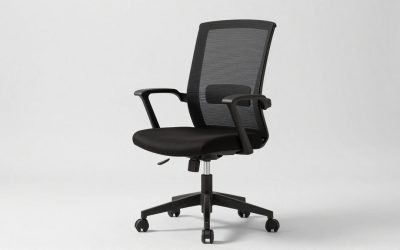
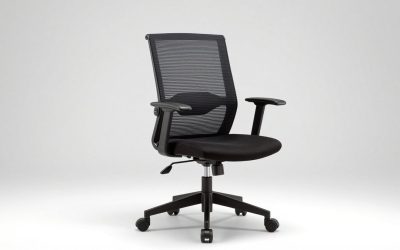
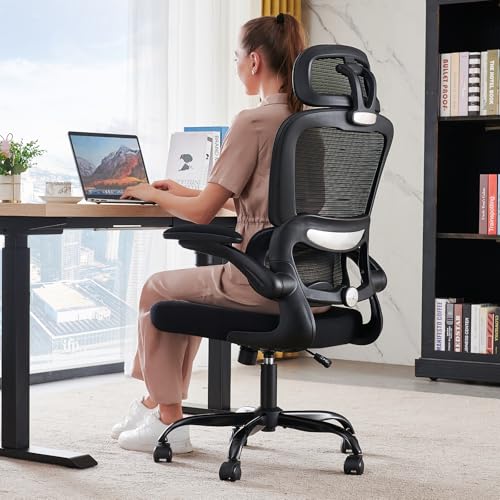 TRALT Office Chair Ergonomic Desk Chair with LumbarPack of 127.6 x 27.6 x 49.2 inches28 poundsCheck on Amazon


Lower back pain from sitting usually comes down to one of two things: your lumbar spine loses its natural inward curve when you slump, or your chair puts pressure on the wrong part of your lower back and your muscles tense up trying to compensate. A chair can’t fix either problem on its own, but the right one makes it much easier to sit without fighting your own posture for eight hours.
What actually matters in a chair, mechanically
Three things do most of the work: lumbar support that sits in the right place, a seat pan that doesn’t cut off circulation behind your knees, and a recline mechanism that lets you shift load off your spine periodically. Everything else, like mesh versus foam or how many colors it comes in, is secondary.
Lumbar support only helps if it hits you around L3-L5, roughly the belt line, not the middle of your back. A fixed lumbar bump that’s 2 inches too high will dig into your mid-back and you’ll end up slumping forward to avoid it, which defeats the purpose. If a chair’s lumbar support isn’t adjustable in height, measure where it sits relative to your own waist before buying, not after.
Seat depth matters more than people expect. If the seat pan is too long, the edge presses into the back of your knees and cuts circulation, which makes you slide forward and lose lumbar contact entirely. You want roughly 2-4 inches of clearance between the seat edge and the back of your knee when you’re sitting all the way back.
Adjustable lumbar vs. fixed lumbar: the real trade-off
Fixed lumbar curves work fine if your torso length happens to match the chair’s design height, which is a coin flip. Adjustable lumbar (height and sometimes depth) costs more but means you’re not relying on luck. If you’re under 5’4″ or over 6’2″, lean toward adjustable; the fixed curve on most mass-market chairs is tuned for a roughly 5’7″-5’10” torso.
| Feature | Fixed lumbar | Adjustable lumbar |
|---|---|---|
| Cost | Lower, often $100-$250 | Higher, typically $300-$900 |
| Fit precision | Works for average torso length only | Can be tuned to your actual spine |
| Failure mode | Pokes mid-back or sits too low, causing slumping | Can be set wrong and ignored for months |
| Best for | Average-height users, budget-limited buyers | Shorter or taller users, chronic pain, long sitting hours |
If you already have diagnosed disc issues or sciatica, the adjustability isn’t a luxury, it’s the point. For everyone else, a well-shaped fixed lumbar chair can genuinely be enough, and spending $700 won’t fix pain caused by sitting 11 hours a day without breaks.
Mesh vs. foam seats for lower back pain specifically
Mesh backs flex slightly and breathe better, which helps people who get sore from heat buildup against their back, but mesh offers less structured lumbar push than a molded foam back with a built-in lumbar bladder. If your main issue is lumbar collapse, foam-backed chairs with a shaped lumbar curve tend to help more directly than mesh. Mesh is better suited to people whose pain is more about overall stiffness and heat than specific lumbar collapse.
Seat cushion matters too. Memory foam that’s too soft lets your pelvis sink and tilt backward, flattening the lumbar curve you’re trying to maintain. Firmer, higher-density foam (look for seat foam rated 2.5-3 lb density if the spec is listed) holds its shape under sustained weight and keeps your pelvis level.
What to actually buy, by budget and situation
If you’re spending under $200, don’t expect precise lumbar adjustment. Look for a chair with a seat depth adjustment and a lumbar curve that’s at least height-adjustable, even if crudely. Searching ergonomic office chairs with adjustable lumbar support will get you into chairs that at least let you move the support up or down, which fixed-curve chairs under $150 usually don’t.
If your pain is specifically in the lower back and worse by end of day, a standalone lumbar support cushion for office chairs is the cheapest real fix, often $20-$40, and it can turn a mediocre chair into an adequate one. This is the move if you’re not ready to replace a chair you otherwise like, or if you’re testing whether lumbar support actually helps before spending $500+ on a new chair.
If you’ve already confirmed lumbar support helps and you sit 7+ hours a day, it’s worth going to a chair with independently adjustable lumbar depth and height, plus a seat pan depth slider. Look at high-back ergonomic chairs with lumbar support in the $300-$600 range; this is where most of the genuinely adjustable mechanisms start showing up without going into executive-chair pricing that’s mostly paying for materials, not function.
Mistakes that undo a good chair
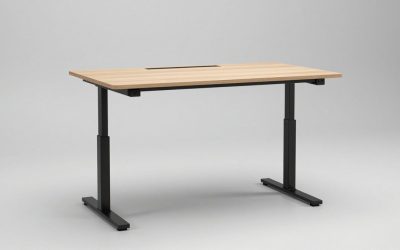
People buy a well-reviewed ergonomic chair, then sit at a desk that’s too high, forcing shoulders up and spine out of neutral regardless of what the chair does. Check desk height before blaming the chair. Also common: leaving lumbar support in the factory position and never adjusting it, which on an adjustable chair means you paid for a feature you’re not using. Spend the five minutes to dial it in to your actual waist height, not where it defaulted out of the box.
Static sitting is the other failure mode no chair solves. Even a perfectly fitted lumbar curve loses effectiveness after 45-60 minutes of unbroken sitting because the muscles around your spine fatigue regardless of support. A $150 chair plus standing up every 45 minutes will outperform a $900 chair sat in continuously for 9 hours.