Our Top Picks
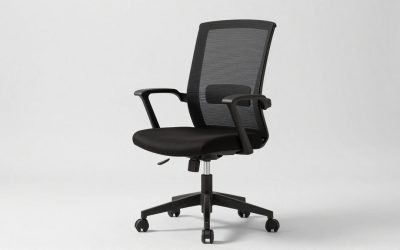
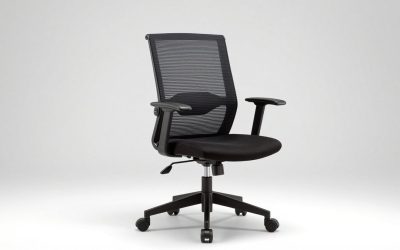
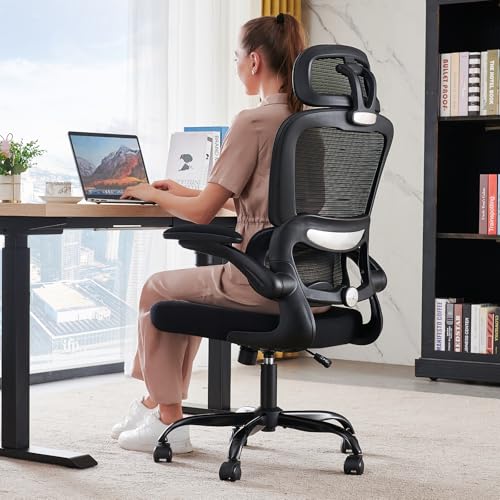 TRALT Office Chair Ergonomic Desk Chair with LumbarPack of 127.6 x 27.6 x 49.2 inches28 poundsCheck on Amazon
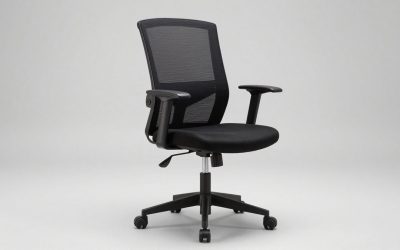
 Marsail Ergonomic Office Chair: Office Desk Chair with46.9" x 24.8" x 24.4"46.9 x 24.8 x 24.4 inches30.42 PoundsCheck on Amazon
Pros & cons
- 3D armrests adjust for multiple working postures
- Supports up to 330 pounds for a wide user range
- Adjustable lumbar moves to match height and body shape
- At over 30 pounds, it is heavier to move around
- Multiple adjustment points add setup complexity
 GTPOFFICE Executive Office Chair with Comfortable Lumbar Support24.4 x 18.5 x 41.7 inches18.5 x 24.4 x 41.7 inches18 PoundsCheck on Amazon
Pros & cons
- High-resilience foam seat resists flattening over time
- Class 3 BIFMA-certified gas lift resists height sinking
- Metal-core base supports up to 330 pounds
- 17.3-inch seat depth may not suit taller users
- At 28 pounds, assembly needs some physical effort
Upper back and neck pain from a desk job almost always traces back to one thing: your head creeping forward of your shoulders while you work. Every inch your head drifts forward adds roughly 10 pounds of effective load on your cervical spine and upper traps. A chair can’t fix bad posture habits by itself, but the right one removes the excuses that cause the drift — screens too low, armrests too high, no support between your shoulder blades — and the wrong one actively makes it worse.
This isn’t really about lumbar support, which is what most office chair marketing pushes. Lumbar support helps your lower back maintain its curve, but it does nothing for the headforward posture that causes neck and upper back pain. What you actually need is a chair that supports your upper spine and lets your arms rest without hiking your shoulders up.
TRALT Office Chair Ergonomic Desk Chair with Lumbar Support Black, 1 | 330 LBS Home Office Desk Chairs with Headrest, Reading Chair with Flip-up Armrests, Comfortable Computer Chairs Gaming Chair
Chosen because it specifies 330 LBS Home Office Desk Chairs with Headrest and Reading Chair with Flip-up Armrests.
View on AmazonMarsail Ergonomic Office Chair: Office Desk Chair with High Back Mesh and Adjustable Lumbar Support Rolling Work Swivel Task Chairs with Wheel 3D Armrests and Headrest
Picked as a relevant option in this category.
View on AmazonGTPOFFICE Executive Office Chair with Comfortable Lumbar Support, Ergonomic Gaming Chair with Flip-up Armrests & Zoned Pressure-Relief Cushion, Comfy PU Leather Desk Chair, Black
Chosen because it specifies Comfy PU Leather Desk Chair and Black.
View on Amazon
TRALT Office Chair - Ergonomic Desk Chair with Adjustable Lumbar Support, Mesh Computer Chair, Executive Chairs for Home Office Comfortable Lumbar Support (Black)
Chosen because it specifies Ergonomic Desk Chair with Adjustable Lumbar Support and Mesh Computer Chair.
View on AmazonWhat’s actually causing the pain
Three mechanical issues show up again and again in chairs that are bad for the neck and upper back:
- No upper back contact. Chairs with lumbar-only support (a pad or curve that stops mid-back) let your thoracic spine round forward with nothing pushing back. Over a few hours your head follows.
- Armrests at the wrong height or too far apart. If your arms hang unsupported, or the armrests force your elbows out wide, your trapezius muscles stay partially contracted all day. That’s the muscle that turns into a knot between your neck and shoulder.
- Headrest that pushes your head forward instead of back. A lot of “ergonomic” chairs with gaming-style headrests actually make this worse — the headrest sits too far forward and tips your chin down, which is the opposite of what you want.
What actually helps
Four features matter more than anything else for this specific problem:
A high backrest that reaches your shoulder blades, not just your lower back. You want contact up to roughly bra-strap height at minimum.
Adjustable armrests, ideally 4D (height, width, depth, pivot). Set them so your elbows sit at roughly 90 degrees and your shoulders stay level and relaxed, not shrugged. If you can’t get the armrests close enough to your body without hitting the desk edge, that’s a chair-desk mismatch, not something you can posture your way out of.
A headrest you can adjust in both height and angle, and that you can also ignore. The best outcome is a headrest you set once to support the base of your skull when you lean back, not one you lean on constantly while working. If you’re resting your head on it during active typing, your monitor is probably too low.
Recline with tension control, locked at an angle you actually use. A slight recline (100-110 degrees) takes real load off the upper back compared to sitting bolt upright. Chairs that only lock at 90 degrees or that recline loosely with no tension adjustment don’t give you this option.
What you get at each price point
Here’s roughly how the features map to price, based on what’s actually available rather than marketing claims:
| Price range | Upper back support | Armrests | Headrest | Good for neck/upper back pain? |
|---|---|---|---|---|
| Varies | Lumbar only, backrest usually stops mid-back | Fixed or 1D height only | Rarely included, fixed if present | Not really — treats symptom, not cause |
| Check on Amazon | High-back mesh reaching shoulder blades | 3D or 4D adjustable | Adjustable height, sometimes angle | Yes, this is the sweet spot |
| Check on Amazon | Shaped thoracic support, sometimes adjustable backrest height | 4D, often with softer pivot | Adjustable height and angle, better foam | Yes, with more fine-tuning and durability |
| Varies | Same mechanical benefit as mid-tier, better materials and warranty | Same mechanical benefit, nicer finish | Marginal gains in comfort | Diminishing returns past this point |
The extra money buys you better foam density, a longer warranty, and nicer materials, not fundamentally better neck support. If you’re on a tight budget, spend on a chair that hits the shoulder blades and skip the premium headrest foam. For a reasonable starting point, browsing high-back mesh office chairs with adjustable armrests
When the chair isn’t the problem
If you’ve got a good chair and you’re still hurting, check your monitor height before buying anything else. The top third of your screen should be at eye level. If you’re looking down at a laptop screen, no chair fixes that — you need a stand or external monitor. A lot of people chase chair upgrades for a monitor-height problem.
Also worth checking: a lumbar support cushionAnd if you work from a laptop on a couch or kitchen chair some days, a laptop stand paired with an external keyboard does more for neck strain than almost any chair purchase, because it removes the forward head tilt at the source.
If pain persists after you’ve fixed monitor height, armrest position, and upper back support for several weeks, that’s a signal to see a physical therapist rather than keep buying chairs. Chronic neck and upper back pain sometimes has a muscular imbalance or old injury behind it that no amount of ergonomic adjustment will resolve on its own.
What to Look For in a Chair for Upper Back and Neck Pain
Thoracic support and backrest height
The upper back is the region many chairs ignore. A backrest that stops at the waist supports the lumbar curve but leaves the thoracic spine free to round. For upper back strain, a backrest tall enough to meet the shoulder blades keeps the ribcage stacked over the pelvis. Mesh backs that flex slightly can help here, as long as the frame still holds firm behind the shoulders.
Armrest range and position
Upper trapezius tension often comes from arms with no support. Four-way adjustable armrests let you set height, width, depth, and angle so the forearms rest lightly while the shoulders stay low. If the armrests hit the desk edge, the chair cannot be pulled close enough, and the torso leans forward to compensate.
Seat height range
Many chairs list a seat height span of a few inches, commonly somewhere in the 16 to 21 inch zone. The correct setting depends on desk height and leg length. A desk that is too high forces the chair up, and then the feet dangle unless a footrest fills the gap.
Tilt tension
Tilt tension should be adjustable so the backrest follows your weight rather than slamming back or refusing to move. A chair that stays rigid encourages sitting upright for too long, while one that is too loose gives no support when leaning.
Worked Example: Setting a Desk Around Your Body
Take someone seated with elbows at roughly 25 inches above the floor. A keyboard tray or desk surface at about that height keeps the upper arms relaxed. If the desk is fixed at 30 inches, the person either raises the chair and uses a footrest, or accepts shoulder shrug. For a laptop user, the screen sits well below eye level, so a separate keyboard and mouse plus a stand that lifts the screen to eye height is the common fix. The stand and external keyboard are often worth considering before any chair upgrade, because they solve the forward-head problem at its source.
Which One Should You Buy?
| If you… | Choose… |
|---|---|
| Feel pain between the shoulder blades by afternoon | A high-back chair with a tall, contoured backrest |
| Feel it at the top of the shoulders and base of the neck | A chair with 4D armrests and a clear way to bring the arms closer to the body |
| Work from a laptop on a shared desk | Any adjustable chair paired with a laptop stand and separate keyboard |
| Are tall, with long thighs | A chair with a deeper seat and a higher backrest |
| Move between desk and sofa | A lighter task chair with a firm backrest, not a plush lounge seat |
Common Mistakes When Buying
- Prioritizing lumbar support only. The upper back and armrests matter as much for this type of pain.
- Setting armrests wide. Reaching outward loads the shoulders and keeps trapezius muscles active.
- Using the highest recline all day. A reclined posture with the screen unchanged just moves the head farther forward.
- Believing padded means ergonomic. Thick cushioning that collapses over time reduces support.
- Not adjusting after assembly. Factory defaults rarely suit any one person.
Questions
How high should the backrest be?
For upper back pain, a backrest that reaches at least the shoulder blades is a sensible target. Taller backs that reach the shoulders provide more support if you spend long hours seated.
Is a headrest necessary?
Not always. A headrest helps most when you lean back during calls or reading, and it should be adjustable. If you sit upright with the screen at eye level, the headrest will rarely touch your head.
Will a standing desk fix upper back pain?
It can reduce long unbroken sitting, but standing with the head forward causes similar strain. Alternating positions and keeping the screen at eye level matters more than the desk type.
How long until a difference shows up?
Owners commonly report that small changes in screen and armrest height feel different within days, but persistent pain that does not ease over a few weeks is worth discussing with a clinician.
Desk Setup Targets That Work With the Chair
| Item | Common target | Typical fix |
|---|---|---|
| Monitor top edge | At or slightly below eye level | Monitor stand or arm |
| Monitor distance | About an arm’s length away | Push the screen back and increase text size |
| Keyboard height | Elbows near a right angle, shoulders relaxed | Adjust armrests or seat height |
| Mouse position | Beside the keyboard, not stretched forward | Compact keyboard or a mouse tray |
| Feet | Flat on the floor | Footrest if the desk is too high |
| Laptop | Screen raised to eye height | Laptop stand plus separate keyboard and mouse |
Troubleshooting: Pain Still Returns by Afternoon
- Check where the head sits. If an ear sits well forward of the shoulder in a side-view photo, raise the screen or move it back.
- Look at your glasses. Progressive lenses can make you tilt the head back to find the reading zone, so the best screen position may differ from the standard one.
- Check a second screen. Dual monitors used unevenly cause constant head turning to one side. Center the main screen and angle the second.
- Review phone habits. Hours of looking down at a phone after work can undo a good workday setup.
- Add breaks. If every setting is correct and discomfort persists, the cause may be static posture rather than the chair.
Stretch and Reset Breaks Worth Building In
No chair setting removes the need to move. Short resets interrupt the slow forward drift of the head that builds over a long session. The goal is not an intense workout but a change of position that lets the shoulders and upper back unload.
- Shoulder rolls. A few slow backward rolls loosen the upper trapezius without strain.
- Chin tucks. Gently draw the head straight back over the shoulders, hold briefly, and release. Stop if anything hurts.
- Doorway chest opener. Stand in a doorway with forearms on the frame and lean forward lightly to open the front of the chest.
- Walk and refill. A short walk for water changes posture and resets the screen distance.
These are general habits and not a treatment plan. Anyone with ongoing pain, numbness, or tingling should ask a clinician or physical therapist which movements suit them.
Signs the Chair Has Been Matched Well
A well-fitted setup is often noticeable by what stops happening. Shoulders no longer creep upward toward the ears. The feet stay flat without effort. The eyes meet the top of the screen without the chin rising or falling, and the lower back stays supported without constant adjustment. If any of those still happen after a week of consistent use, adjust one control at a time and give each change a day or two before moving on, so it is clear which change helped.