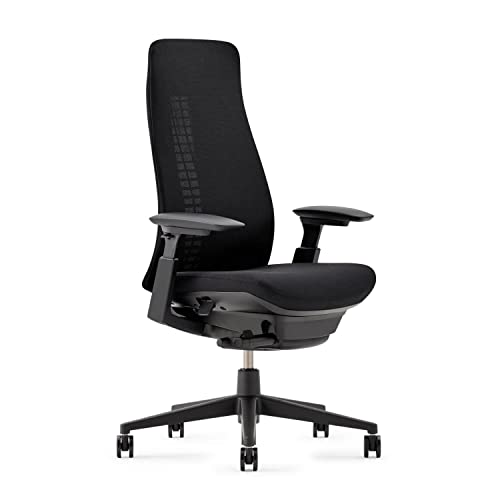
Key takeaways
- Seat width: Look for at least 19 inches of usable width. Around 20–22 inches is more accommodating for full cross-legged sitting, especially if you have broad hips or prefer changing positions.
- Seat depth: A usable depth of 18–20 inches supports the thighs without pressing behind the knees. A sliding seat pan is helpful if the chair is deeper than this.
- Clear seat area: Armrest posts, side bolsters, and a pronounced side-to-side contour reduce the actual space available. Measure between the narrowest points, not the outside width.
- Seat height: A range of roughly 16.5–21 inches suits many desks. For cross-legged sitting, a lower setting can reduce hip and knee elevation, provided your desk still has enough thigh clearance.
- Weight capacity: Choose a chair rated for at least 25% more than your body weight. A 250-pound user should generally look for a 300-pound or higher rating, not a 250-pound maximum.
What's inside
- Ergonomic Chair for Sitting Cross Legged: What to Look For and Best Designs
- Start With the Seat, Not the Headrest
- Flat Cushion or Waterfall Edge?
- Best Chair Designs by Sitting Situation
- Material and Construction Trade-Offs
- Posture Tips for Comfortable Cross-Legged Sitting
- Quick Buying Matrix
- What a Realistic Budget Buys in 2026
- Final Checklist
Ergonomic Chair for Sitting Cross Legged: What to Look For and Best Designs
The best ergonomic chair for sitting cross legged has a wide, level seat, a cushion that supports your weight without forcing your knees downward, adjustable height, and a weight rating comfortably above your own body weight.
- Ergonomic Chair for Sitting Cross Legged: What to Look For and Best Designs
- Start With the Seat, Not the Headrest
- Flat Cushion or Waterfall Edge?
- Best Chair Designs by Sitting Situation
- Material and Construction Trade-Offs
- Posture Tips for Comfortable Cross-Legged Sitting
- Quick Buying Matrix
- What a Realistic Budget Buys in 2026
- Final Checklist
Start With the Seat, Not the Headrest
Many office chairs are designed for feet-flat sitting, so their seat pans can feel narrow or aggressively shaped when you sit with one ankle over the opposite thigh or with both legs folded on the cushion. For cross-legged comfort, prioritize the following measurements:

Cross Legged Office Chair, Ergonomic Cloud Criss Cross Desk Chair, Meditation Chair with Wheels, Height Adjustable Seat for ADHD, Wide Kneeling Chair with Back Support
Included for 'Ergonomic Chair for Sitting Cross Legged: What to Look For and Best Designs' because the listing specifies Ergonomic Cloud Criss Cross Desk Chair and Meditation Chair with Wheels, details this guide uses to compare options.
View on Amazon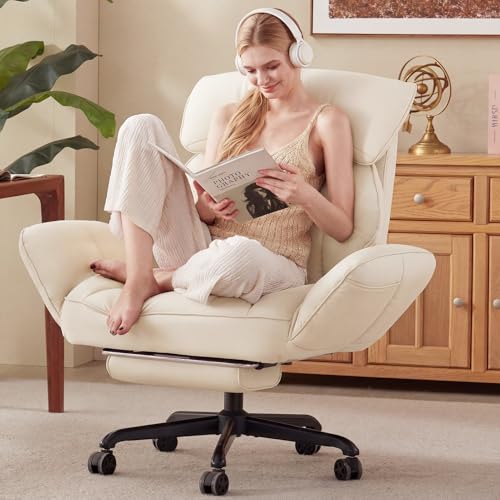
Dowinx Cross Legged Office Chair with Pivoting Armrests,Criss Cross Chair with Pocket Spring Seat & Back,Reclining Computer Gaming Chair with Footrest and Metal Base (Cream)
Included for 'Ergonomic Chair for Sitting Cross Legged: What to Look For and Best Designs' because the listing specifies Criss Cross Chair with Pocket Spring Seat & Back, details this guide uses to compare options.
View on Amazon
Cross Legged Office Chair with Arms, Wide Criss Cross Chair with Wheels, 360° Rotating Footrest, Height Adjustable Swivel Chair for ADHD, Heavy Duty Ergonomic Office Chair for Home Office Relaxing
Included for 'Ergonomic Chair for Sitting Cross Legged: What to Look For and Best Designs' because the listing specifies Wide Criss Cross Chair with Wheels and 360° Rotating Footrest, details this guide uses to compare options.
View on Amazon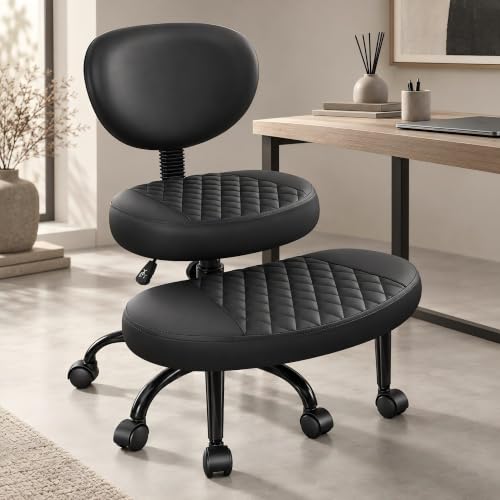
AtHope Cross Legged Office Chair, ADHD Chair with Wider Footrest and Wheels
Included for 'Ergonomic Chair for Sitting Cross Legged: What to Look For and Best Designs' because the listing specifies ADHD Chair with Wider Footrest and Wheels, details this guide uses to compare options.
View on Amazon- Seat width: Look for at least 19 inches of usable width. Around 20–22 inches is more accommodating for full cross-legged sitting, especially if you have broad hips or prefer changing positions.
- Seat depth: A usable depth of 18–20 inches supports the thighs without pressing behind the knees. A sliding seat pan is helpful if the chair is deeper than this.
- Clear seat area: Armrest posts, side bolsters, and a pronounced side-to-side contour reduce the actual space available. Measure between the narrowest points, not the outside width.
- Seat height: A range of roughly 16.5–21 inches suits many desks. For cross-legged sitting, a lower setting can reduce hip and knee elevation, provided your desk still has enough thigh clearance.
- Weight capacity: Choose a chair rated for at least 25% more than your body weight. A 250-pound user should generally look for a 300-pound or higher rating, not a 250-pound maximum.
A wide seat is not automatically ergonomic. If its front edge presses into your thighs, you may develop numbness or shift into a slouch. The useful combination is a roomy cushion, a supportive backrest, and a front edge that does not create a hard pressure line.
Flat Cushion or Waterfall Edge?
This is one of the most important design choices for cross-legged sitting. A flat or gently rounded cushion gives your folded legs a stable surface and usually leaves more usable room near the front corners. It is often the better choice if you sit fully cross-legged for long periods.
A waterfall edge slopes downward at the front of the seat. It reduces pressure behind the knees during feet-flat sitting and can improve circulation when your legs extend forward. However, a strongly curved waterfall edge may feel unstable when one or both feet rest on the cushion. It can also make your hips slide forward, encouraging a rounded lower back.
| Seat design | Best for | Potential drawback when cross-legged | What to look for |
|---|---|---|---|
| Nearly flat cushion | Frequent cross-legged sitting and position changes | May place more pressure behind the knees when sitting feet-flat | Firm, even foam with softly rounded front corners |
| Gentle waterfall edge | Users who alternate between cross-legged and feet-flat positions | Less stable if the front slopes sharply | A shallow slope beginning several inches behind the front edge |
| Deep waterfall or bucket seat | Mostly conventional office posture | Can restrict folded legs and encourage sliding forward | Choose only if the seat depth and width remain generous |
Best Chair Designs by Sitting Situation
For frequent cross-legged work
Choose a wide-seat ergonomic task chair with a relatively flat cushion, adjustable lumbar support, and armrests that move backward or out of the way. A seat width around 20 inches and a 300-pound or greater weight rating are practical targets. A chair with a flexible back is preferable to a rigid shell because you can recline slightly without losing contact with the lumbar area.
For back pain or stiffness
Do not assume that sitting cross-legged is therapeutic for back pain. The position can rotate the pelvis and spine if held on one side for too long. Select a chair with height-adjustable lumbar support, a backrest that reclines at least 100–110 degrees, and a cushion firm enough to prevent your hips from sinking. Use cross-legged sitting in short intervals, then return to a symmetrical position with both feet supported.
For a small apartment or bedroom office
A compact task chair with a 19–20 inch seat width and a footprint under about 27 inches wide usually fits better than an executive chair. In a 10-by-12-foot room, leave approximately 30 inches behind the chair for normal rolling and at least 36 inches in the main walking path. Avoid oversized fixed arms if the desk is close to a wall.
For children, pets, or heavy daily use
Prioritize a replaceable seat cushion, tightly woven upholstery, and a base with a high weight rating. Polyester performance fabric is generally easier to clean than loosely woven wool or boucle. Faux leather wipes clean quickly but can become warm and may crack sooner in dry rooms. Mesh resists many stains, but crumbs and pet hair can collect along the frame and seat edge.
For renters and frequent movers
Choose a chair that separates into a seat, back, arms, and base, and confirm the carton dimensions before ordering. A complete ergonomic chair commonly weighs 35–60 pounds; executive models can exceed 70 pounds. A 24-inch doorway is normally sufficient for a boxed task chair only if the carton is rotated correctly, but elevators, stair turns, and narrow hallways matter more than the front door. Keep the box until you have confirmed the fit and checked all adjustment mechanisms.
Material and Construction Trade-Offs
| Component | Useful choice | Advantage | Trade-off |
|---|---|---|---|
| Seat foam | Medium-firm molded or layered foam, approximately 2.5–4 inches thick | Balances pressure relief with stable hip support | Very soft foam feels comfortable initially but may bottom out and flatten |
| Fabric | Tightly woven polyester or performance textile | Good everyday durability and easier spot cleaning | Can retain heat more than mesh |
| Mesh | Firm, tensioned seat mesh with reinforced frame | Breathable and less likely to hold surface spills | May feel taut at the thighs and offers less cushion for folded legs |
| Base | Aluminum or reinforced nylon five-star base | Stable, usually quieter, and better suited to frequent repositioning | Metal raises cost; nylon can flex or show wear sooner at high loads |
| Armrests | Height- and width-adjustable arms that move backward | Allow your knees and folded legs to occupy the seat area | More adjustment parts can loosen over time |
Foam density is rarely published consistently, so do not judge quality from density alone. More useful questions are whether the cushion has a molded support layer, whether the cover is replaceable, and whether the manufacturer lists a commercial-use warranty. The first parts to show wear are commonly the seat foam, armrest pads, casters, and tilt-control mechanisms.
Posture Tips for Comfortable Cross-Legged Sitting
- Set the chair low enough that your folded legs do not lift your hips above the front edge of the seat.
- Keep your pelvis near the backrest instead of sliding toward the desk.
- Use the lumbar support lightly; it should fill the lower-back curve without pushing you forward.
- Alternate which leg is on top, or switch between one-leg-folded and feet-flat positions every 20–30 minutes.
- Recline slightly, around 100–110 degrees, rather than sitting bolt upright with your spine rigid.
- Keep the monitor’s top edge near eye level and place the keyboard close enough that your shoulders remain relaxed.
- Stand, walk, or stretch for a few minutes at least once every hour.
If your knees press against the armrests, remove the arms only if the chair is designed for that modification. Otherwise, select flip-up or backward-sliding arms. Do not place a thick cushion on the seat unless the chair has enough height adjustment; it can raise your elbows above the desk and reduce leg clearance.
Quick Buying Matrix
| Your priority | Recommended specification | Specification to avoid |
|---|---|---|
| Maximum cross-legged space | 20–22 inch usable seat, flat or gently rounded cushion | Narrow bucket seat or fixed side bolsters |
| Back support | Adjustable lumbar and 100–110 degree recline | Fixed upright back with no tension adjustment |
| Small room | Under 27-inch footprint and compact five-star base | Deep executive frame with oversized arms |
| Higher body weight | 300–400 pound rating, reinforced base, firm cushion | Rating close to your actual weight |
| Pets and children | Tightly woven fabric, replaceable casters, wipeable surfaces | Loose boucle, delicate mesh, or untreated light fabric |
What a Realistic Budget Buys in 2026
Basic wide-seat office chairs generally cost about $150–$300 and may provide adequate width but limited lumbar adjustment. Better-built ergonomic task chairs usually fall around $300–$600, with stronger mechanisms, adjustable arms, and more durable upholstery. Premium chairs commonly cost $700–$1,500 or more, particularly when they offer a long warranty, replaceable components, refined recline control, and commercial-grade construction.
For this specific use, spend first on seat width, cushion shape, weight capacity, and adjustment range. A headrest, polished frame, or highly sculpted backrest cannot compensate for a seat that is too narrow or a waterfall edge that makes your folded legs slide forward.
Final Checklist
- Is the usable seat at least 19 inches wide?
- Can the seat height place your hips comfortably without raising your knees too high?
- Is the cushion flat or only gently sloped at the front?
- Does the chair’s weight rating exceed your body weight by at least 25%?
- Can the arms move out of the way of your knees?
- Does the backrest support a slightly reclined, non-slouched position?
- Will the assembled chair fit your doorway, desk clearance, and room layout?
The most dependable choice is a wide, medium-firm ergonomic task chair with a level seat, adjustable lumbar support, movable arms, and a generous weight rating. Use it to change positions rather than locking yourself into one cross-legged posture, and it can provide comfort without sacrificing the alignment and support expected from a proper office chair.