Our Top Picks
 Marsail Glass Standing Desk with Drawer48 x 24 Inch24 x 46.5 x 28.3 inches58.64 PoundsCheck on Amazon
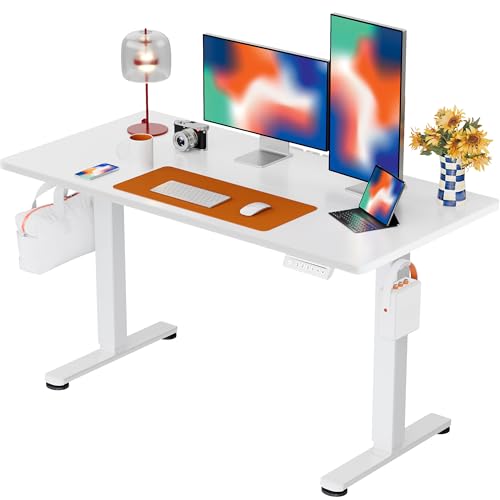 ErGear Height Adjustable Electric Standing Desk48 X 24 Inches23.6 x 47.2 x 28.35 InchesCheck on Amazon
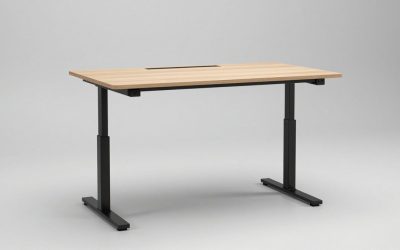
The Twin Star adjustable height desk is a capable mid-budget electric sit-stand desk that fits compact rooms well, offering a typical sit-stand range of roughly 28–48 inches and 48- or 60-inch laminate tops — good value for home offices, but with a few assembly and stability quirks worth knowing before you buy. Twin Star Home (the furniture arm behind ClassicFlame electric fireplaces) sells these desks mostly through big-box retailers and its own catalog, usually in the $200–$450 range depending on size and finish, which undercuts many dedicated standing-desk brands while still giving you motorized height adjustment and preset memory buttons.
What you’re actually buying
Twin Star’s adjustable desk line is built around a consistent formula: a laminated engineered-wood top on a powder-coated steel T-frame or C-frame base, with a single electric motor (on most models) driving two lifting columns. Controls are a simple up/down handset or a keypad with 3–4 memory presets, depending on the model year and retailer bundle.
Marsail Glass Standing Desk with Drawer, 48 x 24 inch Electric Standing Desk, Height Adjustable Desk with One-Piece Tabletop & USB Charging Ports, Sit Stand Desk with Storage for Home & Office White
Chosen because it specifies 48 x 24 inch Electric Standing Desk and Sit Stand Desk with Storage for Home & Office White.
View on Amazon
YDN Glass Standing Desk with Drawers, 48x24 Inch, White
Chosen because it specifies 48x24 Inch and White.
View on Amazon
HUANUO Glass Standing Desk with Drawers, 35 X 20 Inch Electric Adjustable Height Desk, Quick Install One-Piece Tabletop with USB Charging Ports, White
Chosen because it specifies 35 X 20 Inch Electric Adjustable Height Desk and Quick Install One-Piece Tabletop with USB Charging Ports.
View on AmazonErGear Height Adjustable Electric Standing Desk, 48 x 24 Inches Sit Stand up Desk, Memory Computer Home Office Desk, White
Chosen because it specifies 48 x 24 Inches Sit Stand up Desk and Memory Computer Home Office Desk.
View on AmazonTwo things to check on the spec sheet for the exact unit you’re considering:
- Single vs. dual motor. Most Twin Star desks in this price band use one motor linked to both legs. Dual-motor frames lift faster and handle heavier loads more evenly, but cost more.
- Top construction. Some tops ship as a single piece; others arrive in two halves joined by a center seam (visible as a hairline strip across the middle). A one-piece top is stiffer and looks cleaner — worth confirming before purchase.
- Frame width adjustability. The steel crossbar on many units telescopes, so the same frame can accept different top widths if you swap tops later.
Dimensions, clearances, and room fit
Twin Star desks are sized for home offices rather than executive suites. Here’s what the typical numbers look like across the line:
| Measurement | Typical spec | What it means in practice |
|---|---|---|
| Desktop widths | 48 in or 60 in (some 55 in) | 48 in fits a laptop + one monitor; 60 in fits dual monitors comfortably |
| Desktop depth | 24–30 in | 24 in is tight with a monitor arm; 28–30 in keeps screens at a healthier distance |
| Height range | ~28–48 in | Covers seated and standing heights for roughly 5’1″–6’2″ |
| Lift speed | ~1 in/sec | A full sit-to-stand transition takes about 20 seconds |
| Weight capacity | ~110–176 lbs | Fine for monitors and a laptop; don’t sit on it or stack heavy printers |
| Desk weight (assembled) | ~60–90 lbs | One person can slide it; two people to carry |
| Motor noise | ~45–55 dB | A low hum — audible in a quiet room, not disruptive |
In a 10×12 ft room — the most common small-home-office footprint — a 48×24 in Twin Star desk fits along one wall with a chair pull-out zone of about 30–36 inches behind it and still leaves the room walkable. A 60-inch top works too, but start checking door swing and closet access at that point. Leave 2–3 inches of clearance behind the desk: the top moves up and down, and cables, a surge protector, or a mounted power strip will pinch against the wall otherwise. Also check ceiling-adjacent obstacles — at the full 48-inch rise, an under-desk shelf or a low windowsill can collide with your monitor.
Through-door fit is rarely a problem. The desk ships flat-packed in a box roughly 50–65 inches long and under 20 inches deep, and the assembled desk’s widest rigid dimension is the top, which tilts through a standard 30–32 inch doorway easily.
Will the height range fit your body?
The number that matters isn’t the desk’s range — it’s your elbow height. Match your standing elbow height (floor to elbow, arms bent 90°) against the desk’s top-end setting:
| Your height | Comfortable sitting desk height | Comfortable standing desk height | Fits a 28–48 in desk? |
|---|---|---|---|
| 5’2″ | ~24–25 in* | ~37–38 in | Standing yes; seated needs a footrest or lower chair |
| 5’6″ | ~26 in | ~41 in | Yes |
| 5’10” | ~27–28 in | ~44 in | Yes |
| 6’2″ | ~29 in | ~47 in | Yes, near the top of the range |
| 6’5″ | ~30 in | ~49–50 in | Marginally short for standing — look for a 50+ in range |
*A desk that bottoms out at 28 in sits too high for shorter users even when seated — add a footrest and lower your chair, or use a keyboard tray.
Motor vs. manual: which mechanism makes sense
Twin Star’s adjustable desks are electric, so the real comparison is motorized versus the manual crank desks sold elsewhere in the same price bracket.
- Electric (Twin Star’s approach): Push-button adjustment in ~20 seconds, memory presets so two users can each store heights, and no effort — which matters, because research on sit-stand habits consistently shows people switch positions more often when switching is effortless. The trade-offs: it needs a nearby outlet, the motor and controller are eventual failure points, and it adds box weight.
- Manual crank (the alternative type): No electronics to fail, works during a power outage, and usually costs less. The crank takes 30–60 turns per transition, which sounds trivial until day 30 when you stop bothering to stand.
If you’ll genuinely change positions multiple times a day, motorized is worth the premium. If the desk will mostly sit at one height for weeks at a time, a crank desk — or a fixed desk plus a desktop riser — saves money with no real downside.
Assembly: what actually happens out of the box
Budget 45–75 minutes and a second person, even though the manual says otherwise. The realistic sequence:
- Unboxing and sorting (10 min): The box weighs roughly 70–90 lbs total — carryable by two people, awkward solo. Hardware is usually blister-packed by step.
- Frame build (20–30 min): Attach feet to the lifting columns, join them with the telescoping crossbar, and set the width to match your top. Everything is hex-bolted; the included Allen key works but a ratcheting hex bit or your own screwdriver saves your wrists.
- Top attachment (10–15 min): Flip the top upside down on a blanket or carpet — laminate scratches easily on hard floors — align the frame to the pre-drilled inserts, and bolt down. On two-piece tops, join the halves with the underside connector plates first.
- Electronics and flip (10 min): Mount the control box and handset, connect the leg cables, then flip the desk upright with a second person — the assembled frame-plus-top is top-heavy and this is the step where solo builders drop things.
Two practical notes: run the desk through its full up-down cycle once before loading it (this resets the controller and confirms both legs track evenly), and do the final leveling with the adjustable foot glides after the desk is in its permanent spot.
Stability and what wears first
Stability is honest for the price class, not exceptional. At sitting height the desk is rock-solid. At standing height, expect modest front-to-back wobble if you lean on the front edge or type aggressively — typical of any single-motor T-frame without a rear cross-brace. It’s noticeably steadier on hard flooring than on plush carpet, and keeping the crossbar bolts re-torqued after the first month of use removes most of the early looseness.
Durability realities, in the order they typically show up:
- Edge banding on the laminate top is the first casualty — it can lift or chip where your forearms rest, especially in humid rooms. A desk mat prevents most of this.
- Controller/handset glitches (unresponsive buttons, legs out of sync) are the most common mid-life issue; the standard fix is a 10-second reset procedure, and replacement handsets are usually cheap.
- The motor and lifting columns are the expensive wear items but also the slowest to degrade — expect years of daily use if you stay under the rated load. Consistently running near max capacity shortens motor life meaningfully.
- Finish on the frame is powder coat and holds up well; scuffs come from chair contact, not the mechanism.
Which setup fits your situation
| Your situation | Best choice | Why |
|---|---|---|
| Small apartment / 10×12 room | 48×24 in Twin Star electric | Fits one wall with room to walk; motor presets suit shared spaces |
| Renter who moves often | 48 in model, keep the crossbar mid-width | Lighter box, fits through narrow doors, survives reassembly better |
| Two monitors + heavy accessories | 60 in top, confirm 150+ lb capacity | Depth and load headroom matter more than width |
| Back pain / frequent sit-stand switching | Electric with memory presets | You’ll actually use it; crank desks get left at one height |
| User under 5’3″ or over 6’3″ | Consider a wider-range desk instead | The 28–48 in band leaves both extremes underserved |
| Desk stays at one height for weeks | Fixed desk + desktop converter | Cheaper, nothing to break, same ergonomics |
FAQ
Can I clamp a monitor arm to it?
Usually yes, but check the top’s construction first — solid laminate tops of ¾ inch or more take clamps fine, while some budget desks use hollow-core panels that can’t handle clamping pressure. If yours is hollow, use a grommet mount through a drilled hole or a weighted monitor stand.
Does it need its own outlet?
It draws little power, but give it a spot near an outlet with enough slack cable for the full 20-inch rise — the control cable and your monitor cables all need 2–3 feet of travel slack routed through a cable tray or snag-free loop.
Two-piece top or one-piece — does it matter?
Functionally, little; cosmetically, some. The seam is a thin line across the center that a desk mat covers completely, but if you’re clamping a monitor arm at the exact middle, a one-piece top is the safer pick.
Is it worth it over a fixed desk?
If you’ll stand at least a few times daily, yes — the ergonomics pay off and the Twin Star price point keeps the risk low. If you’re buying the idea of standing rather than the habit, a fixed desk plus a $100–150 converter tests the habit for less.