Our Top Picks
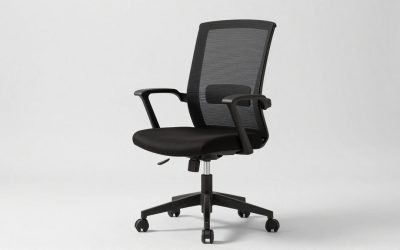
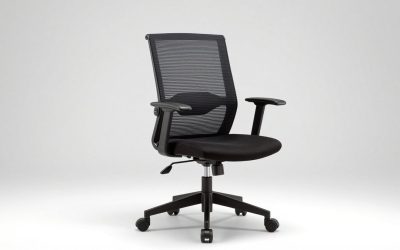
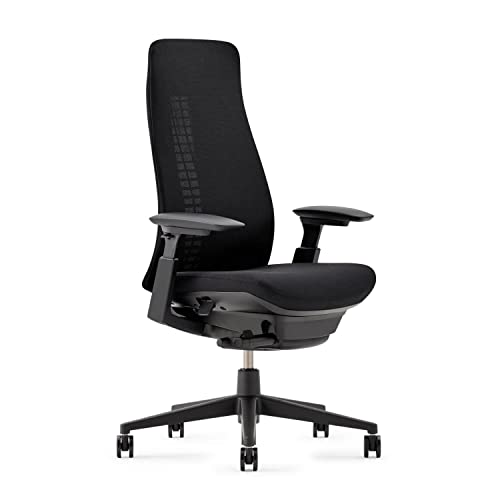 Haworth Fern Ergonomic Office Chair w/Breathable MeshWith Lumbar Support28.9 x 29 x 41.5 inches65 PoundsCheck on Amazon
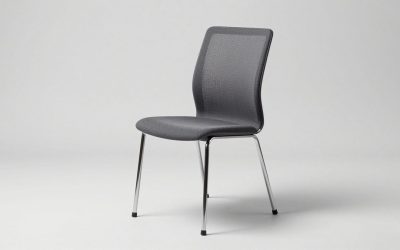
 Haworth Fern Ergonomic Office ChairWith Lumbar Support28.9 x 29 x 41.5 inches55 PoundsCheck on Amazon
The Haworth Fern is a premium ergonomic task chair whose defining feature is a frameless “Wave Suspension” back that flexes in three zones — and it’s best for people who change positions constantly throughout the day rather than sitting bolt-upright for eight hours. It fits a wide height range (roughly 5’0″ to 6’4″), supports up to 325 lb, and typically sells new in the $1,000–$1,400 range depending on options. Below is what the back actually does, what each adjustment controls, and how to tell whether it fits your body, desk, and work style.
How the Fern’s Wave Suspension Back Works
Most ergonomic chairs use a mesh or upholstered back stretched over a rigid perimeter frame. The Fern removes that frame entirely. The back is built from a central “stem” of flexible polymer with leaf-like fronds extending outward — the structure that gives the chair its name. Those fronds are organized into three zones of differing stiffness:
Haworth Fern Ergonomic Office Chair w/Breathable Mesh, Lumbar, Coal
Chosen because it specifies Lumbar and Coal.
View on AmazonHaworth Fern Ergonomic Office Chair, Digital Knit, Lumbar, Charcoal Black
Chosen because it specifies Digital Knit and Lumbar.
View on Amazon
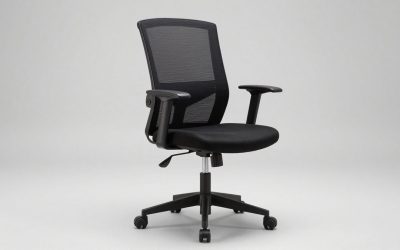
Haworth Fern Ergonomic Office Chair, Breathable Mesh, No Lumbar, Coal
Chosen because it specifies Breathable Mesh and No Lumbar.
View on Amazon
Haworth Fern Executive Office Chair w/Digital Knit & Lumbar,Charcoal Black
Chosen because it specifies Charcoal Black.
View on Amazon- Lower back: the firmest zone, providing the underlying lumbar support structure.
- Middle back: moderate flex for cradling the mid-back as you recline.
- Upper back and shoulders: the softest zone, so the top of the backrest yields when you stretch, twist, or lean back into it.
The practical consequence is that there’s no hard plastic edge anywhere on the backrest. On framed mesh chairs, leaning sideways or draping an arm over the back means pressing into rigid frame rails; on the Fern, the edge itself flexes. This makes it unusually comfortable for people who twist to reach things, lean sideways during calls, or sit in asymmetrical positions. The trade-off: the back feels “cradling” rather than “locked in.” If you want firm, structured resistance holding your spine in one fixed posture, a framed back will feel more supportive — the Fern is engineered around movement instead.
Standard suspension vs. digital knit
The Fern comes with the exposed Wave Suspension back or an optional digital knit layer stretched over it. The knit adds light cushioning, a warmer feel (bare suspension can feel cool through a thin shirt), and a softer residential look. Downsides: it adds cost, traps pet hair, and is more vulnerable to claw snags than the bare polymer fronds. In homes with cats, the standard back is the safer pick.
Every Adjustment and What It Controls
The Fern has fewer controls than some flagship ergonomic chairs, which is deliberate — the back does adaptive work passively. What you actually adjust:
- Seat height (pneumatic): about 16.5″–21.5″ on the standard cylinder; low and stool-height cylinders are also available.
- Seat depth: roughly 4″ of travel, moving the seat pan between about 15″ and 19″ deep. This is the adjustment most buyers skip and shouldn’t — see the fit rules below.
- Arms: armless, height-adjustable, or 4D (height, width, depth, and pivot) depending on configuration.
- Tilt: a synchro-tilt mechanism with tension control and a multi-position lock; some configurations add forward tilt for perching during focused work.
- Lumbar: an optional height-adjustable lumbar pad that slides several inches up or down to sit in the curve of your back.
- Casters: sold in hard-floor and carpet versions — order the right one rather than improvising with a chair mat.
Key measurements
| Specification | Measurement | Why it matters |
|---|---|---|
| Seat height (standard cylinder) | ~16.5″–21.5″ | At the 16.5″ low end, fits users down to about 5’0″–5’2″ — pair with a footrest at fixed-height desks |
| Seat depth range | ~15″–19″ (about 4″ of travel) | Leave 2–3 finger-widths (~2″) between the seat edge and the back of your knees |
| Seat width | ~19″ | Roomy for most; snug if you sit cross-legged regularly |
| Weight capacity | 325 lb | Standard task-chair rating; over that, look at chairs rated 400–500 lb |
| Chair weight | ~45 lb | Easy to roll between rooms; manageable solo for stairs |
| Armrest height (4D) | ~7″–11″ above seat | At the lowest setting, arms sit roughly 24″–25″ off the floor — measure under-desk clearance |
| Warranty | 12 years | Full-length coverage typical of commercial-grade chairs, not the 1–3 years of budget seating |
Matching Postures and Work Styles
The Fern’s adjustment logic maps to how you actually work rather than offering a control for everything:
- Focused typing: moderate tilt tension, optional forward tilt, seat slid to give that 2″ knee gap. The seat foam is firm and contoured — supportive over long stretches, but not plush.
- Reclined calls and reading: loosen the tilt tension and the upper-back zone lets you lean fully into the backrest without a frame edge pressing into your shoulder blades. This is where the Fern most obviously beats framed chairs.
- Fidgeting and position-shifting: the chair’s core strength. The back responds to lateral movement and asymmetry rather than resisting it.
- Perching at standing-desk height: the stool configuration with the tall cylinder works; the standard chair at max height (~21.5″) is marginal for a 40″+ surface.
Will It Fit You? A Decision Matrix
| Your situation | Fern fit | What to do |
|---|---|---|
| Petite (under ~5’3″) | Good, with setup | Set seat depth near minimum (~15″); at a fixed 29″–30″ desk, add a footrest or keyboard tray since the 16.5″ minimum seat height may still leave feet dangling |
| Average height (5’4″–6’1″) | Excellent | Standard cylinder and full adjustment range cover you; set seat depth for the 2″ knee gap |
| Tall (6’2″–6’4″) | Good | Run seat depth near max and seat height near the top of the range; the back tops out around mid-shoulder on taller users |
| Lower back pain | Good — order the lumbar | The bare suspension gives broad support but little focused lumbar pressure; the adjustable lumbar is worth the upcharge for anyone with an existing back issue |
| Over 325 lb | Skip it | Look at big-and-tall chairs rated 400–500 lb with reinforced cylinders and wider seats |
| Kids and pets in the house | Good, with one caveat | Choose the standard suspension back over digital knit (claw snags, hair buildup) and hard-floor casters if needed |
| Budget under ~$600 | Skip it | At $1,000+ new, the Fern competes with flagship chairs; mid-range ergonomic chairs deliver 80% of the function |
Delivery, Setup, and What Wears First
The Fern ships largely assembled in a single large box weighing roughly 60 lb — it fits through standard 30″ doorways, and setup is essentially unboxing and rolling it out rather than a hardware-heavy assembly. The ~45 lb chair itself rolls easily on its casters for moving between rooms.
On durability: this is a commercial-grade chair, and the suspension structure itself is not the weak point. What wears first, in rough order, is seat upholstery and foam compression (most visible on fabric seats after years of daily use), armpad surfaces on the 4D arms, and casters picking up hair and debris. The 12-year warranty covers the mechanism and structure, which is the real value signal at this price — most sub-$400 chairs carry 1–3 year coverage.
Who the Fern Is Best For — and Who Should Skip It
Buy it if: you shift positions constantly, lean or twist in your chair, want adaptive support without fiddling with a dozen controls, work long days at a desk, and your budget covers a flagship-tier chair you expect to last a decade-plus.
Skip it if: you weigh over 325 lb, want a soft cushioned seat (the Fern’s is firm by design), prefer rigid framed-back support that pins you into one posture, or you’re furnishing on a mid-range budget. If framed support is what you want, chairs like the Steelcase Gesture or Herman Miller Embody are the natural cross-shops — they take a more structured approach where the Fern takes a flexible one.
FAQ
Is the adjustable lumbar worth the extra cost?
For most people, yes. The Wave Suspension distributes support broadly but delivers modest pressure specifically at the lumbar curve. If you have an existing lower back issue or like pronounced lumbar push, order it — retrofitting later is more hassle than checking the box upfront.
Digital knit or standard suspension back?
Standard suspension for warm rooms, homes with cats, and minimalist budgets; digital knit if the chair sits in a living space where looks matter and you want a slightly softer, warmer feel against your back.
Is the Fern comfortable for 8+ hour days?
That’s what it’s built for — the firm seat and adaptive back are tuned for sustained use rather than lounge softness. The caveat is sitting still: it rewards movement, so it suits people who naturally shift rather than lock into one posture.
What’s the weight limit?
325 lb, which is the standard rating for commercial task chairs. Above that, look at chairs specifically rated for 400–500 lb with wider seats and heavy-duty cylinders.