Our Top Picks
 BEAUTRIP Ergonomic Armrest Pads- Office Chair Arm Rest9.8 x 4 inches9.8 x 4 x 2.7 inchesCheck on Amazon
Aloudy ergonomic memory foam office chair armrest pads are best chosen by matching their thickness, firmness, length, and attachment method to your chair’s arm shape—not simply by choosing the softest cushion.
What these armrest pads are designed to solve
An office chair armrest concentrates body weight on a small area of the elbow and forearm. That pressure becomes more noticeable during long computer sessions, especially when the armrest is hard plastic, narrow, or positioned too low. A memory foam pad spreads contact over a wider surface and can reduce the sharp edge that irritates the elbow.

Aloudy Ergonomic Memory Foam Office Chair Armrest Pads, Comfy Gaming Chair Arm Rest Covers for Elbows and Forearms Pressure Relief(Set of 2), Stretch Fit, Black
Chosen because it specifies Stretch Fit and Black.
View on Amazon
Aloudy Arm Rest Pillow, 2021 NEW Size 11” Office Chair Armrest Cover Pads, Comfy Desk Chair Cushions for Elbows and Forearms(Large, Set of 2)
Chosen because it specifies 2021 NEW Size 11” Office Chair Armrest Cover Pads and Comfy Desk Chair Cushions for Elbows and Forearms(Large.
View on Amazon
Aloudy Ergonomic Memory Foam Office Chair Armrest Pads, Comfy Gaming Chair Arm Rest Covers for Elbows and Forearms Pressure Relief(Set of 2) (Gray)
Picked as a relevant option in this category.
View on AmazonBEAUTRIP Ergonomic Armrest Pads- Office Chair Arm Rest Cover Pillow - Elbow Support Cushion for Computer, Gaming and Desk Chairs (Set of 2)
Chosen because it specifies Elbow Support Cushion for Computer and Gaming and Desk Chairs (Set of 2).
View on AmazonThe pad is not a substitute for correct chair adjustment. Your shoulders should remain relaxed, your elbows should sit close to your body, and your forearms should approach the keyboard without lifting your shoulders. If the cushion makes the armrests too high, it can create neck and shoulder tension even while making the elbows feel softer.
Thickness and density: the two measurements that matter
Thickness determines how much height the pad adds. Density affects how quickly it compresses and whether it feels supportive or merely plush. Memory foam is generally more conforming than molded polyurethane foam, but “memory foam” alone does not identify its firmness or durability.
| Pad specification | Best use | Potential drawback |
|---|---|---|
| About 0.5–0.75 inch thick | Chairs already at the correct height; light elbow cushioning | Limited pressure relief on a very hard, narrow armrest |
| About 0.75–1.25 inches thick | Most desk chairs and longer work sessions | May raise the elbow position enough to require chair adjustment |
| About 1.25–1.75 inches thick | Very hard armrests or users wanting maximum softness | Can feel unstable and may interfere with a desk or keyboard tray |
| Low-to-medium density memory foam | Soft initial contact and easy compression | More likely to bottom out or lose shape with constant use |
| Medium-to-high density memory foam | Frequent daily use and sustained forearm support | Can feel firmer, warmer, and less immediately plush |
For elbow pressure relief, a medium thickness with enough density to prevent bottoming out is usually the safer compromise. If your elbow still touches the hard armrest when you lean normally, the pad is either too thin or too soft. If the forearm feels perched on a bulky mound, it is probably too thick.
Check the fit before ordering
Measure the armrest rather than relying on the chair’s advertised dimensions. Record the usable length and width, including any curved corners. Also measure the gap between the armrest and the underside of your desk. A pad that adds one inch of height can remove the clearance needed to slide the chair underneath.
| Measurement | Useful buying target | Why it matters |
|---|---|---|
| Armrest length | Pad should be no longer than the flat supporting section | Prevents overhang and premature edge wear |
| Armrest width | Pad should cover most of the top without hanging more than about 0.25 inch per side | Reduces rocking and snagging |
| Desk clearance | Keep roughly 0.5 inch of spare vertical clearance after installation | Allows the chair to move under the desk without crushing the pad |
| Elbow height | Elbows level with or slightly below the keyboard surface | Helps avoid raised shoulders and wrist extension |
For a compact workstation, measure the complete route and storage area as well. A chair that fits a 10-by-12-foot room can still be awkward if the armrests catch on a 28-inch doorway or a narrow desk opening. Soft pads do not reduce the chair’s base width or turning radius.
Which armrest shapes work best?
Flat, rectangular arms
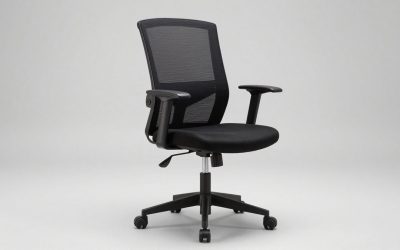
These are the easiest match for Aloudy ergonomic memory foam office chair armrest pads. A broad, flat top gives the foam continuous support, and straps or hook-and-loop fasteners can usually wrap around the sides. Measure rounded corners carefully because a strongly curved front can leave a gap beneath the cushion.
Rounded or waterfall-front arms
These can work when the pad is flexible and long enough to follow the curve. A cover with a zipper or stretch fabric generally conforms better than a rigid shell. Avoid excessive overhang at the front, where the foam can fold and wear when you stand up or pull the chair toward the desk.
Sloped, narrow, or heavily contoured arms
Fit is less predictable. A pad may slide toward the lowest side unless the attachment system is adjustable. Check whether the base of the pad can sit flat; a cushion that contacts only along a narrow ridge will feel unstable and will compress unevenly.
Fixed, T-shaped, and loop-style supports
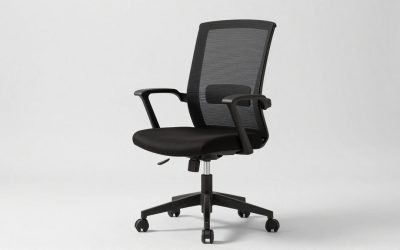
Fixed T-shaped arms can accept pads if there is enough exposed surface for the attachment to grip. Loop-style supports may require a longer strap because the fastening material must pass underneath the arm. Arms with a large control lever, exposed metal frame, or open gap underneath may not provide a secure route for straps.
Attachment types and their trade-offs
- Hook-and-loop straps: Adjustable and renter-friendly because they do not alter the chair. They are suitable for different arm widths, but the loose end can catch on clothing and the fastening may collect lint.
- Elastic bands: Quick to install and visually discreet. They work best when the armrest has a consistent shape; stretched elastic can loosen over time.
- Zippered covers: Usually provide a neat fit and help keep the foam enclosed. They are less forgiving if the armrest is unusually wide or thick.
- Non-slip backing: Helps reduce movement but may not hold the pad in place by itself. It works best combined with a strap or fitted cover.
- Adhesive attachment: More permanent and difficult to reposition. It can leave residue or damage a coated armrest, so it is a poor choice for renters or borrowed office furniture.
Install both pads at the same position from the front edge. Uneven placement can make one elbow sit higher and may encourage twisting at the desk. After fitting, push each pad sideways with moderate hand pressure. Movement of more than about 0.25 inch suggests that the attachment needs adjustment or the chair shape is unsuitable.
Cleaning and everyday maintenance
Clean removable covers according to their care label. In general, vacuum or brush away dust first, spot-clean with mild detergent and cool water, and allow the cover to dry completely before reinstalling it. Do not saturate memory foam: trapped moisture can create odors, slow drying, and weaken the foam’s feel.
Avoid chlorine bleach, solvents, heated dryers, and direct high heat unless the manufacturer specifically permits them. If the cover is not removable, use a barely damp cloth and avoid pressing liquid into the seams. A washable desk mat, clean sleeves, and occasional rotation of the pads can reduce skin oil and friction buildup.
Inspect the fastening points monthly. The cover and strap stitching usually wear before the foam itself, particularly where the pad rubs against a sharp plastic edge. Replace a pad if it remains permanently compressed, exposes the hard armrest, or shifts despite correctly tightened attachments.
Choose by situation
| Your situation | Most suitable choice | What to prioritize |
|---|---|---|
| Small apartment or tight desk | Thin to medium pad | Desk clearance, minimal overhang, secure low-profile fastening |
| Children or pets around the chair | Fitted cover with reinforced attachment | Washability, snag resistance, and no dangling straps |
| Rental or shared office | Removable strap-on design | No adhesive, easy repositioning, and compatibility with several arm widths |
| Hard, narrow armrests | Medium-thickness, supportive foam | Enough width to spread elbow pressure without unstable overhang |
| Neck or shoulder tension | Thinner pad or no pad until height is corrected | Elbow height, desk clearance, and relaxed shoulders |
Bottom line
Choose Aloudy ergonomic memory foam office chair armrest pads when your chair’s hard or narrow arms cause localized elbow pressure and the added height will not disrupt your posture. Measure the armrests, desk clearance, and attachment route first. A medium-thickness pad with stable fastening, a cleanable cover, and enough density to resist bottoming out is generally more useful than the thickest or softest option.
Before purchasing in 2026, confirm the current pad dimensions, cover-care instructions, included attachment hardware, and any stated weight or fit limits on the product packaging or specification sheet. Those details determine whether the cushion will remain comfortable after daily use on your particular chair.