Key takeaways
- Sit fully back in the chair, not perched forward, before judging the lumbar pad position.
- Your lower back (belt line) should feel gentle, even pressure, not a hard ridge poking one vertebra.
- With your back against the rest, there should be 2-4 fingers of space between the seat edge and the back of your knees.
- Armrests should let your shoulders stay relaxed, not shrugged; if they’re not height-adjustable, that’s a bigger issue for shoulder and neck fatigue than for lower-back support.
- Test recline tension if the chair has it. A chair that’s too stiff to recline will get treated like a fixed-position chair even if it was sold as dynamic.
What's inside
- The three lumbar system types, and who each one fits
- Seat pan depth: the spec that decides whether you slouch
- Matching chairs to your situation
- Material trade-offs that affect long-term back support
- What to check when you sit down (in showroom or on delivery)
- Weight limits and box weight, briefly
- Bottom line
The best desk chair for your back is the one whose lumbar system matches your spine’s natural curve and your torso height, not the one with the most padding or the highest price tag. Lumbar support fails for one of three reasons: the pad sits at the wrong height for your body, the seat pan is too deep and forces you to slouch to reach the backrest, or the support is static when your spine actually needs to move throughout the day. Sort chairs by lumbar system type first, then check the fit numbers below, and you’ll skip most of the trial and error.
- The three lumbar system types, and who each one fits
- Seat pan depth: the spec that decides whether you slouch
- Matching chairs to your situation
- Material trade-offs that affect long-term back support
- What to check when you sit down (in showroom or on delivery)
- Weight limits and box weight, briefly
- Bottom line
The three lumbar system types, and who each one fits
Every ergonomic chair uses one of three approaches to support your lower back. They’re not interchangeable, and the “best” one depends on your back shape and how long you sit still.

Herman Miller Classic Aeron Chair - Size B, Posture Fit
Included for 'Best Desk Chairs for Your Back: Lumbar Support That Works' because the listing specifies Size B and Posture Fit, details this guide uses to compare options.
View on Amazon
Herman Miller Classic Aeron Task Chair: Highly Adj w/Lumbar Pad - Tilit Limiter w/Seat Angle Adj - Fully Adj Vinyl Arms - Carpet Casters
Included for 'Best Desk Chairs for Your Back: Lumbar Support That Works' because the listing specifies Tilit Limiter w/Seat Angle Adj and Fully Adj Vinyl Arms, details this guide uses to compare options.
View on Amazon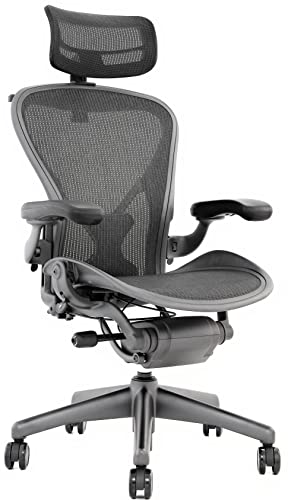
Aeron Chair by Herman Miller - Highly Adjustable Graphite Frame - with PostureFit - Carbon Classic (Medium)
Included for 'Best Desk Chairs for Your Back: Lumbar Support That Works' because the listing specifies Highly Adjustable Graphite Frame and with PostureFit, details this guide uses to compare options.
View on Amazon
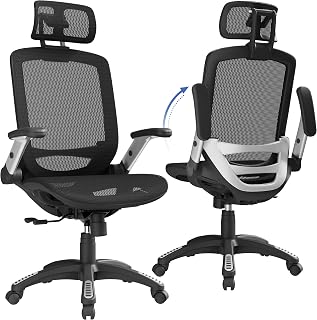
GABRYLLY Ergonomic Office Chair, High Back Home Desk Chair with Headrest, Flip-Up Arms, 90-120° Tilt Lock and Wide Cushion, Big and Tall Mesh Chairs for Man Woman, Black Task Chair
Included for 'Best Desk Chairs for Your Back: Lumbar Support That Works' because the listing specifies High Back Home Desk Chair with Headrest and Flip-Up Arms, details this guide uses to compare options.
View on AmazonFixed lumbar pad (built into the backrest shape)
This is a molded curve baked into the foam or mesh, with no adjustment. It works well if you have an average-to-flat lumbar curve and a torso in the 16-19 inch range (armpit to seat), because manufacturers design the fixed curve around that median. If your torso is shorter or longer, the pad hits your mid-back or misses your lower back entirely, and no amount of sitting up straight fixes that. Fixed pads are common in chairs in the $150-$350 range and in chairs marketed for general home offices rather than clinical back pain.
Good fit: average build, occasional back stiffness, budget-conscious buyers who don’t want to fuss with adjustment knobs.
Adjustable depth and height lumbar support
This is a separate pad or panel on a slider or ratchet, usually adjustable 2-4 inches vertically and sometimes 1-2 inches in depth (how far it pushes into your back). This is the category most orthopedic and physical therapy recommendations point to for lower back and hip pain, because you can position the pad exactly at your belt line, which is where most people need pressure. If you’re under 5’4″ or over 6’2″, this adjustability matters more than any other spec, since fixed pads are built for the middle of the height range.
Good fit: chronic lower back or hip pain, torso heights outside 16-19 inches, anyone who has tried a fixed-pad chair and found the support “in the wrong place.”
Dynamic mesh with flexible lumbar zones
Instead of a pad, the backrest itself is a tensioned mesh (or a hybrid mesh-and-frame system) that flexes with your spine as you shift position. Herman Miller’s Aeron and Steelcase’s Gesture use variants of this approach, as do several mid-range mesh chairs from Autonomous and Branch. There’s no single pressure point, so it suits people who fidget, recline frequently, or switch between upright focus work and slouched decompression, which also makes it a common recommendation for ADHD-friendly chair setups where constant micro-movement is normal rather than a problem to correct. It’s a weaker match for someone who needs firm, targeted pressure on one specific vertebra.
Good fit: restless sitters, people who alternate tasks and postures often, anyone whose “back pain” is really shoulder and mid-back fatigue from staying too still.
Seat pan depth: the spec that decides whether you slouch
Lumbar support only works if your lower back actually reaches the backrest. That depends on seat pan depth relative to your thigh length, not on the lumbar system at all. If the seat is too deep, you either sit with your back away from the support (slouching) or your knees press into the front edge (numbness).
| Your height | Thigh length (approx.) | Seat pan depth you need |
|---|---|---|
| Under 5’3″ | 17-19 in | 15-16.5 in, or a seat with forward slide adjustment |
| 5’4″-5’8″ | 19-21 in | 16.5-18 in |
| 5’9″-6’1″ | 21-23 in | 18-19.5 in |
| Over 6’2″ | 23+ in | 19.5-21 in, look for “tall” or “big and tall” rated frames |
A seat pan with 2-3 inches of forward/back slide adjustment solves most mismatches without buying a size-specific chair. If a chair has no seat depth adjustment and you’re outside the 5’4″-6’1″ range, treat the lumbar system as secondary, since you likely won’t reach it correctly anyway.
Matching chairs to your situation
| Your situation | Best lumbar system | What to check before buying |
|---|---|---|
| Chronic lower back or hip pain | Adjustable depth and height pad | Pad range should cover your beltline; get one with a separate depth adjustment, not just height |
| Short torso (under 5’4″ overall height) | Adjustable height pad, or a “petite” frame | Seat pan depth 15-16.5 in or slide adjustment; low-range lumbar adjustment (some pads only go down to 17 in from seat) |
| Tall frame (6’2″+) | Adjustable, tall-rated frame | Backrest height 22 in+, seat pan 19.5-21 in, weight rating 275+ lbs |
| Restless sitter, frequent posture shifts, ADHD-friendly need | Dynamic mesh | Recline tension adjustment, armrests that don’t block movement, avoid rigid fixed pads that fight against shifting |
| General desk work, average build, budget under $300 | Fixed lumbar pad | Check the pad sits at true belt height when seated, not just “looks ergonomic” |
| Shared or hot-desked chair (multiple users) | Adjustable depth and height | Simple external knob, not an internal tool-adjusted pad, since it needs to change per person |
Material trade-offs that affect long-term back support
The lumbar mechanism matters most, but what’s around it affects how long that support stays effective.
| Backrest material | Pros | Trade-offs |
|---|---|---|
| Molded foam (fixed shape) | Consistent shape, holds curve well for 3-5 years | Foam compresses and flattens over time, usually noticeable by year 4-6; not adjustable if it stops fitting |
| Tensioned mesh | Doesn’t compress or flatten, breathes better, good for warm climates | Mesh can stretch or sag at pressure points after 5+ years; replacement mesh panels aren’t always sold separately |
| Fabric-wrapped foam pad (adjustable) | Precise, movable support; easy to feel if it’s positioned right | Adjustment mechanisms (ratchets, sliders) are the first thing to loosen or squeak with heavy use |
| Leather or PU-leather backrest | Durable surface, easy to wipe down | Traps heat against the back, which some lower-back-pain users find worsens stiffness over long sitting sessions |
What to check when you sit down (in showroom or on delivery)
- Sit fully back in the chair, not perched forward, before judging the lumbar pad position.
- Your lower back (belt line) should feel gentle, even pressure, not a hard ridge poking one vertebra.
- With your back against the rest, there should be 2-4 fingers of space between the seat edge and the back of your knees.
- Armrests should let your shoulders stay relaxed, not shrugged; if they’re not height-adjustable, that’s a bigger issue for shoulder and neck fatigue than for lower-back support.
- Test recline tension if the chair has it. A chair that’s too stiff to recline will get treated like a fixed-position chair even if it was sold as dynamic.
Weight limits and box weight, briefly
Most ergonomic desk chairs list a 250-300 lb weight capacity; big-and-tall models go up to 350-400 lbs and usually have a reinforced base and thicker gas cylinder. Shipping weight for a mesh task chair typically runs 35-45 lbs in the box; heavier leather or molded-foam executive chairs can ship at 55-70 lbs, which matters if you’re carrying it up stairs or through a narrow apartment doorway (standard interior doors are 30-32 inches, and most chair boxes are under 28 inches wide, so doorway width is rarely the blocker, but box weight for a solo carry often is).
Bottom line
For a good desk chair for back support, start with your torso height and back shape, not the price or the brand. Average build and occasional stiffness: a fixed lumbar pad chair is fine. Documented lower back or hip pain, or a body outside the 5’4″-6’1″ range: pay for adjustable depth and height support and confirm the seat pan depth matches your thighs. Restless, fidgety, or ADHD-friendly sitting style: dynamic mesh will outperform any fixed pad, because it supports movement instead of resisting it. Whichever system you pick, the seat pan depth table matters just as much as the lumbar mechanism, since a chair can have perfect lumbar engineering and still fail if your back never reaches it.