Our Top Picks
 VIVO Manual Height Adjustable Standing Desk Converter32"31.5 x 31.5 x 31.3 inches26 poundsCheck on Amazon


Search “best L shaped standing desk” on Reddit and you’ll find the same threads getting bumped every few months: r/battlestations, r/standingdesk, r/WFH, all with people asking the same question and getting a surprisingly consistent set of answers. Having read through dozens of these threads and tested a few corner desks myself, here’s what the collective experience actually boils down to, minus the brand worship and the “I just bought this and love it” posts that haven’t survived six months of use yet.
What Reddit actually agrees on
Strip away the specific model recommendations and three points come up constantly. First, dual motors matter more on an L shaped desk than a rectangular one. The corner connection adds stress and weight distribution issues that a single-motor desk struggles with, leading to tilting or racking where one side rises faster than the other. Second, the corner connector itself is the most commonly cited failure point. Cheap desks use a bolted bracket that loosens over time; better ones use a solid welded or interlocking corner that doesn’t flex under monitor arm weight. Third, almost nobody on Reddit regrets going slightly bigger than they planned. The common refrain is “I wish I’d gotten the version with more depth on the short side” because people underestimate how much corner space disappears once a keyboard tray and monitor arms are in play.
What people don’t agree on is brand. You’ll see Fully, Uplift, Flexispot, and various Amazon-only brands all defended in different threads, and the honest read is that the differences between a $450 and a $900 L shaped desk are real but not dramatic for most home office use. The $900 desk usually gets you a stiffer frame, quieter motors, and a better warranty. It does not usually get you a desk that lasts three times longer.
Weight capacity is the detail threads skip
L shaped desks get loaded up more than straight desks almost by default, dual monitors, a tower PC, a printer, sometimes a second monitor arm clamped to the corner itself. A lot of posts don’t mention weight capacity until something sags. If you’re running two 27-inch monitors on arms plus a laptop dock, you’re already at 40-50 lbs before anything else goes on the surface. Look for a stated capacity of at least 200 lbs for the whole desk, and don’t assume the corner section shares that rating evenly, some desks are weaker right at the joint. If you’re shopping for a frame separately from the top, this is worth checking in the listing before you buy a standing desk frame rather than assuming all frames are interchangeable.
What you get at each price tier
| Price range | Typical build | Common complaint | Good fit for |
|---|---|---|---|
| $300-450 | Single or basic dual motor, bolted corner bracket, laminate top | Wobble at full height, corner bracket loosens within a year | Light use, smaller monitors, budget-conscious first desk |
| $450-700 | Dual motor, steel frame, reinforced corner, programmable height presets | Motor noise on some models, assembly takes 2+ hours | Most home offices, dual monitor setups |
| $700-1000+ | Stronger dual motor, anti-collision sensors, better warranty (5-10 yr) | Price, overkill for light use | Heavy equipment, daily all-day use, long-term buyers |
Assembly: the part nobody mentions until it’s over
Nearly every thread that recommends a specific desk includes a buried comment about assembly taking longer than expected. Budget two to three hours for a first-time L shaped build, done solo. The corner piece is almost always the hardest part to align because you’re working with two surfaces meeting at 90 degrees and trying to keep both level while bolting the frame underneath. Having a second person hold the corner steady while you drive screws saves real frustration. If you’re assembling alone, prop the corner on a box or stack of books at the right height before attaching the frame, it’s a small trick that comes up often and actually works.
The legs matter as much as the top
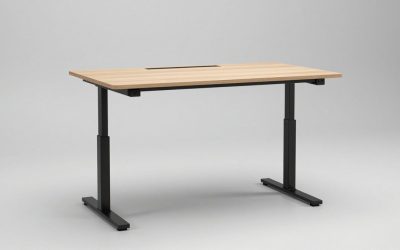
People fixate on desktop material (bamboo vs laminate vs MDF) but the legs and motor are what determine whether the desk feels solid at standing height. A desk that’s rock steady at 29 inches can wobble noticeably at 45 inches if the frame isn’t rigid enough, this is especially true for L shaped desks because the corner acts as a lever arm. If you’re typing on the long side while standing, any wobble gets amplified right where your hands are. When shopping, check for crossbar reinforcement or anti-wobble stabilizer bars, which are more common on mid-range and up frames. For anyone upgrading an existing desk rather than buying a full L shaped unit, a dedicated standing desk converter can test whether you actually want to stand before committing to a full L shaped frame replacement.
When the cheap one is actually fine
If you’re not running heavy monitor arms, don’t need daily height changes, and mostly want the L shape for desk space rather than ergonomics, a $350-400 desk is a legitimate choice and not a compromise you’ll regret. The failure modes at that price (bracket loosening, minor wobble) are annoying but fixable with a $5 bag of lock washers or by re-tightening twice a year. Where it stops being fine is if you’re changing height multiple times a day or mounting dual monitor arms directly to the surface, that’s where the extra few hundred dollars for a stiffer frame earns its keep. For general desk accessories that make either tier work better, a decent cable management kit solves a problem that every L shaped desk owner eventually runs into once the corner becomes a tangle of cords.