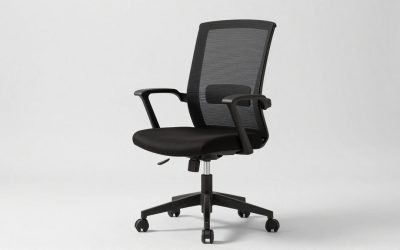
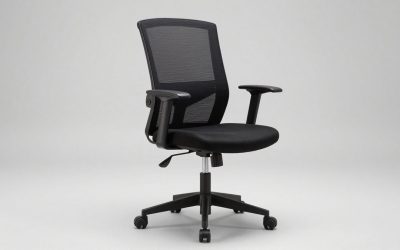
Our Top Picks
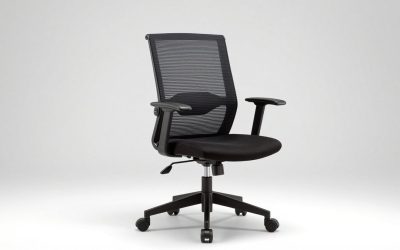
 Steelcase Series 1 Ergonomic Office ChairCarpet Casters (Pack of 1)23.75 x 27 x 41.25 inches29 PoundsCheck on Amazon
An office chair with back support and adjustable arms works best when the lumbar support adjusts in height to meet the curve of your lower back and the armrests move at least up and down (ideally also in, out and forward) so your forearms rest at desk level with relaxed shoulders. Those two adjustments work as a pair: good back support pulls you back into the chair, and well-placed armrests keep you from leaning forward out of it. This guide explains the adjustment types, how to set them, and what shorter users should look for.
Armrest Adjustments Explained: 1D to 4D
Chair listings describe armrests by the number of directions they move. More directions mean a better chance of fitting your body and desk, but also more moving parts that can loosen.
Steelcase Series 1 Ergonomic Office Chair, Carpet Floors, Licorice
Chosen because it specifies Carpet Floors and Licorice.
View on Amazon
Steelcase Gesture Office Chair, Carpet Floors, Graphite Gray
Chosen because it specifies Carpet Floors and Graphite Gray.
View on Amazon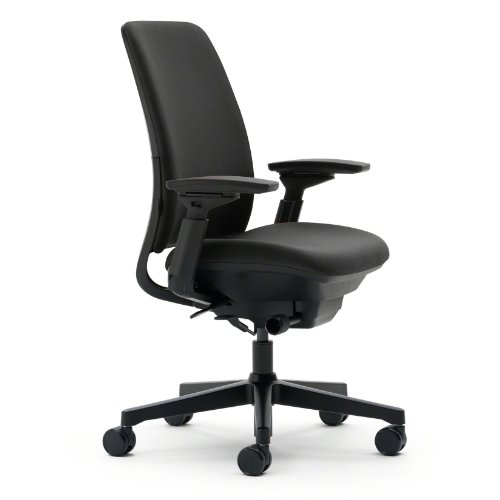
Steelcase Amia Office Chair, Most Comfortable Sit, Buzz2 Black Fabric
Chosen because it specifies Most Comfortable Sit and Buzz2 Black Fabric.
View on Amazon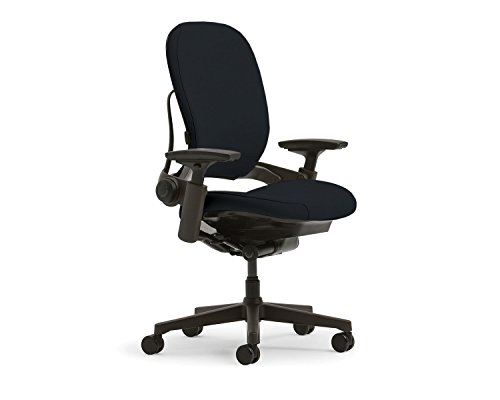
Steelcase Leap Office Chair, Ergonomic Back Support, Onyx
Chosen because it specifies Ergonomic Back Support and Onyx.
View on Amazon| Armrest type | Movements | Typical chair price | Who it suits |
|---|---|---|---|
| Fixed | None | $60–$150 | Short sessions only; often blocks the chair from sliding under the desk |
| 1D | Height (usually 2–4 in of travel) | $100–$250 | Average-size users at a standard 29–30 in desk |
| 2D | Height + width or pivot | $150–$350 | Narrow-shouldered users who need arms pulled inward |
| 3D | Height + width + forward/back | $200–$500 | Users who sit close to the desk or use a keyboard tray |
| 4D | Height + width + depth + pivot | $300–$1,500 | Long workdays, gaming, mixed typing and mouse use |
Height travel matters more than the number of dimensions. Look for at least 3 inches of height adjustment, and check that the lowest position lets the chair slide under your desk when not in use.
Back Support Types and Their Trade-offs
| Back support style | How it adjusts | Pros | Cons |
|---|---|---|---|
| Fixed built-in curve | None | Simple, nothing to break | Only fits people whose lumbar curve matches it |
| Height-adjustable lumbar pad | Slides up/down 2–4 in | Fits a wider range of torso lengths | Depth is fixed; may feel weak for some |
| Height + depth adjustable lumbar | Slides and pushes in/out | Most precise fit | More expensive; needs time to set up |
| Dynamic or flexible backrest | Back flexes with movement | Supports while you shift positions | Feel varies; some prefer firmer fixed support |
| Add-on memory foam cushion | Strap position | Cheap fix for an existing chair ($25–$60) | Pushes you forward and shortens usable seat depth |
How to Set Back Support and Arms Together
- Seat height first: feet flat, thighs roughly parallel to the floor, knees at about 90 degrees.
- Seat depth: leave 2–3 finger widths (about 2–4 inches) between the seat front and the back of your knees.
- Lumbar height: slide the support until it meets the inward curve of your lower back, usually just above belt line, roughly 6–10 inches above the seat.
- Recline: unlock and set a slight recline, around 100–110 degrees, with tension that holds you without pushing.
- Armrest height: with shoulders relaxed and elbows at about 90 degrees, raise the arms until they just touch your forearms. They should be level with or slightly below the desk surface.
- Width and pivot: bring the arms in so elbows stay near your sides; angle the pads slightly inward for typing.
- Depth: slide pads back if they hit the desk edge before you are close enough to type.
If the armrests cannot go low enough to clear the desk, set them to their lowest point or remove them rather than sitting farther away; reaching forward undoes the benefit of the backrest.
Fit for Shorter Users
Shorter users (about 5’3″ and under) often struggle with chairs that have a deep seat and lumbar support placed for an average-height adult. Signs a chair is too big include dangling feet, a seat edge pressing behind the knees, and lumbar support hitting the mid-back instead of the lower back.
| Spec | Average range | Better for users under 5’3″ |
|---|---|---|
| Minimum seat height | 17–18 in | 15–16 in, or use a footrest |
| Seat depth | 18–20 in | 15.5–17 in, or a seat depth slider |
| Lumbar center above seat | 8–10 in | 6–8 in, height-adjustable |
| Lowest armrest height above seat | 7–8 in | 6–7 in |
A memory foam back cushion can help a short user whose chair seat is too deep, because it moves the backrest forward. Choose a thin, firm cushion (about 2–3 inches thick) rather than a bulky contoured one, and make sure the strap holds it at the lower back, not the mid-back.
Chairs Known for This Combination
These widely sold chairs pair adjustable back support with adjustable arms. Prices are general ranges and depend on configuration.
- Steelcase Leap: flexible backrest with lumbar firmness and height adjustment, 4D armrests and a seat depth slider. Usually $900–$1,400 new.
- Herman Miller Aeron: mesh back with adjustable PostureFit support, armrests adjustable in height, pivot and depth on fully adjustable versions, and three frame sizes (A, B, C), which helps shorter and taller users. Usually $1,200–$1,900 new.
- Steelcase Series 1: a more affordable Steelcase model with adjustable lumbar and multi-direction arms on most configurations. Usually $400–$600.
- HON Ignition 2.0: mid-priced task chair with optional adjustable lumbar and adjustable arms. Usually $300–$600 depending on options.
Refurbished units of premium chairs often cost 40–60% less than new and can be a good way to get 4D arms and adjustable lumbar on a moderate budget, provided the seller includes a warranty.
Durability: What Fails First
- Armrest pads and locks: soft pads crack and height locks loosen after a few years. Chairs with replaceable arm pads are easier to keep.
- Lumbar sliders: plastic tracks on budget chairs can slip downward over time.
- Gas cylinder: a sinking seat is common on cheaper chairs; a replacement cylinder costs about $25–$50 and is usually easy to swap.
- Foam: low-density seat foam flattens within 1–2 years; mesh backs keep their shape longer.
Look for a warranty of at least 5 years on mechanisms and arms. Premium brands often cover the chair for 10–12 years.
Quick Picks by Situation
- Long workdays with typing and mouse use: 4D arms plus height- and depth-adjustable lumbar.
- Shorter users: sized chairs or seat depth sliders, low minimum seat height, lumbar that moves down.
- Tight budget with an existing chair: a thin, firm memory foam lumbar cushion and a footrest.
- Shared chair between several people: wide adjustment ranges on every setting matter more than premium materials.