Our Top Picks
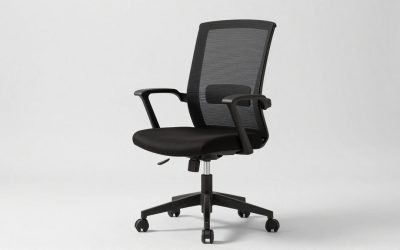
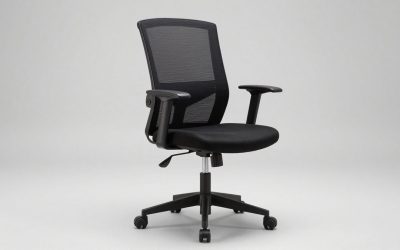
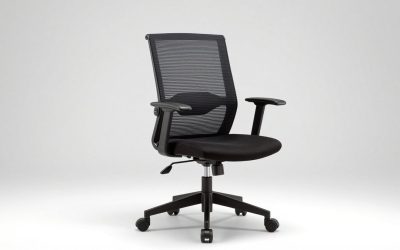
 Luckyear Office Chair Ergonomic Desk Chair-400lbs Big and3'6" x 1'8" x 2'2.62"20.7 x 24.62 x 44.3 Inches35.9 poundsCheck on Amazon


If you’re over 6’2″, most desk chairs are built wrong for you before you even sit down. Standard chair seats top out around 18-19 inches of height adjustment and 17-18 inches of seat depth. That’s fine for someone 5’9″. At 6’3″ and up, you need more seat height range, more depth so the seat doesn’t cut into the back of your knees, and a backrest tall enough to actually support your shoulder blades instead of stopping at your mid-back.
I’ve spent time in a lot of chairs that claimed to be “universal fit” and weren’t. Here’s what actually matters and what you can skip paying for.
What actually matters for height
Three numbers decide whether a chair works for a tall frame: seat height range, seat depth, and backrest height. Everything else — mesh vs. foam, lumbar knobs, armrest material — is secondary.
- Seat height range: most chairs max out at 20-21 inches. If you’re 6’3″ or taller with proportionally long legs, you want a chair that goes to 22 inches or higher. Check the spec sheet, not the marketing copy — “fits up to 6’6″” on a listing often just means the backrest is tall, not that the seat height adjusts enough.
- Seat depth: you want 18-20 inches of usable depth, ideally with a slide adjustment. Without it, the seat edge either cuts into your knees or leaves your lower back unsupported because you have to sit forward to avoid that.
- Backrest height: look for 26 inches or more measured from the seat. Anything shorter and the lumbar support hits you at your lower ribs instead of your lower back, which defeats the point.
Armrest height adjustment range matters too but it’s rarely the dealbreaker — most adjustable armrests go high enough. The real failure mode for tall users is a chair that looks adjustable on paper but has a gas cylinder that’s physically too short, so you max out the “high” setting and your knees are still above your hips.
The gas cylinder problem
This is the thing most buying guides skip. Office chairs use standardized gas cylinder classes (Class 3 and Class 4 are common), and most consumer chairs ship with a cylinder that gives roughly 4 inches of travel, usually landing the seat between 17 and 21 inches. If a chair’s listed max height is 21 inches but you need 22-23, no amount of fiddling with the lever fixes that — it’s a hardware limit, not a user error.
Some manufacturers sell a “tall” or “big and tall” version of a popular chair that’s identical except for a taller cylinder and reinforced base. If that option exists, take it over trying to make the standard version work. A browse through big and tall office chairs will surface these variants faster than digging through a single brand’s lineup.
Weight rating isn’t just about weight
“Big and tall” chairs get marketed around weight capacity (300 lbs, 400 lbs) but the frame reinforcement that comes with a higher weight rating usually also means a wider, deeper seat pan and a sturdier base — which tall users benefit from even at a lighter bodyweight. If you’re 6’5″ and 190 lbs, you probably still want a reinforced frame chair, not because you’ll break a standard one, but because the seat pan dimensions that come with it fit your frame better.
How the common options stack up
| Chair type | Typical max seat height | Seat depth adjustable? | Good fit for | Price range |
|---|---|---|---|---|
| Standard ergonomic mesh chair | 20-21 in | Sometimes | Up to about 6’1″ | $150-$400 |
| “Big and tall” rated chair | 21-23 in | Usually yes | 6’2″ to 6’6″ | $250-$600 |
| Drafting-style tall office chair | 24-29 in | Rarely | Standing desks, counter-height setups | $150-$350 |
| High-end task chair with tall option | 22-24 in | Yes | 6’2″ to 6’8″, daily all-day use | $700-$1,400 |
The drafting-style chair is worth calling out separately because it solves a different problem. If your desk is a standing desk you keep at a mid-height sitting position, or a counter-height setup, a drafting chair’s extended cylinder range gets you there in a way a normal office chair never will. It’s not a substitute for an ergonomic chair for all-day use, but for a specific desk height mismatch, it’s the right tool.
When you don’t need to spend $600
If you’re 6’2″ to 6’3″ with average proportions, a mid-range chair with a stated max height of 21-22 inches and a seat slide will usually work, and you don’t need to jump to the $700+ tier. The expensive chairs earn their price with better foam density, finer lumbar adjustment, and build quality that holds up over 8-hour days for years, not because they fit tall people better than a well-specced $300 chair does. Searching tall ergonomic office chairs turns up several in that $250-400 band with the right numbers.
Where spending more actually pays off is past 6’5″ or above 250 lbs, where the margin for a cylinder or frame being just barely inadequate disappears. At that point you want a chair explicitly rated for your size, not one that technically fits on paper. A quick look at heavy-duty big and tall chairs will show you the reinforced frame options built for that range.
Before you buy
Pull up the spec sheet, not just the product photos, and check three things: max seat height in inches, seat depth range if listed, and backrest height. If a listing doesn’t give you seat height in inches at all, that’s a red flag — it means the company is relying on vague size claims instead of a measurement you can actually compare against your current chair. Measure your own setup first: sit in your current chair, note where your knees sit relative to your hips, and use that as your baseline for how many inches you actually need to gain.