Our Top Picks
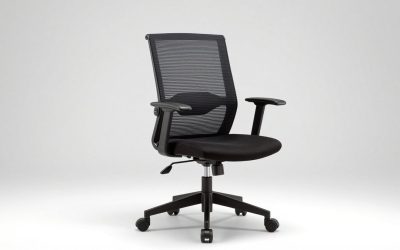
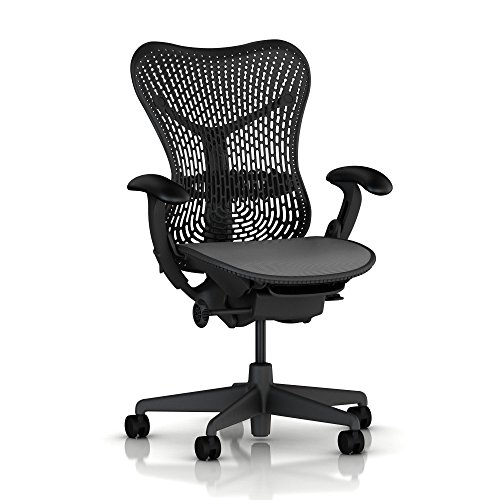 Mirra Chair by Herman Miller: Fully Featured w/Forward21 x 22 x 24 inches54.45 poundsCheck on Amazon
 Herman Miller Classic Aeron Task Chair: Highly AdjSize B (Medium)17 x 27 x 42 inches48 poundsCheck on Amazon
 Herman Miller Embody Ergonomic Office Chair28D x 27W x 38.25H in28 x 27 x 38.25 inches51 poundsCheck on Amazon
Herman Miller does not use one lumbar system across its chairs: the Aeron offers PostureFit SL or a sliding lumbar pad, the Embody relies on its Backfit curvature dial, the Mirra 2 and Sayl offer an optional height-adjustable lumbar, and the Cosm has no lumbar adjustment at all. Which is “best” depends less on the model’s reputation and more on whether you need pelvic (sacral) support, a movable lumbar bump, or a back that conforms on its own.
This guide explains how each Herman Miller back support system works, which body types and sitting habits suit each, and what to check when buying new or used so you actually get the lumbar option you want.
Mirra Chair by Herman Miller: Fully Featured w/Forward Tilt - Adjustable Arms - FlexFront Seat - Tilt Limiter - Lumbar Support - Hard Floor Casters - Graphite Frame/Graphite Seat
Chosen because it specifies Adjustable Arms and FlexFront Seat.
View on Amazon
Herman Miller Classic Aeron Chair - Size B, Posture Fit
Chosen because it specifies Size B and Posture Fit.
View on AmazonHerman Miller Classic Aeron Task Chair: Highly Adj w/Lumbar Pad - Tilit Limiter w/Seat Angle Adj - Fully Adj Vinyl Arms - Carpet Casters
Chosen because it specifies Tilit Limiter w/Seat Angle Adj and Fully Adj Vinyl Arms.
View on AmazonHerman Miller Embody Ergonomic Office Chair | Fully Adjustable Arms and Carpet Casters | Black Rhythm
Chosen because it specifies Fully Adjustable Arms and Carpet Casters and Black Rhythm.
View on AmazonLumbar vs Sacral Support: Why the Distinction Matters
Most chair lumbar supports push into the curve of the lower back, roughly 6–10 inches above the seat. Sacral support sits lower, around 3–6 inches above the seat, pressing on the top of the pelvis to keep it from rolling backward. When the pelvis stays upright, the lumbar curve tends to follow. People who slump, or who feel a standard lumbar pad “in the wrong place,” often do better with pelvic support than with a bigger lumbar bump.
Herman Miller’s PostureFit concept is built on that idea, and it is the main reason the Aeron’s back support feels different from a conventional pad.
How Each Model Handles Back Support
| Model | Back support system | What you adjust | Approx. support zone above seat | Typical new price range |
|---|---|---|---|---|
| Aeron (current) | PostureFit SL (two pads) or Adjustable Lumbar pad, or none | PostureFit SL depth via rear knobs; lumbar pad slides vertically | SL: about 3–9 in; pad: about 6–11 in | $1,300–$2,200 |
| Embody | Pixelated back with Backfit adjustment | Overall spine curvature with a side dial | Whole back; no discrete pad | $1,800–$2,400 |
| Mirra 2 | TriFlex or Butterfly back with optional adjustable lumbar | Lumbar height | About 6–11 in | $1,000–$1,600 |
| Sayl | Frameless suspension back with optional adjustable lumbar | Lumbar height | About 6–10 in | $700–$1,100 |
| Cosm | Suspension back, automatic tilt | Nothing for lumbar | Passive, whole back | $1,200–$2,000 |
Support-zone figures are approximate and vary with chair size and seat cushion compression; treat them as a guide to where the support lands on your back, not exact specs.
Aeron: PostureFit SL vs the lumbar pad
The current Aeron is sold in three sizes (A, B and C) and with three back support choices: PostureFit SL, the Adjustable Lumbar Support pad, or no support. PostureFit SL uses two separate pads, one at the sacrum and one at the lower lumbar, whose pressure you set with knobs at the back of the chair. The Adjustable Lumbar pad is a single curved pad that slides up and down the back and can be flipped for slightly different depth.
- Choose PostureFit SL if you tend to slide your hips forward, have lower-back fatigue by mid-afternoon, or want support low on the pelvis.
- Choose the lumbar pad if you prefer a classic “bump” you can move to a precise height, or if PostureFit SL feels like it pushes you forward.
- No support only makes sense if you plan to add your own cushion or find any lumbar pressure uncomfortable.
Older Aerons (built before the 2016 remaster) used an earlier single-pad PostureFit or a lumbar pad. These parts are not interchangeable with the current version, which matters on the used market.
Embody: support from shape, not a pad
The Embody has no separate lumbar pad. Its back is a flexible spine with a layered pixel matrix, and the Backfit control changes how much the back curves forward. Turned up, it fills more of the lumbar curve; turned down, it is flatter. Because the support spreads across the back rather than concentrating in one spot, people who dislike a pressure point often prefer it, while people who want a firm, localized push sometimes find it too subtle. The gaming-branded Embody made with Logitech G uses the same back principle.
Mirra 2 and Sayl: simpler, height-adjustable lumbar
Both are mid-priced options in the Herman Miller line. On either chair, make sure the specific chair includes the adjustable lumbar option; base configurations may come without it. The support is a conventional height-adjustable lumbar element, closer to what most office chairs offer, just better integrated into a flexible back.
Cosm: no lumbar control by design
The Cosm is built around automatic tilt and a back that flexes to the sitter. That suits people who want to sit down and work without touching a knob, but it is the wrong pick if you know you need adjustable lumbar pressure.
Decision Matrix: Matching the Chair to Your Back
| Your situation | Best match | Why |
|---|---|---|
| Slump or slide forward, lower-back ache late in the day | Aeron with PostureFit SL | Supports the pelvis, not just the lumbar curve |
| Want a firm lumbar bump at an exact height | Aeron with lumbar pad, Mirra 2 or Sayl with adjustable lumbar | Discrete pad you can position |
| Dislike pressure points, shift positions often | Embody | Distributed support; Backfit sets overall curve |
| Want minimal adjustment | Cosm | Automatic tilt, no lumbar controls |
| Budget-conscious, still want adjustable lumbar | Sayl with lumbar option, or a used Aeron | Lower entry price |
| Under about 5’3″ or over about 6’3″ | Aeron in size A or C | Size changes where support lands on your back |
Setting Up Herman Miller Lumbar Support Correctly
- Set seat height first so your feet are flat and thighs roughly level. Lumbar position is relative to the seat, so it changes when height changes.
- Sit all the way back. Support only works if your hips touch the backrest.
- Find the curve. For a lumbar pad, slide it until the firmest point sits at or just above your belt line.
- Start low on PostureFit SL. Add depth gradually over several days; too much feels like being pushed off the seat.
- Re-check after recline changes. Leaning back changes how much the support presses.
Buying Used: What to Confirm
- Exact back option: a listing saying “fully loaded” may still lack PostureFit SL or the lumbar pad. Look for the knobs or the pad in photos.
- Size (Aeron): the size letter is on a label under the seat or on the back of the chair. The wrong size puts support in the wrong place.
- Generation: original vs remastered Aeron parts differ, so retrofitting support can be harder than buying the right chair.
- Mesh condition: sagging or torn mesh at the lumbar area undermines support more than any pad can fix.
- Warranty: Herman Miller’s long warranty applies to original purchasers through authorized sellers; used chairs typically do not carry it.
When an Add-On Cushion Makes More Sense
If you already own a Herman Miller chair without lumbar support, adding the factory part can be costly or unavailable for your generation. A slim lumbar cushion of 2–3 inches thickness, strapped at belt height, is a reasonable stopgap. Avoid thick memory-foam pillows on mesh chairs: they push you forward and shorten the usable seat depth by several inches.