Our Top Picks

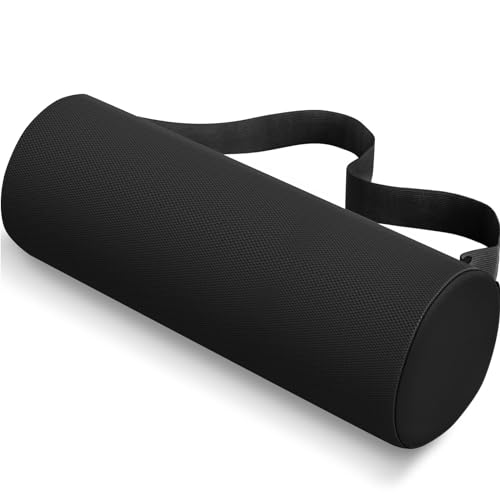
Most desk chairs come with lumbar support that’s either too flat, too high, or shaped for nobody’s actual spine. A lumbar pillow is the cheap fix, but the category is a mess of foam densities, strap systems, and curves that don’t match how your lower back actually works. Here’s what separates a pillow that disappears into your routine from one that ends up on the floor by Wednesday.
Why your chair’s built-in support probably isn’t enough
The lumbar spine curves inward (lordosis), and when you sit, that curve tends to flatten out, especially after an hour or two as you slouch. A lumbar pillow’s job is to fill the gap between your lower back and the chair, keeping that inward curve roughly where it is when you’re standing. If the chair’s built-in lumbar bump is fixed in height, it’s probably sitting at the wrong spot for your torso length. People between 5’2″ and 5’6″ are especially likely to find the built-in support hits mid-back instead of lower back, which does nothing and can even push you forward into a worse slouch.
A separate pillow fixes this because you can slide it to the exact height that matches your spine, not the chair designer’s assumption about average spine.
Shape and material: what actually matters
Three things determine whether a lumbar pillow works for you: curve depth, firmness, and attachment method.
Curve depth is how far the pillow projects forward. A shallow curve (1.5-2 inches) suits people who sit upright already and just need light reinforcement. A deeper curve (2.5-4 inches) suits people who slouch heavily or have a flatter natural lordosis and need the pillow to do more of the work. Too deep for your body and it pushes your hips forward awkwardly; too shallow and you don’t feel it at all.
Firmness is where most cheap pillows fail. Soft memory foam feels nice for the first ten minutes, then compresses flat under sustained weight and stops supporting anything by hour three. Firmer molded foam or foam with a higher density rating holds its shape through a full workday. If a product description doesn’t mention density or just says “memory foam” with no other detail, assume it’s on the softer, less durable side.
Attachment matters more than people expect. A pillow with no strap migrates down the chair back as you shift around, and you’ll find it bunched at the seat within an hour. Adjustable straps that buckle around the chair back solve this. Mesh covers help with heat buildup, which matters if you run warm, since solid foam against your back for eight hours can get sweaty.
Comparing the main types
| Type | Best for | Typical cost | Main failure mode |
|---|---|---|---|
| Strap-on foam lumbar pillow | Most desk chairs, especially mesh-back or basic task chairs | $20-$40 | Foam flattens after 1-2 years of daily use |
| Memory foam with gel layer | People who run hot or sit long stretches without breaks | $30-$50 | Gel layer adds bulk without much added support; can feel mushy |
| Firm molded lumbar roll | Heavy slouchers, people with existing lower back pain | $25-$45 | Too aggressive a curve for people with mild or no lordosis loss |
| Built-in adjustable lumbar (chair feature) | Buying a new chair rather than retrofitting | Included in chair price | Adjustment range often doesn’t go low enough for shorter torsos |
Matching the pillow to the person
If you sit upright most of the day and just want to maintain that posture, a basic strap-on foam pillow in the $20-$30 range does the job. There’s no reason to pay more for this use case; the expensive versions mostly add gel layers or cooling mesh that solve problems you don’t have. You can browse a solid range of lumbar support pillows for office chairs and the mid-tier options cover this group fine.
If you already slouch by mid-morning and feel it in your lower back by afternoon, go firmer and deeper-curved rather than softer. The instinct is to buy something plush because it feels better in the store, but plush is exactly what fails under real sitting load. Look at firm memory foam lumbar rolls instead of the softer standard pillows.
If you’re tall (over 6 feet) or have a longer torso, pay attention to pillow height, not just curve depth. A pillow sized for an average torso will sit too low and press into your sacrum instead of your lumbar spine. Look for options advertised as full-back or extended height, or consider a adjustable lumbar support cushion where the strap height is independently adjustable from the curve itself.
Setup mistakes that waste the purchase
The most common error is strapping the pillow too high, around mid-back instead of the small of the back, which is roughly belt-line height for most people when seated. Sit down first, feel where your lower back naturally wants support, then strap the pillow there before standing up to tighten it.
The second mistake is treating the pillow as a cure rather than a reminder. It encourages better posture, but it doesn’t force your spine into position. You still need to get up and move every 45-60 minutes; a pillow that’s locked in place will not prevent the stiffness that comes from sitting still too long, no matter how good its curve is.
If you’ve swapped pillows twice already and still feel pain by early afternoon, the problem usually isn’t the pillow at all, it’s seat depth or chair height. A perfect lumbar pillow can’t compensate for a seat that’s too deep, which pushes you to slouch forward just to reach the backrest.