Our Top Picks
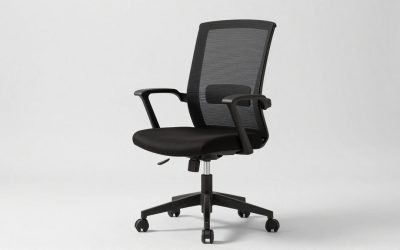
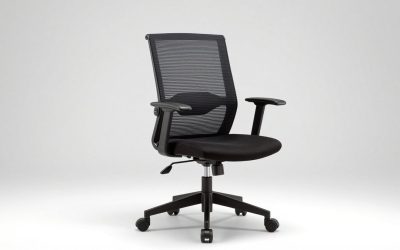
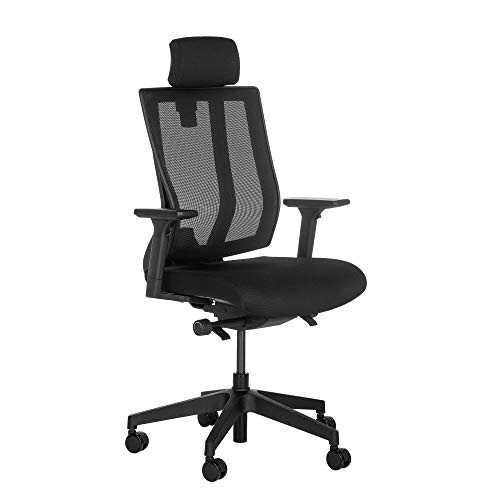 Vari Task Chair with HeadrestTask Chair w/ Headrest25.5 x 25.5 x 44.63 inches45.42 PoundsCheck on Amazon
The Vari Task Chair with Headrest is worth its mid-range price — typically in the $350–$500 band that defines serious ergonomic task chairs — if you’re roughly 5’4″ to 6’1″, work at a standard 28–30-inch desk, and want a cool mesh back rather than a plush padded one. It’s a harder sell if you’re under about 5’3″ (both the seat and the headrest sit relatively high) or if you want to sink in and lounge: this is an upright-task chair where the headrest earns its keep during reclined calls and breaks, not a deep-seat cradle.
What you’re actually buying
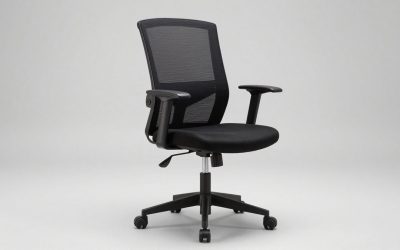
Vari — the company best known for standing desks — sells its Task Chair in two versions, with and without the headrest, for a modest price difference. Both share the same frame: a breathable mesh back with height-adjustable lumbar, a contoured foam seat with a waterfall front edge, height-adjustable armrests, and a tilt mechanism with tension control and an upright lock. The headrest version adds a mesh headrest on adjustable posts with a pivot hinge. If you never recline, the cheaper non-headrest version is the same chair.
Vari Task Chair with Headrest (VariDesk) - Adjustable Height Ergonomic Office Desk Chair with Armrests & Casters - Breathable Mesh Computer Chair with Lumbar Support - Easy Assembly - Black
Chosen because it specifies Breathable Mesh Computer Chair with Lumbar Support and Easy Assembly.
View on Amazon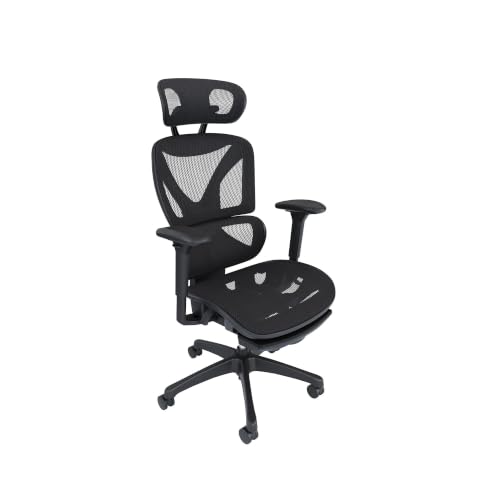
Vari ComfortFlex Office Chair (Gen 2) - Ergonomic Chair with Dynamic Lumbar Support - Adjustable Headrest and Retractable Leg Rest - Fully Customizable for Home or Office
Chosen because it specifies Ergonomic Chair with Dynamic Lumbar Support and Adjustable Headrest and Retractable Leg Rest.
View on AmazonKey measurements and what they mean at a real desk
Figures below are the manufacturer’s listed ranges; small revisions happen between production runs, so confirm against the current spec sheet before ordering.
| Spec | Approximate figure | Why it matters |
|---|---|---|
| Seat height range | ~17.5–21.5 in | Determines which desk heights and leg lengths fit — see desk math below |
| Seat width / depth | ~19.5 in wide / ~18.5 in deep | Depth matters most for thigh support; there’s no sliding seat pan like on premium chairs |
| Overall height (headrest up) | ~45–50 in | Fine for standard 8-ft ceilings; taller than it looks in photos |
| Headrest adjustment | ~3 in vertical + pivot tilt | Modest travel — torso length decides whether it lands at your neck |
| Armrest top height | ~25–29 in from floor | Needs ≥26 in of under-desk clearance to slide in; many desks with drawers/aprons have less |
| Rated capacity | ~300 lb | Standard class rating; users near the cap compress the seat foam faster |
| Chair weight / box weight | ~40 lb / ~50 lb boxed | One-person carry is awkward upstairs; plan for a second set of hands |
| Base diameter | ~26 in | Footprint to allow around the desk in a small room |
For a home office, the practical footprint is bigger than the base: leave roughly 42–48 inches of clear floor depth behind the desk so the chair can roll back and recline without hitting a wall. In a 10×12 ft room with a 60-inch desk on one wall, that still leaves a workable walkway.
Adjustability: what moves and what doesn’t
- Seat height: pneumatic, with about 4 inches of travel — enough to cover most users at standard desks.
- Tilt and recline: tension knob plus an upright lock; the back reclines to roughly 115–120°, which is where the headrest becomes useful.
- Lumbar: height-adjustable pad in the mesh, but no depth adjustment — you position where it pushes, not how hard.
- Armrests: height-adjustable with a few inches of travel; limited or no width/depth pivot on the standard arms.
- Headrest: raises/lowers on posts and tilts on a hinge — covered in detail below.
- What’s missing: a sliding seat pan and 4D arms. Those two omissions are exactly what makes this chair a weak fit at the extremes of height.
Headrest height and tilt: the spec that makes or breaks it
Headrests on mesh chairs only contact you when you’re reclined past about 100° — sitting upright at 90°, the headrest sits several inches behind your skull. So the Vari’s headrest is a recline accessory, not an all-day support.
To predict fit, sit on any chair and measure from the seat surface to the bony bump at the base of your skull (the occiput). Most adults land between 24 and 30 inches, and the Vari’s headrest covers the middle of that range — roughly the 5’4″ to 6’1″ population. Shorter torsos end up with the headrest pressing the top or back of the head and nudging it forward; longer torsos get contact at mid-neck or the shoulders instead of the skull base. The tilt hinge helps you fine-tune contact angle — tipped forward for reading reclined, tipped back for calls — but it can’t compensate for a torso that’s simply outside the vertical travel.
Mesh back vs cushioned back: the real comfort trade-off
The Vari’s seat is padded molded foam; the back and headrest are open mesh. That combination behaves very differently from an upholstered chair:
| Factor | Mesh back (Vari) | Foam + fabric back |
|---|---|---|
| Heat | Excellent airflow; noticeably cooler over 6+ hour days | Traps warmth; runs hot in summer |
| Pressure feel | Firm, elastic support; bony-shouldered users sometimes feel “pushback” at the frame edges | Softer, more even pressure distribution |
| Lumbar delivery | Lumbar pad presses through mesh — precise but harder-edged | Softer, diffused lumbar feel |
| Cleaning / pets | Pet hair weaves into mesh and needs a lint roller or vacuum; spills pass through to the floor | Fabric shows stains but releases hair more easily |
| Longevity | Mesh slowly loosens over years and can’t be restuffed; frame and lumbar outlast it | Foam compresses and fabric pills, but covers can sometimes be replaced |
| Cold rooms | Drafty — you feel airflow through your back | Warmer, more insulating |
The seat itself is a contoured foam cushion rather than mesh, which avoids the hard front frame bar that bothers some users on full-mesh chairs like the Aeron. Expect the foam to soften noticeably in the first year — all molded cushions do — and users near the 300 lb rating will feel that compression sooner and more severely.
Which bodies and desks it fits: a decision matrix
Quick desk math first: for comfortable typing, your seated elbow height should roughly equal the desk surface. Seat height ≈ desk top minus 9–10.5 inches. A 29-inch desk wants about a 19-inch seat — the middle of the Vari’s travel. Also check thigh clearance: the underside of your desk (including any drawer or apron) should clear seat height plus roughly 6–7 inches.
| Your situation | Fit verdict | Workaround or better pick |
|---|---|---|
| 5’0″–5’3″, standard desk | Marginal — seat minimum ~17.5″ may leave feet dangling; headrest likely sits high | Add a footrest, or choose a chair with a seat-depth slider (HON Ignition 2.0, Steelcase Series 1) |
| 5’4″–6’1″, standard 28–30″ desk | Sweet spot — seat, headrest, and lumbar all land in range | None needed |
| 6’2″ and up | Weak — headrest contacts neck/shoulders; fixed ~18.5″ seat is short for long femurs | Look at tall-rated chairs with deeper seats and taller headrests (e.g., Aeron size C) |
| 250–300 lb | Functional but near the rating cap; seat foam compresses faster | For daily heavy use, a big-and-tall chair rated 350–400+ lb lasts longer |
| Low desk, 26–27″ | Problem — you’d need a ~16–17.5″ seat for proper elbows, at or below the chair’s minimum | Use a keyboard tray or raise the desk; otherwise the chair forces a shrugged-shoulder posture |
| Sit-stand desk, shared | Good — full travel covers seated and perch positions | Set seat height for sitting, not perching; it’s not a drafting stool |
| Short inseam (under ~28″) | Check thigh rule — you need ~16″ of buttock-to-knee length for the fixed seat | If the seat edge presses your calves, pick a chair with a shorter or sliding seat |
The thigh rule is worth doing before ordering: sit and check that two to three fingers fit between the seat edge and the back of your knee. A fixed ~18.5-inch seat needs a buttock-to-popliteal length of roughly 16 inches or more.
Assembly, moving, and what wears first
- Assembly: roughly 15–25 minutes — attach arms, back, headrest, gas lift, and casters with the included hex key. It’s genuinely solo-friendly; the awkward part is wrestling the ~50 lb box, not the build.
- Doorways and stairs: assembled, the ~26-inch base clears standard 30-inch doorways and rolls through assembled if you carry it in tilted.
- Wear order, typical for this class: (1) armrest pads dent and shine first, (2) seat cushion front edge compresses, (3) casters clog with hair, (4) mesh tension relaxes over years, (5) gas lift slowly sinks. Mesh is the irreversible one — you can’t restuff it like foam.
- Purchase terms: Vari sells direct with a home trial window and a multi-year warranty; confirm the current return period and coverage before ordering, since terms change.
If the Vari doesn’t fit: alternatives by situation
- Under 5’4″ or over 6’2″: prioritize a seat-depth slider — the Steelcase Series 1 or HON Ignition 2.0 are common picks in a similar or lower price band.
- Over ~250 lb or long daily hours: a chair rated 350+ lb, such as the Herman Miller Aeron in size B or C, holds up better under load.
- Tight budget: the IKEA Järvfjället offers a mesh high-back with headrest for roughly half the price, with fewer adjustments.
- No-compromise ergonomics: the Steelcase Gesture and Herman Miller Aeron sit in the $1,000+ tier with far more adjustment range.
- Already in the Vari ecosystem: if you own a Vari desk, the chair pairs predictably — its armrest range and seat travel were designed around standard Vari desk heights.
FAQ
Is the headrest removable?
It mounts with bolts and can generally be taken off, leaving the bare backrest. If you’re on the fence, the cheaper non-headrest Task Chair is the identical seat, back, and base — you’re only paying for the headrest hardware.
Will it work with a 27-inch desk?
Awkwardly. Proper elbow height at 27 inches calls for a seat around 16–17.5 inches, which is at or below the chair’s minimum. A keyboard tray or a desk riser solves it; otherwise your shoulders ride high all day.
Is the Vari Task Chair with Headrest good for back pain?
The height-adjustable lumbar and recline tension give reasonable mid-back support for general comfort, but there’s no lumbar depth control, and no chair at any price is a medical fix. If you need aggressive, adjustable lumbar pressure, look at chairs with dial-adjustable lumbar depth.
Does the seat depth adjust?
Not meaningfully — the seat is a fixed ~18.5 inches deep. That’s the single most important spec to verify against your thigh length if you’re under 5’4″ or over 6’2″.