Key takeaways
- The seat doesn’t breathe like the back. Foam under fabric retains warmth, so if all-over ventilation is the priority, a full-mesh design (like the Staples Hyken and similar chairs in this price tier) moves more air — at the cost of a firmer, less cushioned sit.
- Mesh collects dust and pet hair. The weave traps debris that upholstery hides. Plan to vacuum the backrest monthly with a brush attachment and wipe it with a damp cloth.
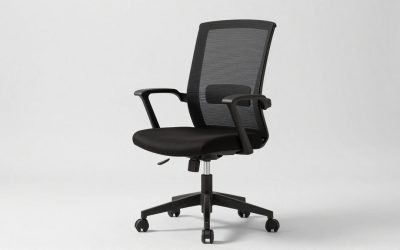
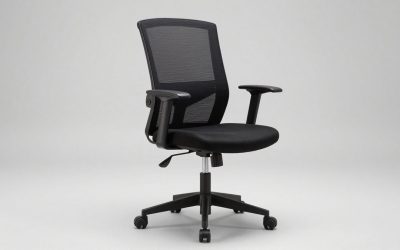
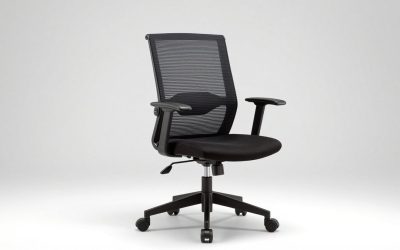
The Realspace Lenzer mesh high back task chair is worth buying if you want a breathable backrest and adjustable lumbar support for daily desk work in the roughly $150–$250 range — but it has no headrest, its weight rating tops out at 275 lb, and its foam seat will age faster than its mesh back. Here’s how each part actually performs and who it’s really built for.
Realspace Lenzer at a Glance
| Specification | Measurement / Detail |
|---|---|
| Overall dimensions | ≈ 27 in W × 27 in D × 45–49 in H |
| Seat height range | ≈ 19–23 in, pneumatic adjustment |
| Seat pan | ≈ 20 in W × 19 in D, fabric over foam |
| Backrest height | ≈ 24–25 in, mesh over frame |
| Armrest height (floor to pad) | ≈ 26–32 in, height-adjustable |
| Weight capacity | 275 lb |
| Chair weight / boxed weight | ≈ 40 lb / ≈ 50 lb |
| Casters | Twin-wheel hard plastic, carpet-friendly |
Figures are approximate — confirm against the current spec sheet before buying, since dimensions occasionally shift between production runs.

Realspace® Lenzer Mesh High-Back Task Office Chair, Black, BIFMA Compliant
Chosen because it specifies Black and BIFMA Compliant.
View on Amazon
Realspace® Lenzer Mesh High-Back Task Office Chair, Gray, BIFMA Compliant
Chosen because it specifies Gray and BIFMA Compliant.
View on AmazonMesh Breathability: A Real but Partial Win
The Lenzer is a hybrid chair: mesh on the back, upholstered foam on the seat. That distinction matters. The mesh back genuinely improves airflow — if your home office runs above roughly 75°F or gets afternoon sun, you’ll notice less heat buildup against your spine than with a padded or leather-look chair. The mesh is stretched over a rigid frame rather than loosely suspended, so it stays taut instead of hammocking under your weight.
Two trade-offs to know:
- The seat doesn’t breathe like the back. Foam under fabric retains warmth, so if all-over ventilation is the priority, a full-mesh design (like the Staples Hyken and similar chairs in this price tier) moves more air — at the cost of a firmer, less cushioned sit.
- Mesh collects dust and pet hair. The weave traps debris that upholstery hides. Plan to vacuum the backrest monthly with a brush attachment and wipe it with a damp cloth.
High-Back Support: Who the Backrest Actually Fits
At roughly 24–25 inches tall, the backrest reaches the shoulder blades or lower shoulders for most people between about 5’4″ and 6’2″. The adjustable lumbar support slides vertically, and positioning it at your belt line is what converts this from “a chair” into actual lower-back relief — most buyers who complain about lumbar discomfort simply never moved it from its factory position.
Two fit cautions:
- Shorter users (under ~5’4″): The lumbar pad may sit too high even at its lowest setting, and the 19-inch seat depth can press behind the knees. You want 2–3 fingers of clearance between the seat edge and the back of your knee. If you can’t get it, look for chairs with a seat-depth slider instead.
- Recliners and readers: The Lenzer offers a modest tilt with tension control and tilt lock — enough to shift posture, not enough to lounge. There’s no headrest, so anyone wanting neck support for reading or calls should look elsewhere.
Weight Capacity and What 275 lb Really Means
The 275-pound rating is the industry-standard test baseline, not a comfort guarantee for eight-hour daily use. As a practical rule, if you’re within about 25 pounds of the rating and sitting 40+ hours a week, you’ll accelerate wear on the gas lift and seat foam — the two components that feel it first. Users over roughly 260 lb who sit all day are better served by big-and-tall task chairs rated 350–500 lb, which typically run $300–$500.
The five-star nylon base and standard gas cylinder are typical for this class: adequate, not exceptional. The stock casters roll fine on carpet but can drag and leave scuff trails on hardwood — a set of soft rollerblade-style casters costs roughly $15–$30 and swaps in with no tools.
Assembly: 20–30 Minutes, One Person
The chair arrives in a single box weighing about 50 lb — one adult can carry it, but it’s awkward on stairs, so consider opening the box downstairs and carrying components up. Assembly follows the standard task-chair sequence:
- Press casters into the base and set the gas lift in place
- Bolt the tilt mechanism to the underside of the seat
- Attach the backrest to the seat — the fiddliest step; hand-start all bolts before tightening any of them
- Bolt on the arms last, then drop the seat assembly onto the gas lift
The included Allen key does the job, though a ratcheting hex driver cuts the time noticeably. Two useful realities: all fasteners are metric bolts into threaded inserts (no wood screws, no glue), and the arms are optional — leaving them off entirely drops the chair’s profile enough to slide under desk aprons as low as about 26 inches, which helps in compact setups.
How It Holds Up After Months of Daily Task Use
Based on the Lenzer’s construction, here’s the realistic wear order for a chair used 6–8 hours daily:
| Timeline | What to Expect | Action |
|---|---|---|
| Weeks 1–3 | Bolts settle during break-in; armrests may develop slight wobble | Retighten all bolts once at ~2 weeks |
| Months 1–3 | Seat foam softens and compresses roughly 10%; fabric may pill at the front edge | Normal — rotate sitting posture |
| Months 3–9 | Casters collect hair and carpet debris; rolling gets gritty | Pop casters out and clean quarterly |
| Year 1+ | First real failure points on chairs in this class: gas lift slowly sinking, armrest pads cracking at the edges | Check warranty paperwork; replacement gas cylinders run about $20–$40 |
Notably, the mesh back is usually the last thing to degrade, not the first — frame-stretched mesh holds tension far longer than the foam underneath you. The chair’s longevity story is really a seat-and-cylinder story, which is true of nearly every task chair under $300.
Who Should Buy the Lenzer — and Who Shouldn’t
| Your Situation | Verdict | Why / Alternative |
|---|---|---|
| Home office, 4–8 hr days, warm room | Strong fit | Mesh back + adjustable lumbar is exactly what it’s built for |
| Under ~5’4″ tall | Caution | 19-in seat depth may hit behind knees; seek seat-slider chairs |
| 260 lb+ with all-day sitting | Skip | Big-and-tall chairs rated 350–500 lb ($300–$500) |
| Wants headrest or deep recline | Skip | Full-mesh chairs with headrests fit better |
| Hardwood or laminate floors | Fit, with one upgrade | Swap stock casters for soft wheels (~$15–$30) |
| Occasional use, under 2 hr/day | Fine but overkill | Basic mid-back task chairs cost less |
FAQ
Will it fit under a standard desk?
With the arms at their lowest setting (roughly 26 inches off the floor), the chair tucks under most standard 29–30-inch desks. Measure the clearance beneath your desk’s apron — if it’s under 26 inches, simply assemble the chair without the arms.
Is the mesh back or a full-mesh chair better?
Full mesh cools more but sits harder. The Lenzer’s foam seat is the more forgiving option for long sessions; the trade-off is slightly more heat retention where you sit.
How do you clean the mesh?
Vacuum monthly with a brush attachment, then wipe with a cloth dampened in mild soapy water. Skip bleach and solvents — they degrade the mesh weave over time.
Does it recline?
It tilts with adjustable tension and locks upright, giving you posture variety rather than a true recline. Treat it as a task chair, not a lounger.
Bottom Line
The Realspace Lenzer mesh high back task chair earns its place for warm-room home offices and average-to-tall users under about 250 lb who want adjustable lumbar support without paying ergonomic-chair prices. Its limits are clear — no headrest, a 275-lb ceiling, and a seat cushion that will compress before anything else — but within those boundaries it’s a durable, breathable work chair that just needs a bolt retightening at two weeks and quarterly caster cleaning to age well.