Our Top Picks
 FLEXISPOT L Shaped Standing Desk with Drawers63''x28''27.6 x 63 x 47.2 inches106 poundsCheck on Amazon
 FLEXISPOT 55 x 48 Inch L Shaped Executive55"x48" Cherry48.5 x 55 x 30.7 inches152.22 poundsCheck on Amazon
 FLEXISPOT Reversible L-Shaped Corner Standing Desk with Monitor71x63"丨Maple63 x 70.9 x 29 inches128.92 poundsCheck on Amazon
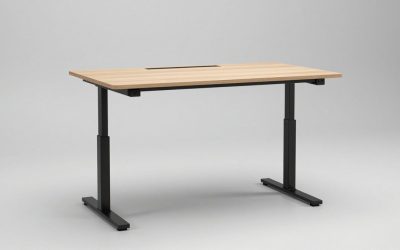
The best l shaped desk with adjustable height for an ergonomic workspace is an electric dual-motor model with a height range of 24 to 50 inches, a weight capacity of at least 220 lbs, and a three-leg frame that leaves full clearance for your chair to roll into the corner without hitting a leg or support beam.
Electric vs. Manual Lift: Which System Makes Sense
Both systems let you sit and stand, but they work very differently day-to-day. Your choice affects speed, stability, and how often you will actually adjust the desk.

FLEXISPOT 71 x 63 Reversible L-Shaped Corner Standing Desk, Black
Chosen because it specifies Black.
View on AmazonFLEXISPOT L Shaped Standing Desk with Drawers (63 x 28, White Wood Grain)
Chosen because it specifies White Wood Grain).
View on AmazonFLEXISPOT 55 x 48 Inch L Shaped Executive Standing Desk with Drawer, Cherry
Chosen because it specifies Cherry.
View on AmazonFLEXISPOT Reversible L-Shaped Corner Standing Desk with Monitor Shelf
Picked as a relevant option in this category.
View on Amazon| Feature | Electric (Dual-Motor) | Electric (Single-Motor) | Manual Crank / Pneumatic |
|---|---|---|---|
| Height Range | 24″ – 50″ | 27″ – 47″ | 29″ – 45″ |
| Adjustment Speed | 1.2″ – 1.5″ per second | 0.8″ – 1.0″ per second | ~15-20 cranks per inch |
| Weight Capacity | 220 – 330 lbs | 155 – 220 lbs | 130 – 180 lbs |
| Noise Level | 45-50 dB | 50-55 dB | Silent (manual effort) |
| Typical Price Range | usually $500–$900 | usually $400–$650 | usually $250–$450 |
| Best For | Daily stand-sit switching, heavy setups | Moderate use, 2-3 changes per day | Occasional adjustment, renters on a budget |
When to Choose Electric
Choose an electric l shaped desk with adjustable height if you plan to change positions 3 or more times per day. Push-button presets let you save your exact sitting height and standing height, so you do not have to guess or measure each time. Dual-motor frames are significantly more stable at standing height than single-motor, especially on the longer 60-inch wing of an L-shape, and they handle two monitors, a desktop PC, and accessories without straining the motor. Look for anti-collision sensors and a 10-year warranty on the motors and frame.
When Manual Is Enough
A crank or pneumatic lift works if you only switch once a day or want to save money and avoid power cords in a corner. The trade-off is effort and speed. A manual crank takes 40 to 60 turns to go from 29 inches to 45 inches, and you must clear items near the edge before cranking. Pneumatic counterbalance desks lift quickly but require you to adjust the tension to your desk load, and they often have lower weight limits. They are lighter to ship and have fewer electronics that can fail.
The Right Height Range for Sitting and Standing
A true ergonomic range must fit both your seated elbow height and your standing elbow height. Standard fixed desks sit at 29 to 30 inches, which is too high for many people under 5’8″ and too low for standing.
Measure correctly: sit in your office chair with feet flat, thighs parallel to the floor, and forearms parallel to the floor. The distance from floor to the bottom of your elbow is your ideal sitting desk height. Standing, with shoes on and elbows at 90 degrees, measure floor to elbow again for your standing height.
| User Height | Typical Seated Elbow Height | Typical Standing Elbow Height | Desk Height You Need |
|---|---|---|---|
| 5’2″ (157 cm) | 23.5″ – 24.5″ | 38.5″ – 40″ | 24″ – 40.5″ |
| 5’6″ (168 cm) | 24.5″ – 26″ | 41″ – 42.5″ | 24.5″ – 43″ |
| 5’10” (178 cm) | 26″ – 27.5″ | 43″ – 44.5″ | 25″ – 45″ |
| 6’2″ (188 cm) | 27.5″ – 29″ | 45″ – 47″ | 27″ – 47.5″ |
For shared households or tall users, choose a frame that goes down to 24 inches and up to at least 48 to 50 inches. If you are 5’2″ and your desk only goes down to 27 inches, you will need a footrest and your shoulders will shrug while typing. If you are 6’2″ and the desk tops out at 45 inches, you will hunch while standing. Keyboards and monitor arms add 1 to 2 inches, so factor that in.
How to Check Leg Clearance for Corner Setups
L-shaped adjustable desks fail most often not on height, but on knee and chair clearance in the corner. The frame geometry determines whether you can actually sit in the corner or are forced to sit off-center.
There are three common frame types: 1) Three-leg frame with one leg at each end and one in the corner, 2) Two-leg frame with a fixed corner connector that does not move, 3) Two separate rectangular desks joined with a corner top. Only the three-leg adjustable frame moves evenly and keeps the corner usable.
Measurements to Take Before Buying
- Available corner footprint: Most L-shaped tops are 60″ x 60″, 63″ x 63″, or 72″ x 60″. In a 10×12 ft room, a 60″ x 60″ leaves about 58 to 60 inches of wall space on each side for a bookshelf or filing cabinet. Measure both walls from the corner and subtract 2 inches for cable management and baseboards.
- Under-desk depth clearance: You need 30 inches of clear depth from the front edge to the wall or frame for your knees and chair. Check the distance from the front edge to the rear crossbar. Budget frames often have a horizontal support beam 8 to 10 inches from the back that hits your knees when you tuck in.
- Chair tuck-in width: Your chair mat and base need 26 to 28 inches of width to roll fully under. Measure between the left and right legs on each wing. On a 60-inch wing, the leg is often inset 4 to 6 inches from the end. That leaves about 48 to 52 inches of usable tuck-in space, which is fine, but a 48-inch wing can feel cramped for a large task chair.
- Sit-in-the-corner test: If you plan to sit facing the corner (at a 45-degree angle), you need a corner leg that is set back at least 12 inches from the inner corner seam and no lower bracing at shin height (12 to 16 inches off the floor). Otherwise your feet hit metal.
- Doorway and assembly clearance: The desktop usually ships in two boxes. Each wing is 60″ x 30″ and weighs 50 to 75 lbs. The boxes are 62″ x 32″ x 6″ and will not fit through a 28-inch apartment doorway diagonally without opening. Assemble in the room where it will live.
Frame and Top Construction Trade-Offs
| Material / Construction | Pros | Cons | Durability Reality |
|---|---|---|---|
| Solid Wood Top (rubberwood, acacia) | Very stable, repairable, holds screws well | Heavy (90-130 lbs for top alone), needs oiling, usually $650–$900 | Lasts 10+ years; may dent but can be sanded |
| Engineered Wood with Laminate (MDF/particleboard) | Light, affordable, many color options | Chips on edges, swells if water sits at seams, weak screw hold | First failure is usually sag at the corner joint after 2-3 years if overloaded |
| Steel Frame + Powder Coating | High weight capacity, stable at height | Heavier to move, feet can scratch floors without pads | Motor and control box fail before the steel does |
| Aluminum Frame | Lighter, rust-resistant | More flex at standing height | Better for lighter setups under 180 lbs |
For an l shaped desk with adjustable height, a steel three-leg frame with a laminate top is the most common balance of cost and stability. If you use a heavy solid wood top, verify the motor rating. A 110 lb top plus 40 lbs of equipment leaves little headroom on a 155 lb-rated single-motor frame.
Decision Matrix: Pick by Your Situation
Use your room and work style to narrow the choice quickly.
- Small apartment or 10×10 ft home office: Choose a 60″ x 50″ or 63″ x 55″ reversible L-shape with a three-leg electric frame. Reversible means you can install the long side left or right to fit the corner. Avoid 72-inch wings; they block closet doors and leave less than 36 inches of walkway, which feels cramped.
- Gamers and dual-monitor users with a PC tower: Choose dual-motor, 250+ lb capacity, and programable presets. Place the tower on the shorter wing or on a CPU holder under the desk to keep weight centered. Add a cable tray that moves with the desk so cables do not snag when rising.
- Back pain or frequent stand-sit switching: Prioritize height range and speed over desktop finish. A 24″ to 50″ electric frame with 1.4″ per second lift and anti-collision is worth the premium. Pair with a monitor arm so the screen stays at eye level at both heights; your eyes should be 20 to 30 inches from the screen.
- Renters or frequent movers: Choose a frame with a modular design that disassembles into three legs and two top pieces. Avoid glued corner tops. Check box weight: a full solid wood L-top can ship at 140+ lbs in two boxes, which is difficult to move up stairs. Engineered laminate is 30% lighter.
- Kids, pets, and high-traffic homes: Choose laminate with a 3D edge or beveled wood edge that resists chipping, and a frame with a child lock on the controller. Low crossbars at 4 inches off the floor are a trip hazard; look for feet-only design with no low stretcher bar.
Assembly, Moving and What Wears First
Expect 90 to 150 minutes for assembly with two people. You will need a drill, not just the included Allen keys, to secure the top accurately. The most common assembly error is overtightening screws into particleboard, which strips the holes and weakens the corner joint where the two wings meet. Use the pre-drilled pilots and do not exceed hand-tight plus a quarter turn.
What wears first is not the frame, but the corner seam and the control box. On two-piece L-tops, the seam in the middle of the corner is a weak point. If you lean on it or sit on the edge, it sags. Reinforce with a flat bracket underneath if your model includes one. Control boxes and handsets are sensitive to power surges; use a surge protector and keep the under-desk cables slack with 4 to 6 inches of service loop so lifting does not pull connectors.
For moving, remove the top before moving the frame. Dragging a fully assembled L-desk stresses the motor drives and bends the corner connector. When retightening after a move, re-level the feet first; an uneven load makes the desk shudder when rising. Brands with widely available frames such as FlexiSpot, UPLIFT Desk, and Vari use standard 2-stage or 3-stage columns that are easier to source parts for in 2026, but frame specs matter more than brand name. Compare height range, column stages, and weight rating directly.
Final Checklist Before You Buy
- Confirm your sitting and standing elbow heights and pick a frame that covers both with 1 to 2 inches to spare.
- Verify leg positions and measure chair clearance: 30″ depth, 27″ width, and no shin-height crossbar in the corner.
- Match weight capacity to your real load: top weight + monitors + PC + accessories + 20% buffer.
- Measure both walls from the corner and ensure 36″ of clear walkway remains in the room after placement.
- Choose dual-motor electric for daily use, manual only if you adjust less than once a day and want to save on cost and wiring.