Our Top Picks
Pros & cons
- Four memory presets simplify switching between heights
- Aerospace-grade lifting columns aim for long-term stability
- Low-VOC materials support a healthier indoor workspace
- 48 x 24 inch top limits room for larger multi-monitor setups
- At nearly 44 pounds, assembly needs some help



At 5’11” (180 cm), you’re close enough to “average” male height in the US that most standing desk charts will get you in the right neighborhood. But the right neighborhood isn’t the right house. The difference between a desk set at 40″ and one set at 42″ is small on paper and very real on your shoulders after six hours. Here’s what actually works at this height, and where the standard advice falls short.
Sitting desk height for 5’11”
For seated work, the elbow-angle rule still holds up: sit with your arms relaxed at your sides, forearms bent to roughly 90 degrees, and your desktop should meet your palms right there. For someone 5’11”, that typically lands between 28″ and 29.5″, depending on torso-to-leg ratio and chair height. If you’re long-legged relative to your height, you’ll want the chair seat higher and the desk to follow it up.
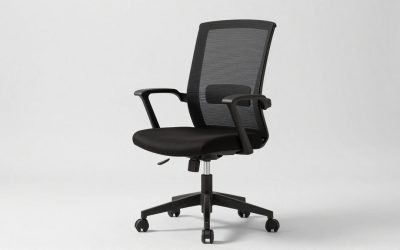
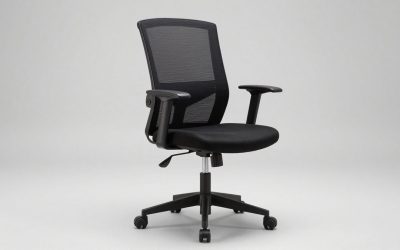
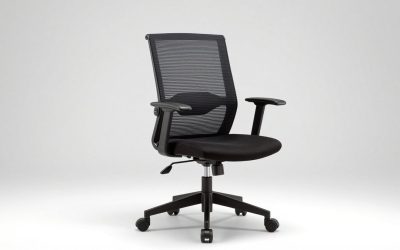
This is also where chair setup quietly matters more than desk height. A chair with a seat that’s too low forces you to hunch forward to reach the desk regardless of what height you set it to. If your chair doesn’t adjust high enough to put your feet flat and thighs roughly level, fix that first before you fuss over the desk’s exact inch.
Standing desk height for 5’11”
Standing, you’re looking at 41″ to 43″ for most people this height, with 42″ being the common sweet spot. The same elbow test applies: stand naturally, let your arms hang, bend elbows to 90 degrees, and that’s where your palms should rest on the desktop. Don’t eyeball this standing up straight and stiff like you’re being measured for a suit — stand the way you actually stand when you’re working, which usually means slightly less rigid.
A mistake I see constantly: people set the standing height once, on day one, and never touch it again. Your preferred height will drift by half an inch or so depending on footwear (bare feet vs. shoes with a heel), fatigue, and even time of day. If your desk has memory presets, use two standing presets a half-inch apart instead of one, and alternate.
| Posture | Typical range for 5’11” | Starting point |
|---|---|---|
| Seated | 28″ – 29.5″ | 28.5″ |
| Standing (barefoot/socks) | 41″ – 42.5″ | 42″ |
| Standing (shoes, ~1″ heel) | 40.5″ – 42″ | 41.5″ |
Why generic height charts fail you
Most desk height calculators only ask for your height, which treats everyone 5’11” as identical. They’re not. Two people the same height can have a 2-inch difference in torso length, and that shows up almost entirely in the elbow height, not the standing height. If a calculator gives you one number with no range, it’s a rough starting point, not a final answer. Treat whatever number you get as a place to begin adjusting from on day one, not a setting to lock in and forget.
Monitor height compounds this. If your screen top isn’t roughly at eye level once the desk is set, you’ll end up tilting your neck down or craning it up regardless of how perfect the desk height is for your arms. These are two separate adjustments and both need to be right.
What this means for desk range when buying
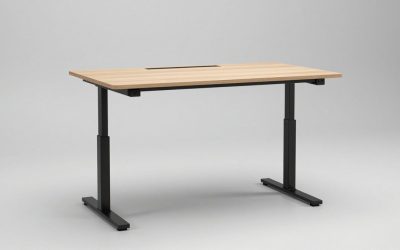
Here’s the part that actually affects your purchase decision: at 5’11” you need a desk whose range comfortably covers 28″ to 43″ minimum, with a bit of slack on both ends. Cheaper fixed-height or crank desks often bottom out around 29″ or top out around 41″, which either squeezes your sitting posture or stops you an inch short of a comfortable stand. That inch matters more than it sounds like, because people compensate by shrugging their shoulders up to reach the desktop, which is exactly the repetitive strain pattern standing desks are supposed to prevent.
When you’re comparing electric options, check the stated range in the spec sheet, not just the marketing height. A lot of listings advertise “27”–45″” but that’s the frame range before the desktop thickness is subtracted, and a 1″-thick top eats into both ends. If you’re shopping, browsing electric standing desks with a published range of at least 26″ to 44″ gives you real margin at your height, including room to adjust for shoes or a thicker mat.
If you’re on a tighter budget, a manual crank desk is genuinely fine for most people at 5’11”, as long as its range covers the same window. You lose the convenience of presets and the speed of electric motors, but the ergonomic outcome at a correctly set height is identical. Where crank desks fall short is for households with multiple users of different heights, since re-cranking 15 inches takes a couple minutes versus a few seconds with a button.
Anti-fatigue mat and monitor arm considerations
Standing at 42″ for extended periods without an anti-fatigue mat is where most people quietly give up on standing desks within a month, not because the height was wrong but because their feet and lower back got sore on hard flooring. A anti-fatigue standing mat is a cheap fix relative to the cost of the desk itself, and it changes how long you’ll actually tolerate standing sessions.
A monitor arm is the other piece people skip and shouldn’t. At 5’11”, eye level standing is roughly 62″–64″ from the floor, and very few monitors sitting directly on a 42″ desktop land your screen that high without you tilting your head down. A basic monitor arm desk mount solves this independently of desk height and is worth adding before you assume the desk itself is the problem.