Our Top Picks
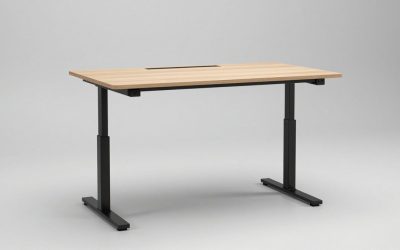
Yes, the Yo Yo Desk Pro 2 is worth considering for a small home office if you want a straightforward electric sit-stand desk, but its 71–121 cm height range and 80 kg load rating make it a better fit for most seated and standing users than for very tall users or heavy dual-monitor setups. The main buying decision is size: the 120 × 60 cm top saves floor space, while the 140 × 70 cm version is the more practical everyday choice if your room allows it.
Yo Yo Desk Pro 2: key specifications
The Yo Yo Desk Pro 2 uses a two-stage electric lifting frame with a dual-motor system. Its control panel typically provides programmable height presets, allowing you to save preferred sitting and standing positions rather than adjusting the desk manually each time.

Cubiker Standing Desk, 55x24 Inches Sit Stand Home Office Desk, Electric Stand up Desk, Adjustable Desk with Splice Board, White Frame/Maple Top
Chosen because it specifies 55x24 Inches Sit Stand Home Office Desk and Electric Stand up Desk.
View on Amazon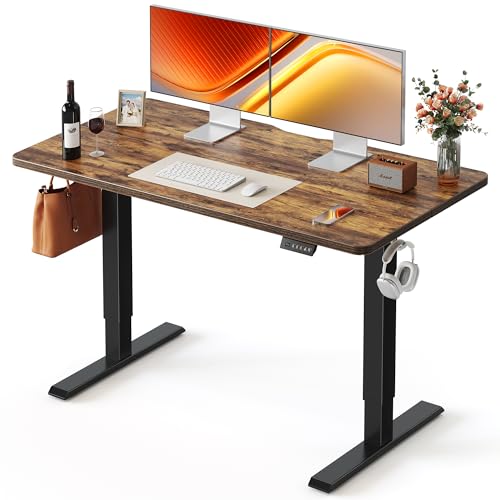
FEZIBO Standing Desk 48 × 24 Inch Electric Height Adjustable, Rustic Brown
Chosen because it specifies Rustic Brown.
View on Amazon
FLEXISPOT 71"x32" Electric Standing Desk, Black Walnut
Chosen because it specifies Black Walnut.
View on Amazon
FLEXISPOT Standing Desk Converter, 36", Black
Chosen because it specifies 36" and Black.
View on Amazon| Specification | Yo Yo Desk Pro 2 detail | What it means in practice |
|---|---|---|
| Height range | Approximately 71–121 cm | Suitable for most seated users and standing users up to roughly 185–190 cm, depending on keyboard and monitor height |
| Weight capacity | Up to 80 kg, including the desktop | Enough for a laptop, monitor arms and typical office equipment, but leave a safety margin for a very heavy setup |
| Desktop sizes | 120 × 60 cm, 140 × 70 cm and 160 × 80 cm options | The smallest size suits compact rooms; larger tops provide better monitor and paperwork space |
| Frame type | Two-stage, dual-motor electric frame | Quieter and more convenient than a hand-crank desk, with improved lifting balance over a single-motor design |
| Controls | Electronic handset with stored height positions | Useful when alternating between sitting and standing several times per day |
| Recommended working load | Keep everyday equipment below roughly 60–65 kg | Operating below the headline limit reduces strain on the motors and frame |
Check the specification for the exact desktop finish before ordering, because the frame height and desktop dimensions can vary by package. The 80 kg figure should include the desktop itself, not just the items placed on it.
Which desktop size should you choose?
120 × 60 cm: best for a small apartment
This is the most space-efficient version. It can accommodate a laptop, one monitor, keyboard and mouse, but the depth leaves little room behind the screen for a large monitor arm or for pushing the desk far away from a wall. Allow at least 75 cm of clear space behind the user for a comfortable working position, and about 90 cm if a chair needs to remain behind the desk while someone walks past.
For a 10 × 12 ft room, the 120 × 60 cm model works well against a wall or in a bedroom corner. It is also the easiest version to move through narrow doorways and stairwells.
140 × 70 cm: the balanced choice
The middle size is better for a permanent workstation. It gives a 27-inch monitor, laptop, speakers and writing area enough separation to avoid a crowded surface. The extra 10 cm of depth is particularly useful with a monitor arm, since the screen can sit farther back while the keyboard remains at a comfortable distance.
Choose this size if the desk will be used for a full working day, video calls, study and occasional paperwork. It still fits comfortably in many spare bedrooms, but measure the complete chair clearance rather than the desktop alone. A practical footprint is approximately 140 × 70 cm for the desk plus 90 cm behind the chair.
160 × 80 cm: best for a heavier workstation
The largest top provides a more relaxed layout for two monitors, a desktop computer, speakers and documents. It is the strongest choice for people who dislike moving equipment around during the day. However, the larger surface increases visual bulk and makes any frame movement more noticeable if the desk is placed on an uneven floor.
Leave roughly 180–200 cm of wall length for the desk and cable space. In a small bedroom, this size can make the chair, storage and walking route compete for the same floor area.
Height range and stability trade-offs
The 71 cm minimum height is generally suitable for seated computer work with a standard office chair, although shorter users may need a footrest or a chair with a lower seat height. A useful seated setup normally places the desktop around elbow height, often between 68 and 75 cm depending on the chair and the user.
At the 121 cm maximum, the Yo Yo Desk Pro 2 suits many standing users. Taller people may still need to raise the monitor on an arm or stand so the top of the screen is near eye level. If you are above approximately 190 cm, compare the required keyboard height with the desk’s maximum rather than assuming any standing desk will be tall enough.
As with most two-stage frames, stability is best in the lower and middle part of the travel range. At maximum height, there can be more front-to-back or side-to-side movement, particularly with a large monitor mounted on an extended arm. A 120 cm desktop with one monitor will normally feel steadier at full height than a 160 cm desktop carrying two large screens.
| Situation | Recommended setup | Reason |
|---|---|---|
| Small apartment or bedroom office | 120 × 60 cm, single monitor, wall-facing position | Leaves more room for chair movement and storage |
| Full-day work from home | 140 × 70 cm, monitor arm and cable tray | Balances usable surface with manageable floor space |
| Two-monitor workstation | 160 × 80 cm, equipment centered over the frame | Provides depth and reduces edge loading |
| Children or pets nearby | Any size, with anti-collision enabled and cables secured | Reduces snagging and prevents loose cables being pulled |
| Very tall standing user | Measure required elbow height first | The 121 cm maximum may not provide enough keyboard height |
Assembly: what the process is really like
Allow approximately 60–90 minutes for assembly with two people. One person can build it, but turning over the completed frame and positioning a larger desktop is awkward. A clear floor area slightly larger than the selected top is useful, along with a Phillips screwdriver, hex keys supplied with the desk and a drill only if the instructions permit it.
- Prepare the desktop. Place it face down on a blanket or cardboard. Confirm the pilot holes, control-panel position and cable exit direction before tightening anything.
- Attach the lifting columns. Fix the columns to the upper frame or cross supports, keeping the motor cables away from screw holes and moving joints.
- Fit the feet. Attach both feet evenly and install the adjustable levelling glides. Do not fully tighten every screw until the frame is aligned.
- Mount the frame to the desktop. Center the frame from side to side. On a 160 cm top, accurate centering matters because an overhanging monitor can increase wobble.
- Install the handset and control box. Route cables with slack for the complete 71–121 cm movement. A cable that is tight at the lowest setting can be damaged when the desk rises.
- Turn the desk upright with help. Do not lift a large assembled desk by the desktop edge alone. Check that all four feet sit firmly on the floor.
- Reset and test the frame. Follow the reset procedure in the manual, then raise and lower the desk without equipment before loading it.
Do not use the desk as a lifting aid or sit on the desktop. After several days, recheck the frame and desktop screws; settling can create minor looseness, especially on engineered-wood tops.
Where the Yo Yo Desk Pro 2 compromises
- Two-stage columns: They offer a useful range but are usually less rigid at maximum height than a heavier three-stage frame.
- Large desktop movement: A deep top with an extended monitor arm acts like a lever, making small frame movement more visible.
- 80 kg headline capacity: This is generous for normal office equipment, but it is not a reason to stack printers, speakers and storage on the desk.
- Assembly access: The underside hardware is easier to reach before the desk is turned upright, so rushing the final steps can lead to uneven alignment.
- Cable management: A height-adjustable desk needs a cable loop or under-desk tray. Fixed-length cables can restrict movement or pull equipment from the surface.
Is the Yo Yo Desk Pro 2 worth it in 2026?
It is a sensible purchase if you need electric sitting and standing adjustment, a choice of compact desktop sizes and enough capacity for normal home-office equipment. The 140 × 70 cm version is the safest recommendation for most buyers because it provides useful depth without the floor-space demands of the largest option.
Choose the 120 × 60 cm model when room size is the priority, especially in a bedroom or a 10 × 12 ft office. Choose 160 × 80 cm only when you genuinely need the extra surface and can accept more visual bulk and potentially more movement at standing height. If you need maximum rigidity for a very tall user, a heavy three-stage frame may be a better alternative even if it costs more; electric standing desks in this broader category commonly range from about $300–$600, with heavier premium configurations costing more.
Bottom line: the Yo Yo Desk Pro 2 is best viewed as a practical, mid-range sit-stand desk rather than a heavy industrial workstation. Its 71–121 cm adjustment range, 80 kg capacity and three desktop choices cover most home-office needs, provided you match the top size to your room and keep the heaviest equipment centered over the frame.