Our Top Picks
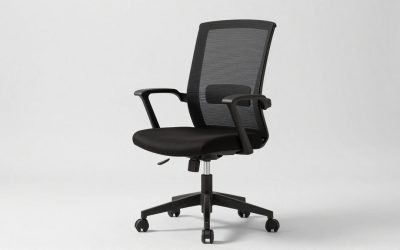
 Nouhaus +Posture Ergonomic PU Leather Office Chair. Click5Large19.1 x 27.55 x 43.3 inches40.75 poundsCheck on Amazon
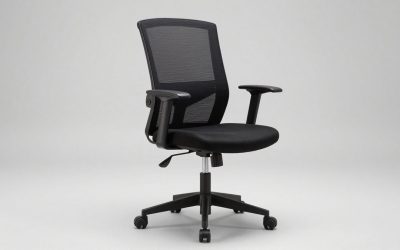
 Nouhaus Ergonomic Office Chair Premium Leather Adjustable LumbarOversized27.55 x 26.77 x 43.3 Inches40.75 poundsCheck on Amazon
 Nouhaus Ergonomic Office Chair Premium Microfiber Leather AdjustableOversized27.55 x 26.77 x 43.3 Inches40.75 poundsCheck on Amazon
The Nouhaus Posture Ergonomic PU Leather Office Chair is worth buying if you want an executive-looking chair with genuinely adjustable lumbar support for 6–10 hour workdays — and worth skipping if your workspace runs warm, because PU leather traps body heat in a way mesh never will. That single trade-off, more than anything else, decides whether this chair fits your situation. Below is what the spec sheet doesn’t tell you: real measurements, how the Click5 system actually works, what assembly involves, and which parts wear out first.
Nouhaus Posture specs and real-world measurements
The Posture is a mid-back executive-style chair built around a padded PU leather seat, a five-position lumbar mechanism, and flip-up armrests. Here are the numbers that matter for fitting it into a room and fitting your body to it:
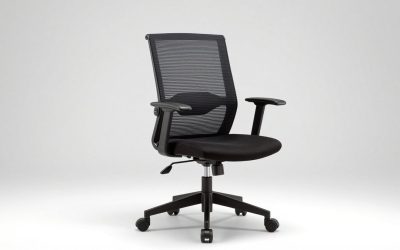
Nouhaus +Posture Ergonomic PU Leather Office Chair. Click5 Lumbar Support with FlipAdjust Armrests. Modern Executive Chair and Computer Desk Chair (Black)
Picked as a relevant option in this category.
View on AmazonNouhaus Ergonomic Office Chair Premium Leather Adjustable Lumbar Support & Armrests, High Back Comfy Desk Gaming Chairs Executive Computer Swivel Chair Tilt Function(Posture,White)
Chosen because it specifies White).
View on AmazonNouhaus Ergonomic Office Chair Premium Microfiber Leather Adjustable Lumbar Support & Armrests, High Back Comfy Desk Gaming Chairs Executive Computer Swivel Chair Tilt Function(Posture,Taupe)
Chosen because it specifies Taupe).
View on Amazon| Measurement | Figure |
|---|---|
| Seat height range | ~18.9–22.4 in (48–57 cm) |
| Seat width / depth | ~20 in / ~19.5 in |
| Overall footprint | ~27 in W × 26 in D |
| Maximum recline | ~135° |
| Weight capacity | 275 lb (125 kg) |
| Chair weight | ~40 lb |
| Shipping box (one box) | ~29 × 26 × 14 in, ~50 lb |
| Comfortable user height | Roughly 5’4″–6’1″ |
Two of these numbers have practical consequences. First, the ~19.5-inch seat depth is generous — good for average and taller users, but anyone under about 5’4″ may find the front edge presses behind the knees unless they perch forward, which defeats the lumbar support. Second, with the armrests flipped up, the chair slides under any desk with roughly 24 inches or more of knee clearance, which makes it workable in compact home offices where a fixed-arm executive chair wouldn’t fit. The ~50-pound box ships flat and fits through a standard 30-inch doorway with room to spare, so renters can unbox it inside rather than in a hallway.
PU leather vs mesh: the breathability trade-off
PU leather is a polyurethane coating over a fabric backing, and it’s effectively airtight. In a climate-controlled room, that’s a non-issue and the padded seat feels noticeably plusher than taut mesh. In a room that regularly sits above about 78°F — an upstairs office in summer, a converted garage, anywhere without AC — most people will feel heat and humidity building against their back within 60–90 minutes of sitting. Mesh chairs, including Nouhaus’s own ElastoMesh models, ventilate that heat continuously. This is the single biggest reason buyers return PU chairs, and it has nothing to do with build quality.
| Factor | PU leather (Posture) | Mesh chairs |
|---|---|---|
| Breathability | Low — retains heat and sweat | High — continuous airflow |
| Sitting feel | Padded, cushioned, plush | Taut, firmer, suspended |
| Spills, crumbs, pet hair | Wipes clean with a damp cloth | Crumbs and hair lodge in the weave |
| First typical failure | Topcoat peels/cracks, years 2–4 | Seat mesh sags, years 3–5 |
| Cold rooms | Feels warm immediately | Can feel drafty in winter |
| Appearance | Classic executive look | Technical, modern look |
The durability pattern differs too. Mesh fails by sagging gradually — you notice support declining over a year. PU leather fails cosmetically and suddenly: the topcoat starts flaking at high-friction points (seat front edge, where forearms rest, headrest) typically in years two through four of daily use. The chair underneath usually still functions, but it looks shabby. If a chair needs to look presentable on video calls for five-plus years, that timeline matters.
Click5 and the recline mechanism explained
A common point of confusion: despite the name, Click5 is not a five-step recline. It’s the lumbar support — a padded lumbar pad behind the backrest that clicks through five height positions so you can seat the curve precisely in the small of your back rather than accepting a fixed lumbar bump. Each position locks with an audible click, and it holds under load instead of drifting like friction-based lumbar pads on cheaper chairs. For anyone whose lower back aches by mid-afternoon, this is the chair’s main selling point, because lumbar that sits two inches too high is worse than none.
The recline itself is a conventional tilt mechanism: pull the lever to unlock, lean back to roughly 135 degrees, push to lock. There’s a tilt-tension knob under the seat — worth spending ten minutes dialing in, because factory tension is usually set for mid-weight users and lighter sitters will find the chair barely reclines at all. A padded headrest supports the reclined position; it’s genuinely useful at full tilt for reading or calls, less so while typing upright. The FlipAdjust armrests flip up and out of the way entirely — helpful for tucking the chair under a desk, playing guitar, or sitting cross-legged — but they don’t offer height or width adjustment, which is the ergonomic compromise for the flip-up convenience.
Assembly: what arrives and how long it takes
Assembly is a realistic one-person job in 15–25 minutes with the included hex key — no other tools required. The realistic sequence:
- Press the five casters into the base by hand (they need a firm shove; a rubber mhelps if stubborn)
- Drop the gas lift cylinder into the base
- Bolt the armrests and tilt mechanism to the seat — leave bolts a half-turn loose
- Attach the backrest to the seat bracket — this is the one step where a second pair of hands helps, since you’re holding the backrest in position while threading bolts
- Tighten everything fully once aligned (tightening early can leave the backrest slightly skewed)
- Set the seat assembly onto the cylinder and sit down to seat it
Two practical notes: the PU leather around the backrest bolt holes can be stiff on a new chair, so don’t force the bolts at an angle — cross-threading them is the most common self-inflicted assembly problem. And re-check all bolts after the first month; mechanisms settle and a quarter-turn snug prevents creaks later.
Durability after years of daily use
For a chair in the roughly $200–$300 range, the Posture holds up reasonably well, but wear follows a predictable order. Armrest pads show scuffing first (they’re PU too, and forearms grind them daily). The PU topcoat on the seat front edge is next — expect flaking somewhere in years two to four if you sit eight-plus hours daily; less frequent use stretches that considerably. The gas lift may develop a slow sink after three or so years, and casters collect hair wraps that need occasional cleaning to keep them rolling smoothly on hardwood. The tilt mechanism itself rarely fails, but the bolts backing out gradually is normal — a twice-yearly check keeps it silent.
Maintenance genuinely extends the PU leather’s life: wipe it down monthly with a damp cloth and mild soap, and avoid alcohol-based wipes entirely — they dry the topcoat and accelerate cracking. A vinyl/PU conditioner every few months keeps the surface supple. Skip those steps and you can pull the peeling timeline forward by a year or more.
Should you buy it? A decision matrix
| Your situation | Verdict |
|---|---|
| 8+ hour days with lower-back ache | Yes — Click5 lumbar is the strongest reason to choose it |
| Warm room, no AC, or you run hot | No — choose a mesh chair; this is a comfort mismatch |
| Under ~5’4″ | Caution — the seat depth likely won’t fit you |
| Near or above the 275 lb capacity | Caution — daily use near the limit accelerates wear |
| Kids, pets, coffee spills | Yes — wipeable PU is a real advantage over fabric and mesh |
| Tiny office, chair must tuck away | Yes — flip-up arms clear most desks |
| Budget under ~$150 | No — it typically sits in the $200–$300 band |
FAQ
Is the Nouhaus Posture good for hardwood floors?
Yes — the smooth-rolling casters are safe for hard surfaces. Keep them free of hair and grit, since a jammed caster is what actually scratches floors.
How long does the PU leather last?
Realistically two to four years of daily use before visible peeling starts, longer with regular cleaning and conditioning, or with part-time use.
Can one person assemble it?
Yes, in about 15–25 minutes. A second person only helps with holding the backrest steady while threading its bolts.
Does it recline flat?
No — it reclines to roughly 135 degrees, which suits leaning back on calls but isn’t a nap position.
Bottom line: the Nouhaus Posture Ergonomic PU Leather Office Chair earns its place for cool-room users who want adjustable lumbar, wipeable surfaces, and an executive look in a mid-range budget. If breathability is the priority, put the money toward mesh instead.