Our Top Picks
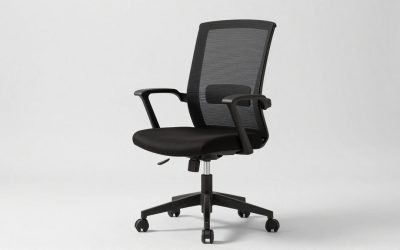
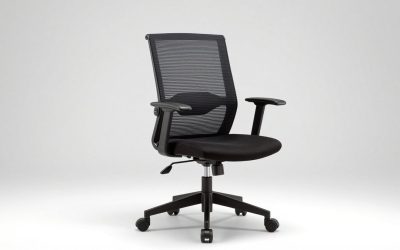
 Sweetcrispy Small Armless Desk ChairClassic Black16.34 x 16.54 x 34.25 inches11.9 poundsCheck on Amazon
The best ergonomic desk chair for small spaces is a compact task chair under about 25 inches wide with adjustable seat depth and either armless or flip-up arm options — models like the Herman Miller Sayl and Steelcase Series 1 give you real lumbar support and recline while fitting comfortably in rooms as small as 8×10 ft. If the chair needs to disappear entirely, a foldable ergonomic desk chair or an armless design that slides fully under the desk is the smarter play, though each involves trade-offs worth understanding before you buy.
The measurements that actually matter in a small room
Most small-space chair regrets come from measuring the desk but not the zone the chair lives in. A chair that’s 24 inches wide can still need 60 inches of floor to use properly. Before comparing models, check these numbers against your room:
Sweetcrispy Small Armless Desk Chair, Mesh Rolling Office Chairs
Chosen because it specifies Mesh Rolling Office Chairs.
View on Amazon
Tervo Model U - Folding Office Chair - Ergonomic Design for Small Spaces
Chosen because it specifies Folding Office Chair and Ergonomic Design for Small Spaces.
View on Amazon
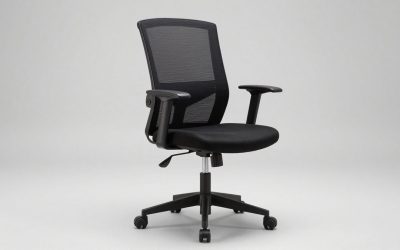
NEO CHAIR Office Desk Chair, Ergonomic Mesh with Flip-Up Armrests, Ivory
Chosen because it specifies Ergonomic Mesh with Flip-Up Armrests and Ivory.
View on Amazon
MUXX.STIL Office Chair, Ergonomic Desk Chair with Adjustable Lumbar Support and Flip up Armrest, Breathable Mesh Computer Chair for Home Office, Khaki
Chosen because it specifies Breathable Mesh Computer Chair for Home Office and Khaki.
View on Amazon| Measurement | Why it matters | Target for small spaces |
|---|---|---|
| Overall chair width | Armrests add 1–2 inches per side beyond the seat | ≤ 25 inches with arms; ≤ 22 inches armless |
| Five-star base diameter | The base is usually the widest point — often 1–2 inches wider than the stated seat width | ≤ 26 inches |
| Seat depth | Adjustable depth lets you sit closer to the desk without losing back contact | Adjustable range around 15–19 inches |
| Recline depth | Leaning back pushes the backrest rearward 6–10 inches | Allow 8–10 inches behind the chair’s upright depth |
| Pull-out zone | Space needed behind the desk edge to sit down and stand up | 30–36 inches; ~24 inches is workable if the chair slides fully under |
| Seat height range | Must pair with desk height (standard desks are 28–30 inches) | Roughly 16–21 inches; shorter users need a minimum under 16 inches |
| Knee space under desk | Determines whether the chair can tuck in | ≥ 24 inches wide, ~18 inches deep, 24–27 inches high |
One spec-sheet trap: manufacturers list “width” at the armrests, but the base diameter is what clips walls, desk legs, and filing cabinets. Always compare both numbers.
Compact picks that keep real ergonomics
Herman Miller Sayl (~24.5 inches wide) is the benchmark for a full-featured ergonomic desk chair for small spaces. The frameless elastomer back keeps the visual and physical footprint slim, it can be configured armless, and it’s rated to roughly 350 lb — unusually high for its size. Expect a premium price, usually in the $550–$800 range depending on configuration.
Steelcase Series 1 (~25–26 inches with arms) is the other safe compact bet. Its adjustable seat depth and LiveBack lumbar make it the better pick if you sit 6+ hours and have any back sensitivity. It’s lighter than it looks and manageable for one person to carry upstairs. Typically $450–$600.
Budget options (~$80–$200). The IKEA Markus is about 24 inches wide with a high back — comfortable, but its seat depth is fixed, which matters more in tight rooms. The armless IKEA Flintan goes even narrower. Brands like Hbada and SIHOO sell flip-up-arm mesh chairs in this range; quality varies, so prioritize models with adjustable lumbar over headrest add-ons.
If you want an ergonomic desk chair with headrest, note that headrests add 4–7 inches of height and mostly pay off during recline — which is exactly what small rooms restrict. Compact options with headrests exist (the IKEA Järvfjället is a common example at roughly 27 inches wide), but if your pull-out zone is under 30 inches, skip the headrest and put that budget toward better lumbar adjustment instead.
Armless vs. flip-up arms vs. truly foldable
These three solve the same problem differently, and the right answer depends on whether your chair needs to shrink while you sit, or shrink when you’re done.
| Type | Width saved | How it stows | All-day support | Typical price |
|---|---|---|---|---|
| Compact chair with fixed arms | Baseline | Tucks partway under desk | Best — full lumbar, recline, arm support | $300–$800 |
| Armless | 4–6 inches | Slides fully under a 26–28″ deep desk | Good — lumbar still works; you lose forearm support | $100–$400 |
| Flip-up arms | 4–6 inches when raised | Slides fully under desk | Good, but arm hinges loosen over time on budget models | $100–$300 |
| Truly foldable | Folds to ~6–9 inches thick | Closet, wall hook, behind a door | Limited — fine for 2–3 hour sessions | $50–$150 |
Armless chairs are the most underrated small-space solution: they reduce the working width by 4–6 inches and slide completely under the desk, freeing the walkway. The ergonomic cost is forearm support — compensate by setting seat height so your forearms rest near desk level.
Flip-up arms give you armrests while working and an armless footprint when parked. On sub-$150 chairs, check that the hinges lock firmly; a loose flip-arm is more annoying than no arm.
A truly foldable ergonomic desk chair is a compromise by definition. The good ones have a contoured mesh back with fixed lumbar and a waterfall seat edge (usually around 17–18 inches wide and deep), but adjustable lumbar, seat-depth control, and meaningful recline essentially don’t exist in this category, and weight ratings often cap around 200–250 lb. It’s the right call for a shared dining-table office or occasional guests — not for a 40-hour work week.
Durability and moving-day realities
Small-space buyers are usually renters, so the chair’s life in boxes matters as much as its life on the floor:
- Box size and weight: Full task chairs ship partially assembled in boxes roughly 26×25×18 inches weighing 35–55 lb — fine through standard 30–32 inch doorways, awkward on narrow staircases. Armless and folding chairs ship far smaller.
- What wears first: Armrest pads (especially PU) compress and crack within 2–3 years. Gas lift cylinders on budget chairs start sinking around year 3–4. Cheap casters scratch hard floors — a $20 rollerblade-style wheel swap fixes this.
- Seat material: Budget cut foam (~1.5–1.8 lb/ft³ density) flattens within a year or two of daily use; molded foam (2.5+ lb/ft³) holds up. Mesh seats skip foam entirely but can sag on chairs under $150.
- Upholstery: Mesh is the slimmest-looking and coolest for warm apartments. Bonded/PU leather peels with daily use — avoid it for a primary chair. Fabric is quiet and durable but shows stains.
- Weight ratings: Budget chairs typically rate 250 lb; the Sayl and Series 1 are tested around 300–350 lb. If you’re near a rating’s limit, buy up — the gas lift and base are the first failure points.
How to check fit before you buy
- Measure the knee space under your desk: you need at least 24 inches of width for a chair base to enter.
- Measure from the desk edge to whatever is behind it (wall, bed, shelf). You need the chair’s depth plus 24–30 inches minimum.
- Check your desk height against the chair’s seat range. A 30-inch desk with a chair that only goes to 19 inches leaves most people reaching.
- Find both the “width” and “base diameter” in the spec sheet — plan around the bigger number.
- If recline matters to you, measure 8–10 inches behind the chair’s upright position, not the catalog depth.
- Confirm the box dimensions fit your door, elevator, or staircase before delivery day.
FAQ
Can an armless chair still be ergonomic?
Yes — lumbar support, seat height, and seat depth do most of the ergonomic work. Armrests mainly reduce shoulder strain during long sessions; in a small room, correct seat height and desk height cover much of that gap.
Is a foldable ergonomic desk chair good enough for full-time work?
Generally no. Folding chairs cap out around 2–3 comfortable hours because lumbar and seat adjustments are minimal. If you work at the desk daily, choose an armless or flip-up-arm compact chair and reclaim the floor by sliding it under the desk instead.
Do I need a headrest on a compact chair?
Only if you recline often or take calls leaning back. An ergonomic desk chair with headrest support adds height and visual bulk, and in a room with under 30 inches of pull-out space you’ll rarely recline far enough to use it.
What’s the smallest room that still works?
A dedicated 8×10 ft room comfortably fits a 48-inch desk and a compact armless chair with a proper pull-out zone. Below that, or in a bedroom corner, prioritize a chair that slides fully under the desk and keep the walkway clear.