Our Top Picks
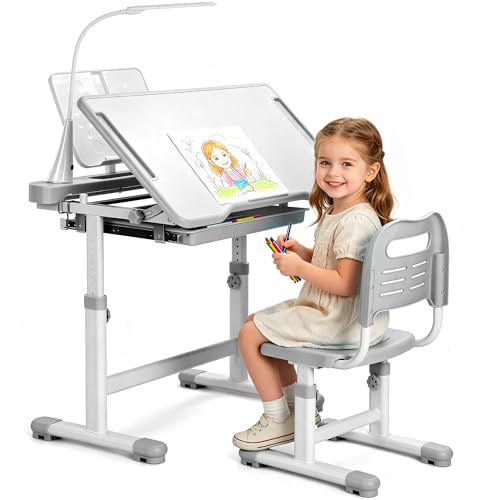 Rengue Kids Desk and Chair Set28.74" L x 19.69" W x 28.74" H27.56 x 19.69 x 27.95 inchesCheck on Amazon
The best desks for 10 year olds are 28 to 30 inches high, 36 to 48 inches wide, and 20 to 24 inches deep, with built-in storage for homework supplies and a chair clearance of at least 30 inches behind the desk. That size fits most tweens who are 54 to 58 inches tall, provides enough workspace for a laptop, notebook, and textbook side-by-side, and still fits in a typical 10×12 ft kids’ bedroom without blocking closet or bedroom doors.
What Size Desk Does a 10 Year Old Actually Need?
At age 10, most children have outgrown small toddler tables but are not tall enough for standard adult 30-inch desks without ergonomic compromises. The right fit prevents slouching, wrist strain, and dangling feet.
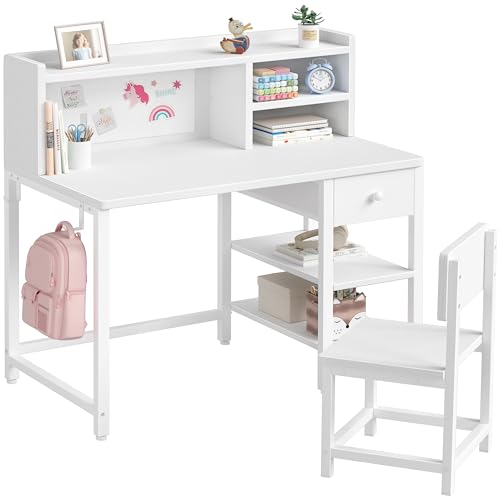
BOLUO White Kids Desk and Chair Set for 6-12 Year Old, Children Study Desk with Hutch and Storage Shelf, Student Writing Table with Fabric Drawer for Girls Boys
Chosen because it specifies Children Study Desk with Hutch and Storage Shelf and Student Writing Table with Fabric Drawer for Girls Boys.
View on AmazonRengue Kids Desk and Chair Set, Height Adjustable Children School Functional Study Desk with 55° Tiltable Desktop, 3 Modes & Brightness LED Light, Storage Drawer & Metal Hook for Boys Girls (Grey)
Chosen because it specifies 3 Modes & Brightness LED Light and Storage Drawer & Metal Hook for Boys Girls (Grey).
View on Amazon
WINAZ White Kids Desk with Hutch, Height Adjustable 32" Small Study Table | Mobile Rolling Desk with Drawers, Storage Shelves, Felt Pin Board, Side Bag & Hooks for Girls Boys Teen Study Writing
Chosen because it specifies Height Adjustable 32" Small Study Table.
View on Amazon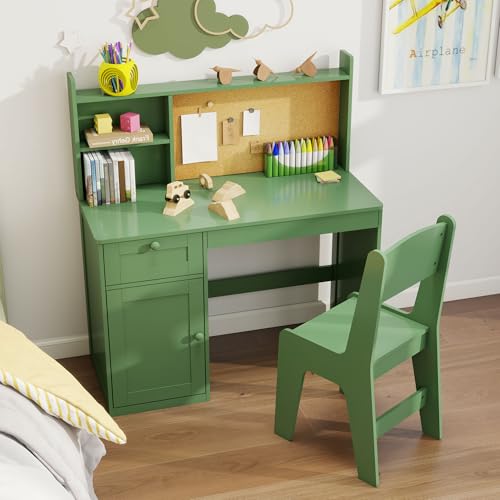
Kids Desk and Chair Set with Hutch & Storage Cabinet for 5-12, Green
Chosen because it specifies Green.
View on Amazon| Measurement | Ideal Range for 10 Year Olds | Why It Matters |
|---|---|---|
| Desk Height | 28-30 inches | Allows elbows to rest at 90 degrees when seated; if desk is 30 inches, pair with an adjustable chair and footrest |
| Desk Width | 36-48 inches | 36 inches is minimum for writing + tablet/laptop; 42-48 inches allows spread-out homework and art projects |
| Desk Depth | 20-24 inches | Less than 20 inches leaves no room for a monitor/lamp; more than 24 inches makes it hard to reach the back edge |
| Chair Seat Height | 15-17 inches | Feet should be flat on floor or footrest, knees at 90 degrees |
| Underside Clearance (Leg Room) | At least 24 inches high x 20 inches wide | Needed for comfortable leg movement and to push chair in fully |
| Weight Capacity | 75-150 lbs static load | Covers books, laptop, and leaning; avoid desks rated under 50 lbs |
If your child is tall for their age (over 58 inches) or growing quickly, choose a height-adjustable desk with a range of 22 to 30 inches. Models with crank or pin adjustment are more stable than twist-knob legs and let you raise the desk half an inch every 6 months.
Room-Size Fit: How Much Space to Leave Around the Desk
Buying the right desk is also about circulation space. A desk that fits on paper can make a bedroom feel cramped if you ignore clearances.
- Behind the chair: Leave 30 to 36 inches from the desk edge to the wall or bed so your child can pull out the chair and stand up. In a tight room, 30 inches is the absolute minimum.
- Side clearance: Allow 18 to 24 inches on at least one side for a bookshelf, drawer unit, or to avoid scraping the wall when the chair swivels.
- In a 10×12 ft bedroom: A 42 x 20 inch desk on the short wall leaves room for a twin bed (75 inches long), a 30-inch nightstand, and a closet door swing. A 48-inch wide desk works best on the long 12-foot wall; on the 10-foot wall it leaves less than 30 inches of walkway if the bed is opposite.
- For shared rooms or small apartments: A 36 x 20 inch compact desk or wall-mounted fold-down desk (usually $150–$350) saves 10 to 12 square feet. Pair it with a rolling cart instead of built-in drawers.
- Doorway and hallway check: Most kids’ desks ship flat-pack, but an assembled 48-inch desk needs a 29-inch minimum doorway to move. If you have narrow 24-inch closet doors or tight stairwells, keep the box packed until it’s in the final room.
Storage Features That Actually Help With Homework
At 10, homework shifts to longer assignments, binders, and a mix of paper and tech. Open shelves alone lead to clutter; no storage at all means supplies migrate to the dining table.
The most homework-friendly setup includes:
- One shallow drawer (3-5 inches tall): For pencils, calculators, chargers, and rulers. Deeper drawers become junk drawers for tweens.
- One file or deep drawer OR an open cubby: For letter-size folders, workbooks, and a 1-inch binder standing upright. Cubbies 12 inches high x 12 inches wide fit standard binders.
- Hutch or pegboard option: A low hutch (10-12 inches deep, 20 inches tall) keeps books off the work surface but should be wall-anchored. Pegboards add vertical storage without the bulk of a hutch in rooms with 8-foot ceilings.
- Cable management: A simple grommet hole or under-desk tray prevents lamp and laptop cords from tangling with drawer slides.
Avoid desks with only tiny 6-inch pencil drawers if your child does art or LEGO building at the same desk — you will end up buying a separate storage cart anyway. Conversely, a large L-shaped desk with three drawers often overwhelms a 10-year-old’s room and leaves no floor space for reading.
Material and Construction Trade-Offs
Material determines weight, durability, and how the desk handles spills, wobbles, and moves.
| Material | Typical Price Range | Durability & Stability | Best For / Watch Out |
|---|---|---|---|
| Solid Wood (pine, rubberwood, poplar) | usually $300–$700 | Most durable, holds screws well, can be refinished; weight 60-90 lbs assembled | Best for long-term use through middle school; heavier to move, may dent with hard impacts |
| Engineered Wood (MDF / particleboard with laminate) | usually $120–$350 | Smooth finish, resists stains; weaker at screw joints, swells with water damage; weight 35-55 lbs | Best for budget and bright color options; avoid if you move often or need to disassemble/reassemble |
| Metal Frame + Wood/MDF Top | usually $150–$400 | Very stable, highest weight capacity (100-150 lbs); metal legs resist wobble | Best for active kids who lean or climb; check for rounded edges and foot levelers to protect floors |
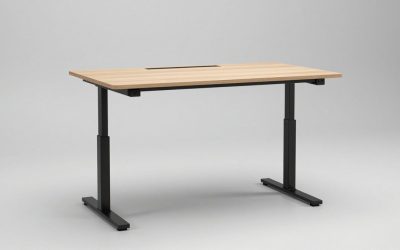
| Solid Wood Top + Metal Height-Adjustable Legs | usually $250–$500 | Adjustable 22-30 inches; excellent longevity if mechanism is steel crank, not plastic | Best for fast-growing tweens and shared sibling use; costs more and needs periodic tightening |
Laminate and foil finishes are easiest to clean after markers and glue sticks. If you choose engineered wood, look for CARB Phase 2 or TSCA Title VI compliance for low formaldehyde and a top that is at least 5/8-inch thick — thinner tops sag under a stack of textbooks.
Choosing by Your Situation
Use this matrix to match your space and study needs to the right desk type, rather than starting with a style.
| Your Situation | Recommended Desk Type | Why It Works |
|---|---|---|
| Small bedroom (under 90 sq ft) or shared room | 36-inch compact desk with wall shelf above | Frees floor space; vertical storage replaces a bulky hutch. Usually $120–$250. |
| Dedicated homework zone, heavy binder/textbook load | 42-48 inch writing desk with 2 drawers + hutch | Keeps reference books within reach; 24-inch depth prevents papers from stacking over the edge. |
| Art, crafts, and building projects at the same desk | 48-inch table-style desk with open legs, separate rolling cart | Large flat surface, no drawer dividers limiting workspace; cart can be rolled aside. |
| Needs to last until age 14+ or for siblings | Height-adjustable desk (28-30 inch range) + separate bookshelf | Adapts from 10 to teen years; avoids replacing the whole desk when height changes. |
| Renter or frequent moves | Metal-frame desk with MDF top, no hutch | Disassembles cleanly, lighter box (40-50 lbs), fewer screws to strip on reassembly. |
| ADHD / easily distracted | Simple front-facing desk with closed drawer and side pegboard, not an L-shape | Reduces visual clutter; facing a wall minimizes distractions vs. facing the room. |
Assembly, Moving and What Wears Out First
Most desks for this age range ship in one flat box weighing 35 to 70 lbs. Solid wood boxes are heaviest and may require two people to carry up stairs. Plan 45 to 90 minutes for assembly with a Phillips head screwdriver and included Allen key; metal-frame models are fastest, hutch models take longest due to alignment.
- What loosens first: Drawer slides and leg bolts. Choose desks with metal drawer glides rather than wood-on-wood, and retighten leg bolts after the first 30 days — wood compresses slightly after initial assembly.
- What stains first: Unsealed engineered wood edges and light-colored laminates near the front edge. Add a clear desk mat (19 x 30 inches) for $15–$30 to protect against markers and hot mugs.
- What wobbles: Tall hutches not wall-anchored, and four-leg desks without a crossbar stretcher. If the desk will hold a monitor, choose a model with a rear crossbar or modesty panel.
- Future moves: Particleboard desks often strip at cam-lock holes if taken apart more than once. If you expect to move within 2 years, keep original packaging or reinforce joints with wood glue on second assembly.
For families deciding between a desk-and-chair set vs. buying separately: Sets in the $200–$450 range guarantee seat-to-desk height matching, but separate pieces let you choose an ergonomic adjustable chair (usually $100–$250) with lumbar support and a footrest — which matters more than a matching finish for daily 45- to 90-minute homework sessions.
Picks by Age and Use Case Without Overbuying
For compact rooms: 36-inch writing desk with one drawer
Brands like Pottery Barn Kids, KidKraft, and Walker Edison make 36 x 20 inch models that fit a small wall and still hold a laptop and open textbook. This is the safest bet if floor space is under 30 inches behind the chair.
For everyday homework: 42-inch desk with storage
Look to types like the South Shore or Bush Furniture 42-inch models with a file drawer — usually $180–$350 — that give a true 24-inch depth. They accommodate a 20-inch desk lamp, pencil drawer, and binder storage without needing a hutch.
For growing tweens: Height-adjustable desk
A crank-adjustable desk from brands such as IKEA (MÅLSKYTT, BEKANT style ranges) or Vari-style adjustable tables lets you start at 26 inches at age 10 and raise to 29-30 inches by middle school. Pair with an adjustable task chair rather than a fixed-height kids’ chair.
Across all types, prioritize a desk that is 28 to 30 inches high, leaves proper chair clearance, and uses closed storage for at least half its supplies. That combination keeps homework focused and keeps the bedroom circulation safe and comfortable through the tween years.