Our Top Picks
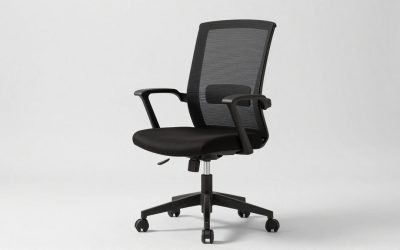
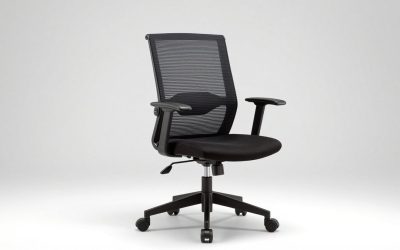
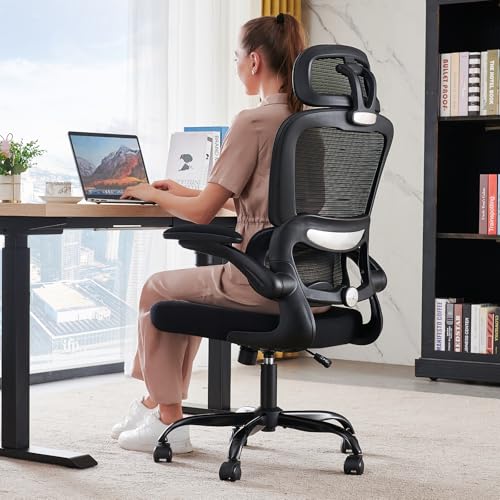 TRALT Office Chair Ergonomic Desk Chair with LumbarPack of 127.6 x 27.6 x 49.2 inches28 poundsCheck on Amazon

Back pain and office chairs is a huge, mostly misunderstood topic. Most of what sells chairs is marketing about lumbar support, but the real cause of pain for most people is stillness, not shape. That said, a bad chair makes a bad day worse, and a good revolving (swivel) chair with proper adjustability removes a lot of the daily aggravation. Here’s what actually matters, based on fitting and adjusting dozens of these for people with lower back issues, sciatica flare-ups, and post-injury recovery.
What actually helps back pain in a chair
Three adjustments do almost all the work: seat height, lumbar depth, and recline tension. Everything else — mesh vs fabric, headrest, armrest material — is comfort, not therapy.
Seat height matters because if your feet aren’t flat and your knees aren’t near 90 degrees, your pelvis tilts and your lower back rounds to compensate. That rounding is where most “my chair hurts my back” complaints actually start. Lumbar support only helps if it sits at the right height for your spine — usually right at or just above your belt line — and most people never adjust it after unboxing, so it sits wherever the factory default put it, which is often too low.
Recline tension is the most ignored one. A chair that’s locked upright all day loads your lumbar discs constantly. A chair that lets you rock back 10-15 degrees periodically unloads them. If your current chair has a tension knob under the seat, try loosening it before buying anything new.
Match the chair to the problem
Chronic lower back pain (disc issues, general stiffness) responds well to adjustable lumbar depth and a seat with a waterfall front edge, so the seat pan doesn’t dig into the backs of your thighs and cut circulation. Sciatica specifically hates pressure on the glutes and upper hamstrings — a seat that’s too firm or too short in depth will aggravate it within an hour. For that, look for seat depth adjustment, not just lumbar adjustment.
If your pain is upper back and neck rather than lower back, a headrest matters more than lumbar depth. Don’t buy a chair for lumbar support if your actual pain is between the shoulder blades — that’s a different adjustment problem entirely, usually monitor height and armrest height, not the chair itself.
What you get at each price tier
There’s a real quality floor around $150 and a real point of diminishing returns around $700. Below $150 you’re mostly getting fixed lumbar bumps and non-adjustable armrests — fine for someone without existing pain, risky for someone managing a flare-up. Between $300-600 you get properly adjustable lumbar (depth and height), seat depth sliders, and tension control that actually holds its setting instead of drifting after a few months. Above $700 you’re paying for materials and warranty length more than therapeutic benefit — mesh quality, 12-year warranties, and build tolerances that won’t squeak in year two.
| Price range | What’s adjustable | Good for | Watch out for |
|---|---|---|---|
| $100-150 | Seat height, fixed or minimal lumbar bump | No current pain, budget-limited | Lumbar position can’t move to match your spine; tension knobs loosen over time |
| $300-500 | Height, lumbar depth + height, tilt tension, often seat depth | Chronic lower back pain, sciatica, long desk hours | Mesh seats can feel firm after 6+ hours; test before committing if possible |
| $600-900 | Everything above plus 4D armrests, synchro-tilt, better materials | 8+ hour days, recovering from injury, long-term use | Diminishing returns past this — you’re paying for warranty and build quality, not more therapy |
If you’re not sure which tier you need, start in the middle. A chair in the ergonomic office chair with adjustable lumbar support range covers most back pain cases without overspending on features you won’t use.
Features worth paying for versus skipping
Pay for: independent lumbar height and depth adjustment, seat depth sliders (especially if you’re under 5’4″ or over 6’2″, since fixed seat depth is sized for average builds), and a tilt lock that holds position without creeping. These directly address the mechanics that cause pain.
Skip or deprioritize: heated/massage functions (gimmicky, rarely used after week two), premium leather (worse for all-day sitting than mesh — it traps heat and compresses unevenly), and headrests if your pain is purely lower back. If budget is tight, put the money into lumbar and seat depth adjustment before anything else on this list.
One feature that’s underrated: armrest height and width adjustment. Armrests set too high push your shoulders up and strain your upper back and neck, which people often misattribute to the seat or lumbar support. If you’re troubleshooting pain, check armrest height before you blame the backrest.
What about kneeling chairs and balance stools
These come up a lot for back pain and they’re a mixed bag. Kneeling chairs reduce lumbar curve load for some people but shift strain to the knees and shins, and they’re genuinely bad for anyone with existing knee issues. They also don’t swivel properly, which matters if you’re constantly turning to grab things or face a second monitor. If you want to try the posture-correction angle, a standard ergonomic chair with proper lumbar adjustment solves the same problem without the knee trade-off for most people. If you specifically want to experiment with an alternative seating style, a kneeling chair for back pain is worth trying for an hour or two a day, not as a full-time replacement.
What I’d actually tell a friend
If your pain is new and mostly from sitting still too long, don’t buy anything yet — set a timer to stand every 45 minutes for two weeks and see how much that alone changes things. If pain persists after that, or you already know it’s structural (disc, sciatica, old injury), spend in the $300-500 range on a chair with independent lumbar depth/height and seat depth adjustment, and actually take 10 minutes to dial in the fit when it arrives. The chair that’s “better” on paper but left on factory settings will do less for you than a mid-range chair that’s properly adjusted to your body.