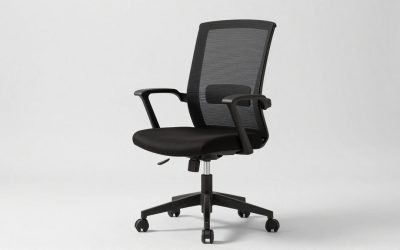
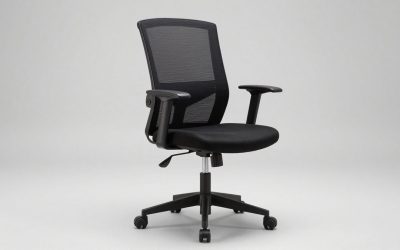
Our Top Picks
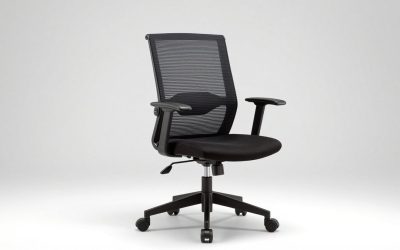
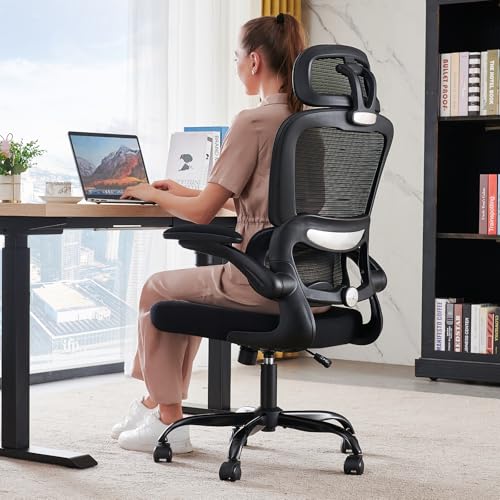 TRALT Office Chair Ergonomic Desk Chair with LumbarPack of 127.6 x 27.6 x 49.2 inches28 poundsCheck on Amazon
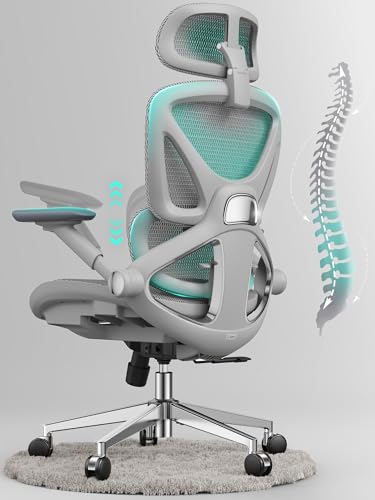
What Actually Causes Chair-Related Back Pain
Most back pain blamed on “a bad chair” is really a lumbar support problem. When your lower back loses its natural inward curve for hours at a time, the discs and ligaments in that area take on load they’re not built to hold. Sit slouched for six hours a day, five days a week, and you don’t need a dramatic injury to end up in pain. You just need time and a seat that doesn’t hold your spine where it wants to be.
The second big factor is seat depth. If the seat pan is too long for your thighs, you either sit with your back away from the backrest (no lumbar contact at all) or you jam yourself forward and let your knees take the hit. A lot of people blame their back for a problem that’s actually a seat-pan sizing issue.
The Features That Matter, and the Ones That Don’t
Adjustable lumbar support is the single feature worth prioritizing. Not a fixed lumbar bump molded into the foam, but a pad or mechanism you can move up, down, and sometimes in and out, so it meets your spine where your curve actually is. Everyone’s torso length is different; a lumbar bump that fits a 5’4″ person sits at completely the wrong height for someone 6’1″.
Seat depth adjustment matters almost as much, especially if you’re under 5’5″ or over 6’2″. Most “ergonomic” chairs are tuned for a mid-range height and simply don’t fit outside that band without a sliding seat pan.
Recline tension and lockout are worth having but not worth paying a premium for. A chair that reclines to 110-120 degrees and lets you lock it there takes pressure off your lower spine during calls or reading. Nice to have, not a dealbreaker if it’s missing.
Mesh vs. foam back is mostly personal preference and heat tolerance, not a back-pain variable on its own, with one exception: mesh backs that use elastic webbing instead of a tensioned, slightly firm mesh tend to sag within a year and stop supporting the lumbar curve at all. That’s a durability issue people mistake for a design flaw.
Headrests, 4D arms, and “ergonomic” marketing language on the box are mostly irrelevant to back pain specifically. They help neck and shoulder comfort, which is a different problem.
Budget vs. Mid-Range vs. Premium: What You’re Actually Paying For
| Price range | What you get | Who it’s fine for | Where it fails |
|---|---|---|---|
| $100-$200 | Fixed or basic lumbar pad, limited recline, mesh or foam back | People under 8 hours/day, no existing back issues, shorter torso lengths | No seat depth adjust; lumbar pad often in the wrong spot for taller/shorter users; foam flattens in 1-2 years |
| $300-$600 | Adjustable lumbar (height, sometimes depth), seat depth slide, better recline tension control | Full-time desk workers, people with mild chronic back pain, most body types | Mesh tension can loosen over 3-4 years; arm mechanisms sometimes feel cheap |
| $700+ | Precision lumbar dial-in, breathable high-tension mesh or multi-layer foam, 10+ year warranties | 8+ hour days, existing diagnosed back conditions, people who’ve already tried cheaper chairs and failed | Diminishing returns past this point; you’re paying for warranty length and material longevity, not more comfort |
If you sit less than 5 hours a day and have no existing back pain, the $100-$200 tier is genuinely fine. Don’t let anyone tell you that you need to spend $800 to avoid a sore back. The jump that actually matters most is from “no adjustable lumbar” to “adjustable lumbar.” Everything after that is refinement.
How to Fit a Chair to Your Body (5 Minutes, No Tools)
Sit all the way back so your spine touches the backrest. Adjust the lumbar support up or down until you feel it press into the small curve just above your belt line, not your mid-back and not your tailbone. That’s the single most common adjustment people skip entirely.
Check seat depth: there should be a 2-3 finger gap between the front edge of the seat and the back of your knee. Too little gap cuts circulation behind the knee; too much means you can’t reach the backrest without slouching.
Set armrest height so your shoulders stay relaxed, not shrugged. Shrugged shoulders over hours translates into upper back and neck tension that often gets misdiagnosed as a “lower back chair problem” when the chair’s lumbar support was fine all along.
Set desk and monitor height last, after the chair. A perfect chair paired with a monitor that’s too low will have you leaning forward anyway, undoing everything the lumbar support was doing.
What to Buy Based on Your Situation
If you’re shopping on a budget and mostly need a reliable upgrade from a kitchen chair or an old folding chair, look at ergonomic office chairs with adjustable lumbar support in the $150-250 range and prioritize the lumbar adjustment over everything else on the spec sheet.
If you’re tall (6’2″+) or petite (5’3″ and under), seat depth is going to be your limiting factor more than price. Search specifically for big and tall office chairs with seat depth adjustment rather than generic ergonomic listings, since most standard chairs are sized for 5’5″-6’1″.
If you already have a diagnosed lower back condition (herniated disc, chronic sciatica, degenerative disc issues), it’s worth looking at high-back mesh chairs with adjustable lumbar support and reading return policies closely. Fit is individual enough with existing conditions that you should expect to possibly exchange once.
One failure mode worth naming directly: buying a chair and never adjusting it. A $900 chair left on factory settings will underperform a $200 chair that’s actually been fitted to your body. The adjustment step isn’t optional, it’s most of the value.