Our Top Picks
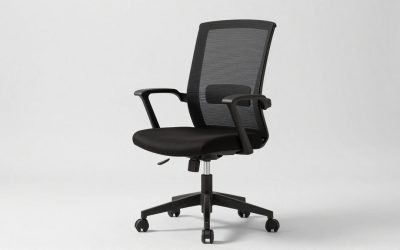
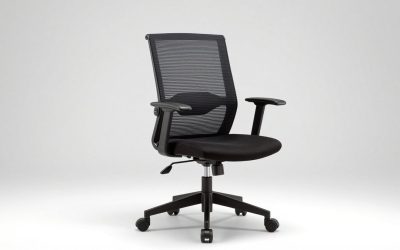
 GTPOFFICE Executive Office Chair with Comfortable Lumbar Support24.4 x 18.5 x 41.7 inches18.5 x 24.4 x 41.7 inches18 PoundsCheck on Amazon
 DRAGONN by VIVO Ergonomic Adjustable Kneeling Chair w/Back13D x 27.13W x 21H in24.3 PoundsCheck on Amazon

Kneeling chairs with back support are a strange hybrid, and most of them don’t work as advertised. The pitch is simple: shift weight onto your shins, open up your hip angle, and let your spine stack naturally instead of curling into a C-shape. The reality is that a lot of kneeling chairs skip the back support part entirely, because adding a backrest to a forward-tilted seat is a harder engineering problem than it sounds. If you’re specifically hunting for one with a back, you’re already ahead of most buyers who grab a backless model and regret it after week two.
How a kneeling chair with back support actually works
A standard kneeling chair has a forward-sloped seat (usually 20-30 degrees) and a lower shin pad. You slide forward, your pelvis tilts, and your lumbar curve falls into place without you forcing it. The problem is you’re now leaning forward with nothing behind you, which is fine for 20 minutes and miserable for a full workday if you ever want to lean back and relax your core.
The back-supported versions solve this one of two ways. Some use a reclining or fixed backrest mounted on a frame behind the seat, letting you rock back between forward-kneeling posture and a more relaxed recline. Others are closer to a saddle-stool hybrid with a small lumbar pad that only works if you’re sitting fairly upright and not actually using the shin pads much. The second type is weaker support and I wouldn’t pay a premium for it.
Who actually benefits from this
People with mild lower back pain from slouching, people who sit with their pelvis tucked under (posterior pelvic tilt), and people who want to break up a day of sitting with position changes. It is not a fix for disc issues, sciatica, or anything a doctor should be looking at. I’ve seen people buy one expecting it to cure chronic pain and it just redistributes the discomfort to their knees and shins instead.
Shin and knee pressure is the real failure mode nobody mentions in the marketing copy. If you have any knee issues, a bad kneecap, or you’re over about 220 lbs without a well-padded chair, the shin pads will start to hurt within an hour. Thin, dense foam padding is worse than it looks in photos. Press your thumb into the pad at the store or check return policies before buying online.
What to actually check before buying
- Adjustable seat height and tilt. Fixed-angle kneeling chairs force one posture. You want at least seat height adjustment, and ideally seat angle too, so you can dial in how much weight goes to your knees versus your sit bones.
- Backrest that moves independently or reclines. A backrest bolted on at a fixed 90 degrees defeats the point. Look for a hinge or recline mechanism, even a basic spring-tension one.
- Padding thickness and density. 2 inches of medium-density foam minimum on the shin pads. Anything thinner is going to dig in.
- Weight rating. Many budget kneeling chairs cap out around 250 lbs. Check this before anything else if you’re near that range.
- Stability base. Rocking kneeling chairs (the ones that let you shift weight dynamically) feel great for 10 minutes and then become distracting during focused work. A more stable, less bouncy base is better for all-day use.
How kneeling chairs compare to other back-support options
It’s worth being honest that a kneeling chair is not always the right tool. Here’s how it stacks up against the two most common alternatives people are actually choosing between.
| Type | Back support quality | Comfort over 6+ hours | Learning curve | Typical price range |
|---|---|---|---|---|
| Kneeling chair w/ backrest | Moderate, depends heavily on recline design | Fair; most people alternate with standing or another chair | 1-2 weeks of adjustment, some knee soreness early on | $120-$300 |
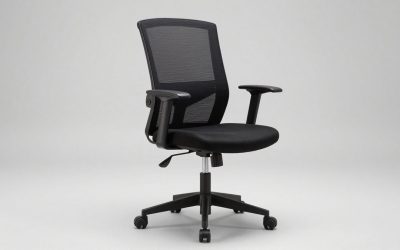
| Ergonomic office chair w/ lumbar support | High, purpose-built for sustained sitting | Good; designed for 8-hour days | Minimal | $150-$900 |
| Saddle stool | Low to none without add-on backrest | Fair for active sitting, poor for passive relaxing | Moderate, core engagement required | $100-$350 |
If you spend more than six hours a day at a desk, a well-adjusted ergonomic office chair with lumbar support is still going to outperform a kneeling chair for raw comfort and sustainability. The kneeling chair’s real value is as a second seat you rotate into for an hour or two, not a full replacement.
What I’d actually buy
If you’re set on a kneeling chair with back support, go for one with an adjustable, hinged backrest and a seat tilt you can lock at a few different angles rather than one fixed position. Browsing kneeling chairs with back support directly will show you the adjustable hinge models alongside the cheaper fixed-angle ones, and the price difference is usually only $30-50, which is worth paying.
If your actual goal is just better lumbar support and you’re not attached to the kneeling format, a $40-60 lumbar support pillow for your existing office chair solves 80% of the problem these buyers are chasing, at a fraction of the cost and with zero knee strain. I’d point most people there first and only move to a kneeling chair if the pillow fix doesn’t help after a couple weeks.
The trade-off nobody puts on the box
A kneeling chair with back support asks you to trade some knee and shin comfort for better spinal alignment, and it only pays off if you’re disciplined about using it part-time and swapping back to a normal chair or standing desk through the day. Treat it as one tool in a rotation, not a replacement for a decent chair, and don’t buy the cheapest fixed-angle model just to save $40, because that’s the version most likely to end up in a closet by month two.