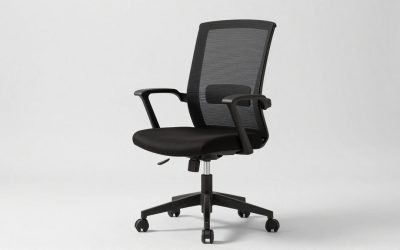
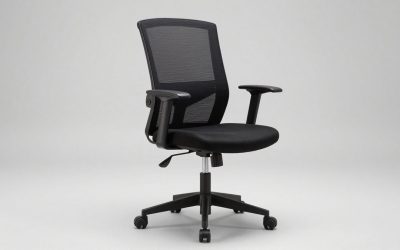
Our Top Picks


Chair pads for back pain fall into two very different categories that get marketed the same way: lumbar cushions that attach to a chair’s backrest, and seat cushions that sit under you. People buy the wrong one constantly, then conclude cushions don’t work. If your pain is in the lower back and worsens over the course of a sitting day, you want a lumbar support. If it’s more about tailbone pressure, hip pain, or numbness in your legs, you want a seat cushion. Some back pain is actually referred from the seat, so it’s worth knowing which problem you’re solving before spending money.
How a chair pad actually helps (and when it won’t)
A lumbar pad works by filling the gap between your lower back and the chair’s backrest, which most office chairs leave at 2-4 inches depending on how far forward you sit. Without support there, your lumbar spine loses its natural inward curve and flattens or rounds, which loads the discs and the muscles that run along the spine unevenly. A pad that restores that curve reduces muscle fatigue over hours, not minutes. If you only feel better for the first 20 minutes after adjusting it, the pad is too soft or positioned too low.
Seat cushions help a different mechanism: they redistribute pressure off the ischial tuberosities (the “sit bones”) and tailbone. If you have a herniated disc, sciatica, or coccyx pain, a seat cushion with a cutout or channel down the middle matters more than any lumbar pad. People searching for orthopedic seat cushions are usually dealing with this, not lumbar flattening.
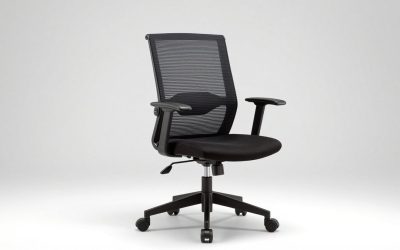
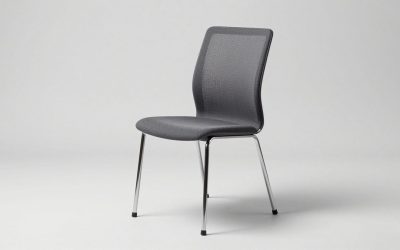
What a pad won’t fix: a chair with no lumbar region at all (some mesh chairs have a single curved shell with nothing to anchor a pad to), a seat pan that’s too deep for your thigh length, or pain that’s actually hip flexor tightness from sitting too long regardless of support. In those cases a $40 pad on a $90 chair is a bad trade compared to just replacing the chair.
Lumbar pad vs. seat cushion vs. combo
| Type | Best for | Typical price | Main failure mode |
|---|---|---|---|
| Lumbar pillow (foam or inflatable) | Lower back flattening, slouching, mesh chairs with weak lumbar curve | $15-$35 | Straps slip down after a few weeks; foam ones pack flat within a year |
| Memory foam seat cushion | Tailbone pain, long sitting without breaks, hard plastic/mesh seats | $25-$50 | Low-density foam bottoms out in 3-6 months, loses support exactly where you need it |
| Gel-infused seat cushion | Heat buildup complaints, same uses as foam | $30-$60 | Gel layer can shift or separate from the foam base over time |
| Combo back + seat set | People who need both and don’t want to buy twice | $40-$80 | Mismatched firmness between the two pieces; one half ends up unused |
What actually matters when buying one
Density, not thickness, determines whether a cushion lasts. A 3-inch cushion made of cheap 1.5 lb/ft³ foam will compress to half its height within months and feel like sitting on a pancake. Memory foam rated 4-5 lb/ft³ holds its shape far longer, though it costs more and runs warmer. If a listing doesn’t mention density at all, assume it’s the cheap stuff — that’s not automatically disqualifying for occasional use, but it’s a bad bet if you sit 7+ hours a day.
For lumbar pads, adjustability matters more than material. A pad that straps on with a single elastic band will migrate down your backrest over a few hours as you shift around; one with two straps (or a strap plus a clip) holds position much better. If you’re tall (above 6’1″ or so), check the pad’s height — a lot of lumbar pillows are sized for average torso length and will sit too low to actually reach your lumbar curve.
Breathability is a real complaint, not a marketing afterthought. Solid memory foam without a gel layer or cover ventilation runs noticeably hot after an hour, which matters if you’re in a warm office or don’t have great airflow. Mesh covers and gel layers address this at the cost of a slightly firmer feel.
If you’re shopping broadly rather than for a specific symptom, searching lumbar support pillows will surface most of the strap-on and clip-on options worth comparing by density and strap design rather than brand.
When the cheap option is genuinely fine
If you sit less than 4-5 hours a day, switch positions often, or already have a chair with decent built-in lumbar support and just want a little extra, a $15-20 basic foam lumbar pillow does the job. The failure modes of cheap pads (slipping straps, foam breaking down) take months to show up, and for light use you’ll likely replace it on a normal schedule anyway. There’s no evidence that a $70 gel-infused pad outperforms a $20 foam one for someone who isn’t sitting all day with a diagnosed issue.
Where spending more is justified: if you’ve been told by a physical therapist or doctor that you have a specific postural issue (excessive flattening, scoliosis-related asymmetry, post-surgical restrictions), or if you’re sitting 8+ hours daily and a cheap pad has already failed once. At that point, paying for adjustable strap systems, higher-density foam, or a proper coccyx-cutout cushion pays for itself in not having to replace it twice. A full ergonomic chair with built-in adjustable lumbar support is also worth comparing against buying add-on pads, especially if your current chair is failing in multiple ways at once — a worn seat pan, broken recline tension, and no lumbar support together usually mean the chair, not the cushion, is the problem.
One more practical note: give any new pad or cushion two full weeks before judging it. Your back muscles have adapted to whatever bad position you were sitting in before, and correcting that posture often feels mildly uncomfortable at first — that’s not the same as the product being wrong for you.