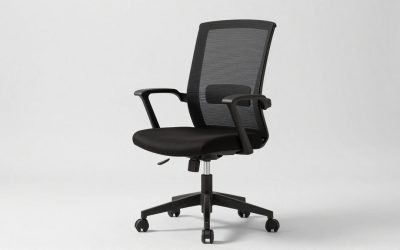
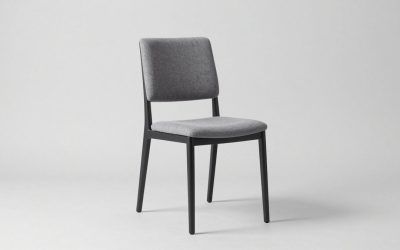
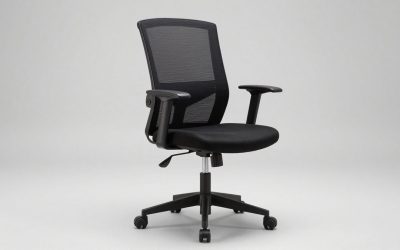
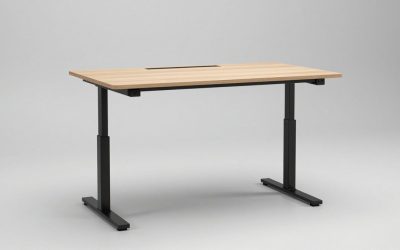
Our Top Picks
 VIVO Manual Height Adjustable Standing Desk Converter32"31.5 x 31.5 x 31.3 inches26 poundsCheck on Amazon

Most “best chair for posture” roundups skip the actual mechanics of what a chair does to your spine over an 8-hour day. Posture isn’t about sitting up straight and rigid, it’s about having enough adjustability that your spine can stay in a neutral position while you move, slouch a little, lean back to think, and shift around. That’s what actually prevents the lower back ache and neck strain that come from desk work.
What actually affects posture in a chair
Four things do most of the work. Lumbar support that hits the actual curve of your lower back, not just a vague bump. Seat depth you can adjust, because if the seat is too deep it forces you to either slouch back against the lumbar support (wasting it) or perch forward with no back support at all. Armrests that let your shoulders stay relaxed instead of shrugged or slumped. And seat height range wide enough that your feet are flat on the floor with your knees at roughly 90 degrees.
Backrest recline and tilt tension matter too, but they’re secondary. A chair that nails lumbar and seat depth but has a mediocre recline mechanism will still beat a chair with fancy recline and a flat, unadjustable back.
Budget vs. premium: where the money actually goes
Below $150, you’re mostly paying for basic height and tilt adjustment with fixed or minimally adjustable lumbar support. That’s genuinely fine if you’re under 5’8″, sit for less than 6 hours a day, and don’t have an existing back issue. A lot of people buy a $900 ergonomic chair to fix a problem that a $120 chair with a decent lumbar pad and 20 minutes of adjustment would have solved just as well.
Where the premium chairs earn their price is adjustability range and material durability. A $400+ chair typically has independently adjustable seat depth, 4D armrests (height, width, depth, and pivot), and a mesh or foam that holds its shape past the 3-year mark. Cheap foam compresses and goes flat around 18-24 months, which quietly undoes any posture benefit you were getting. If you’re over 6 feet tall, over 220 lbs, or sitting more than 8 hours a day, that durability and range stop being nice-to-haves and start being the difference between the chair working and not.
| Feature | Budget (under $200) | Mid-range ($200–450) | Premium ($450+) |
|---|---|---|---|
| Lumbar support | Fixed pad or none | Height-adjustable pad | Dynamic/shape-matching lumbar |
| Seat depth adjustment | Rarely | Sometimes | Standard |
| Armrest adjustment | Height only | 2D–3D | 4D |
| Foam/mesh lifespan | 1.5–2 years | 3–5 years | 7–10 years |
| Best for | Light use, under 6 hrs/day | Daily full-time desk work | 8+ hrs/day, taller/heavier frames, existing back issues |
Mesh vs. foam seats
Mesh backs breathe better and resist the sagging that foam eventually does, which is why most ergonomic chairs above $300 use mesh for the backrest. But mesh seat pans (not just backs) can feel firm and create pressure points under the thighs if the mesh is low quality or poorly tensioned. Foam seats are more forgiving on pressure but need higher-density foam to avoid going flat. If you run warm, mesh is worth prioritizing. If you tend to feel pressure point discomfort on hard surfaces, test a foam seat with memory foam or high-resilience foam rather than assuming mesh is automatically better.
Adjustment actually matters more than the chair
A huge number of posture complaints are chair setup problems, not chair problems. Seat height should let your feet sit flat with knees level with or slightly below your hips. Lumbar support should sit right at your belt line, not higher. Armrests should be low enough that your shoulders aren’t hiking up, and the desk height should match, which means if you’re shopping for a chair you should also check your desk height or consider a standing desk converter if your current desk is a fixed, non-adjustable height that fights whatever chair setting you land on.
If you’ve already got a decent chair but still feel lower back strain, before replacing the chair try a dedicated lumbar support cushion. It’s a $25-40 fix that solves the single most common posture failure, which is lumbar support sitting in the wrong spot or not existing at all.
Common failure modes
The most common mistake is buying based on looks or brand reputation without sitting in the chair for at least 15-20 minutes, since posture problems from a bad fit usually don’t show up in the first 60 seconds. Second most common: buying a tall-person chair when you’re average height, or vice versa. Most “ergonomic” chairs are sized for roughly 5’4″ to 6’0″. If you’re outside that range, check the manufacturer’s seat height and seat depth specs specifically rather than assuming one size fits all.
Third: ignoring armrests entirely. Armrests set too high push your shoulders up and create neck tension that people mistake for a lumbar problem. Armrests set too low or removed entirely let your shoulders slump forward. Get them level with your relaxed elbow height, not higher.
What to actually buy
If you sit under 6 hours a day and have no existing back pain, a well-reviewed chair in the $120-180 range with adjustable height and a lumbar pad is enough, don’t overspend here. If you’re full-time at a desk, especially 8+ hours, put your money into seat depth adjustment and lumbar quality before you worry about mesh vs. foam or how many colors it comes in. And if you already own a reasonable chair, try the $30 lumbar cushion fix before you spend $500 replacing it. Most posture complaints are a 10-minute adjustment problem wearing a chair-shaped disguise.