Our Top Picks
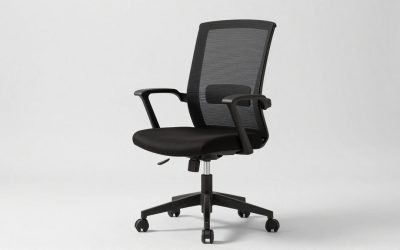
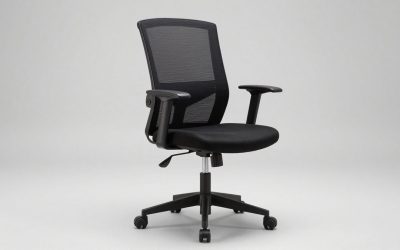
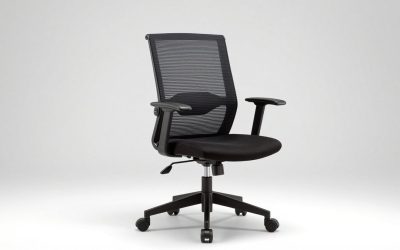
 400lbs Executive Office Chair with Flip-Up ArmrestsLarge20 x 22 x 40 inches36.52 PoundsCheck on Amazon


What actually matters at larger sizes
Most office chairs are rated for 250-300 lbs because that’s what the frame, gas cylinder, and casters can handle before something fails early. The failure isn’t usually dramatic. It’s a cylinder that sinks a half inch every week until the seat bottoms out, or a nylon base that develops hairline cracks around the caster sockets after a year of daily use. If you’re over 300 lbs, those numbers aren’t marketing fluff, they’re the actual limit of the parts.
Seat width matters as much as weight rating, and it’s the spec most people ignore. A chair rated for 350 lbs with an 18-inch seat will still feel wrong if your hips need 22 inches of clearance. You end up perched on the edge or wedged against armrests that dig into your thighs. Look for seat width specs, not just “big and tall” marketing language, and measure your own hip width while sitting on a hard chair, then add 2-3 inches for clothing and movement.
Weight ratings and what they actually mean
A chair’s weight rating is usually tested at a static load, not the dynamic load of someone leaning back, shifting, or standing up repeatedly through an 8-hour day. In practice, buy at least 50-75 lbs above your actual weight if you want the gas cylinder and tilt mechanism to last more than a year or two. A 300 lb-rated chair for a 280 lb person will feel fine on day one and start sagging by month six.
Steel is the dividing line. Chairs rated above 350 lbs almost always use a steel frame and steel-reinforced base instead of nylon or plastic composite. If you see a chair claiming a 400+ lb rating with a plastic base, that’s a red flag worth skipping. The base is usually the first thing to crack under sustained heavy use, well before the upholstery wears out.
Three tiers, honestly compared
You don’t need to spend $900 to get a chair that holds up. You do need to know which corners get cut at each price point.
| Tier | Price range | Typical weight rating | What you get | What you don’t |
|---|---|---|---|---|
| Budget big and tall | $150-250 | 300-400 lbs | Steel base, wide seat, decent lumbar pad | No real adjustability beyond height and tilt tension; foam softens in 1-2 years |
| Mid-range ergonomic | $300-500 | 350-450 lbs | Adjustable armrests and lumbar, better mesh or cushion, 5-8 year warranty | Still mostly off-the-shelf sizing, not built-to-order |
| Heavy-duty / big and tall specialist | $500-900 | 400-500+ lbs | Reinforced steel frame, wider seat pan options, longer warranty on gas cylinder | Bulkier footprint, heavier to move, not worth it if you’re under 300 lbs |
If you’re in the 250-320 lb range, the mid-range tier is usually the sweet spot. You’re not paying for structural capacity you don’t need, but you get adjustability that actually reduces hip and back strain over a workday. If you’re north of 350 lbs, don’t try to save money in the budget tier. The frame will likely outlast the gas cylinder by a wide margin, and replacing a sunk cylinder costs almost as much as buying a better chair up front.
Seat depth and armrests, the overlooked parts
Seat depth (front to back) is the second most-ignored spec. If the seat pan is too deep, the front edge presses into the back of your knees and cuts circulation, which is a bigger problem the longer you sit. You want 1-2 inches of clearance between the seat edge and the back of your knee when your back is against the lumbar support. Some chairs let you slide the seat pan forward and back by 2-3 inches; that adjustment is worth paying extra for if you’re between standard sizes.
Armrests on wide chairs are often mounted too close together to actually support your arms once you account for hip and thigh width. Look for armrests that adjust outward (width adjustment), not just up and down. A chair with 4D armrests (height, width, depth, and pivot) costs more but solves a problem that fixed armrests simply can’t.
What to actually search for
Skip generic “office chair” listings and search with the right qualifiers, because that’s where the weight rating and seat width actually show up in the listing. A good starting point is a big and tall office chair rated for 400 lbs, which filters out most of the chairs that quietly max out at 250. If you specifically need width, search for a wide seat office chair with 22-inch seat rather than relying on photos, since seat width is wildly inconsistent across brands even within the same price range. For the heavy-duty tier, a heavy-duty executive chair rated to 500 lbs search turns up the steel-frame options that are actually built for sustained daily use rather than occasional sitting.
When the cheaper chair is genuinely fine
If you’re under 280 lbs and sit for 4-5 hours a day rather than 8-10, a $180-220 big and tall chair with a steel base is a reasonable choice. The main thing that fails first in that price range is the foam density, not the frame, and foam flattening is annoying but not unsafe. Where it stops being fine is heavy daily use past the 300 lb mark, or any situation where you’re leaning back frequently and loading the recline mechanism. That’s where the cheap gas cylinders give out, usually announced by a slow sink that gets worse over weeks rather than a sudden failure.
One more practical note: check the actual box weight and your doorway/elevator access before buying anything in the heavy-duty tier. Steel-frame big and tall chairs commonly ship at 60-80 lbs, and returning one because it won’t fit through a hallway turn is a worse headache than spending ten extra minutes measuring first.