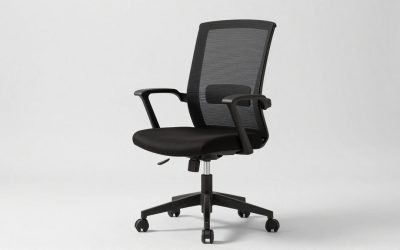
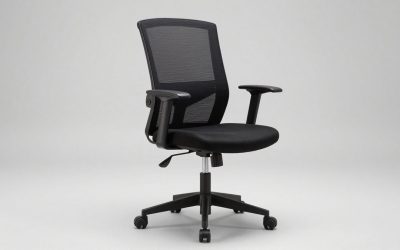
Our Top Picks


Why Neck Pain Starts at the Chair
Cervical pain from sitting almost never starts in the neck. It starts lower, usually at the lumbar support or lack of it. When your lower back isn’t held in a neutral curve, your pelvis tilts back, your shoulders round forward, and your head drifts out ahead of your spine to compensate. That’s called forward head posture, and every inch your head moves forward adds roughly 10 pounds of effective load on your cervical spine. A chair that only addresses the neck with a headrest, but ignores lumbar and seat depth, is treating the symptom, not the cause.
So the “best chair for cervical pain” question is really a chair-fit question. The right chair for a 5’2″ person with a short torso is wrong for a 6’3″ person with long legs, and no single model fixes both. What matters is a short list of adjustable features and whether you actually use them.
The Features That Actually Matter
Skip the marketing copy about “ergonomic design” and check for these specifically:
Adjustable headrest, both height and angle. A fixed headrest that hits mid-skull instead of the base of your skull pushes your head forward, which is the opposite of what you want. You need one that can sit low enough to support the occipital area and tilt forward to meet your head rather than make you reach back for it.
Lumbar support with depth adjustment, not just height. Height-only lumbar pads are common and mostly useless if they don’t also push forward enough to fill your specific lower back curve. Depth adjustment is the feature that separates a $150 chair from a $500 one, and it’s the one most buyers skip checking.
Seat depth adjustment. If the seat pan is too long, you either sit with your knees jammed or scoot forward off the backrest entirely, which kills lumbar contact and sends the whole chain of compensation up to your neck. Seat depth sliders matter more for people under 5’5″ or over 6’1″.
Armrest height and width adjustment. Armrests set too low make you shrug your shoulders up toward your ears for hours at a time, which tightens the upper trapezius and directly feeds tension headaches and neck stiffness. This is an underrated cause of cervical pain that has nothing to do with the headrest.
Budget vs. Premium: What You’re Actually Paying For
Below is a realistic breakdown of what changes as you move up in price. These are categories, not specific models, since fit varies by body type.
| Price range | What you typically get | Good for | Common failure mode |
|---|---|---|---|
| $100–200 | Fixed or height-only lumbar, basic tilt, mesh back | Light use, under 6 hours/day, no major existing injury | Lumbar support flattens out within 1-2 years; padding degrades |
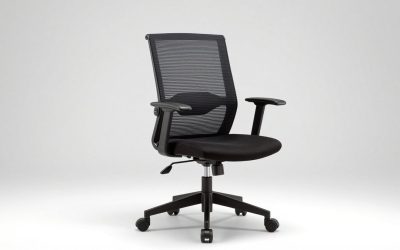
| $200–400 | Adjustable lumbar depth, seat depth slider, 3D or 4D armrests | Full-time desk work, mild to moderate neck/shoulder pain | Headrest often still fixed-angle or missing entirely |
| $400–900 | Full headrest articulation, synchro-tilt mechanisms, adjustable tension | Chronic cervical issues, post-injury, 8+ hour days | Diminishing returns if you never adjust the settings you paid for |
The honest take: if you’re under 40, your pain is mild and recent, and you work six hours a day, a well-reviewed mid-range ergonomic chair with adjustable lumbar support will solve most of your problem. You don’t need to spend $800. Where premium chairs earn their price is seat depth range and headrest articulation, features that matter a lot if you’re outside average height ranges or have a diagnosed cervical condition.
If the Headrest Is the Main Issue
Some people have good lumbar support already (a decent chair, or they’ve fixed it with a cushion) but still get neck pain from looking at monitors that sit too low or too far, forcing chin-down posture for hours. In that case the fix isn’t a new chair at all, it’s monitor height. The top of your screen should be at or just below eye level. If you’ve already corrected monitor height and still ache, a chair with a dedicated adjustable headrest for neck support is worth the upgrade, specifically one where the headrest moves independently of the backrest recline, not one bolted at a fixed angle.
For side sleepers who nap at their desk, or anyone who leans sideways while reading, wing-style headrests that curve around the sides help more than flat pads, since flat pads only support the head when it’s pointed straight back.
What Doesn’t Work
Neck pillows strapped to a generic task chair are a common workaround and they rarely help for more than a week. They add bulk at the wrong height and often push the head forward rather than back, since they’re not adjustable to your specific skull position. Gaming chairs marketed with “ergonomic” branding and a pillow headrest attachment fall into the same trap: the bolster is fixed, the lumbar is usually a stuffed cushion with no depth control, and the recline mechanism is tuned for leaning back to watch something, not for sustained typing posture.
Standing desks also don’t fix cervical pain on their own. Standing with poor monitor height or a forward-leaning habit just moves the same bad posture to a different position. If you’re considering a standing desk for neck pain specifically, fix monitor height first; it costs nothing and tells you whether the desk purchase is even necessary.
How to Check Fit Before You Buy
If buying online without sitting in the chair first, measure your own seated eye height and torso length, and check the manufacturer’s seat height range and seat depth range against those numbers rather than against generic “fits 5’0″-6’5″” marketing claims. Most return windows are 30 days; use that time deliberately. Sit in the chair for at least a full workday before deciding, since lumbar fit that feels fine for twenty minutes can feel wrong after four hours, and that’s exactly the timeframe where cervical pain actually shows up.