Key takeaways
- Pros: Exceptional breathability for 8+ hours, size-specific fit, fully adjustable arms, 12-year warranty, keeps lumbar contact when reclined
- Cons: Firm feel initially, no headrest included, seat has no depth adjustment within a size, higher price range
The best chair for computer work in 2026 is the Steelcase Leap or Herman Miller Aeron for most people doing 8+ hours at a desk, with the Haworth Fern and Herman Miller Embody as top alternatives for back pain, and the Secretlab Titan Evo as the best foam option if you prefer a cushioned seat over mesh.
For all-day computer work, lumbar support that stays in contact when you recline, a seat depth that fits your leg length, and 4D armrests matter more than marketing features. Below are 7 proven picks compared on what actually affects comfort over a full workday, plus how to choose based on your space, body, and budget.

Herman Miller Classic Aeron Chair - Size B, Posture Fit
Included for 'Best Chair for Computer Work in 2026: 7 Picks for All-Day Comfort' because the listing specifies Size B and Posture Fit, details this guide uses to compare options.
View on Amazon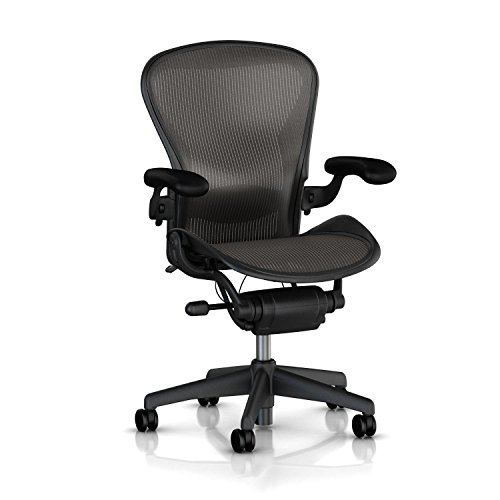
Herman Miller Aeron Executive Office Chair-Stainless Steel, Size B-Fully Adjustable Arms-lumbar Support Open Box
Included for 'Best Chair for Computer Work in 2026: 7 Picks for All-Day Comfort' because the listing specifies Size B-Fully Adjustable Arms-lumbar Support Open Box, details this guide uses to compare options.
View on Amazon
Herman Miller Embody Ergonomic Office Chair | Fully Adjustable Arms and Carpet Casters | Black Rhythm
Included for 'Best Chair for Computer Work in 2026: 7 Picks for All-Day Comfort' because the listing specifies Fully Adjustable Arms and Carpet Casters and Black Rhythm, details this guide uses to compare options.
View on Amazon
Herman Miller Aeron Ergonomic Chair - Size B, Graphite
Included for 'Best Chair for Computer Work in 2026: 7 Picks for All-Day Comfort' because the listing specifies Size B and Graphite, details this guide uses to compare options.
View on AmazonHow to Choose a Chair for 8+ Hour Computer Work
Before comparing models, use these four decision criteria. They separate chairs that feel good for 30 minutes from chairs that still feel good at hour eight.
1. Lumbar Support Type
Fixed lumbar pads push on one spot. Look for height-and-depth adjustable lumbar or a backrest that adapts as you move. If you have lower back pain or sit slightly reclined (100-110 degrees is ideal for spinal discs), an adjustable system that maintains contact when you lean back is essential.
2. Mesh vs. Foam Seat
Mesh breathes and distributes weight without pressure points but can feel firm. High-density foam feels plusher initially but traps heat and compresses over 3-5 years. Your climate, weight, and whether you sit cross-legged should drive this choice.
3. Adjustability That Matters
Priority features for computer work: seat height range, seat depth adjustment (critical if you are under 5’6″ or over 6’0″), lumbar height/depth, armrest height/width/depth, and tilt lock with tension control. Headrests help only if you recline often.
4. Fit For Your Body and Space
A standard office chair needs about 30 inches of depth when reclined and 36 inches of clearance to roll back from a desk. In a 10×12 ft bedroom office, that leaves room for a 48-60 inch desk plus a chair without blocking the doorway. Check seat height range against your desk height: a standard 29-30 inch desk works with a 16-21 inch seat height range for most users. If your desk is 27-28 inches (compact or standing desk at sitting height), you need a low minimum seat height.
7 Best Chairs for Computer Work in 2026 Compared
| Chair | Ideal For | Seat Material | Weight Limit | Seat Height Range | Typical Price Range |
|---|---|---|---|---|---|
| Herman Miller Aeron (Size B/C) | All-day mesh comfort, hot offices | 8Z Pellicle Mesh | 300 lbs (B), 350 lbs (C) | 16 – 20.5 inches | usually $1,100 – $1,600 |
| Steelcase Leap | Best overall adjustability | Foam seat + flexible back | 400 lbs | 16 – 21 inches | usually $900 – $1,300 |
| Herman Miller Embody | Back pain, posture support | Foam + pixelated support | 300 lbs | 16 – 20.5 inches | usually $1,500 – $2,000 |
| Steelcase Gesture | Multiple sitting positions, large frames | Foam seat + 3D LiveBack | 400 lbs | 16 – 21 inches | usually $1,000 – $1,400 |
| Haworth Fern | Flexible back, broad shoulders | Foam seat + mesh/fiber back | 325 lbs | 16 – 20.5 inches | usually $900 – $1,300 |
| Secretlab Titan Evo | Gaming + work hybrid, foam lovers | Cold-cure foam (leatherette or fabric) | 285 lbs (Regular), 395 lbs (XL) | 17.5 – 21.5 inches (Regular) | usually $500 – $700 |
| Branch Ergonomic Chair | Small spaces, mid-range budget | Italian mesh + foam seat hybrid | 275 lbs | 17 – 20.5 inches | usually $300 – $500 |
1. Herman Miller Aeron – Best Mesh Chair for Long Hours
The Aeron remains the benchmark for breathable, all-day support. Its 8Z Pellicle mesh has eight zones of varying tension to support the sacrum and lumbar without a bulky pad, and the PostureFit SL system adjusts both sacrum and lower back independently. Available in three sizes (A/B/C) so seat depth and width actually fit your frame, unlike one-size chairs.
- Pros: Exceptional breathability for 8+ hours, size-specific fit, fully adjustable arms, 12-year warranty, keeps lumbar contact when reclined
- Cons: Firm feel initially, no headrest included, seat has no depth adjustment within a size, higher price range
2. Steelcase Leap – Best Overall for Computer Work
Leap is the most adaptable foam chair for office work. Its LiveBack technology flexes with your spine shape as you change posture, and the adjustable lumbar moves 2.25 inches in height and 1.75 inches in depth. Seat depth adjusts 3 inches (15.75 to 18.75 inches), making it one of the few chairs that fits both 5’2″ and 6’2″ users well.
- Pros: Best seat depth range, high 400 lb weight limit, natural recline with 5 lock positions, soft armrest caps for typing
- Cons: Foam seat sleeps warm in summer, back frame is wider than mesh chairs, needs more clearance (32 inches deep when reclined)
3. Herman Miller Embody – Best for Back Pain
Designed with input from physicians, Embody uses a pixelated support system that distributes pressure and aligns the spine. The backrest narrows to allow arm movement and encourages micro-movements, which reduces stiffness during long computer sessions. Lumbar and backrest adapt automatically rather than via manual knobs.
- Pros: Excellent spinal alignment, encourages healthy movement, narrow back frees shoulders for keyboard/mouse work
- Cons: Limited manual lumbar tuning, heaviest in class (box weight 68 lbs), highest price range
4. Steelcase Gesture – Best for Varied Postures
Gesture was designed for how people actually sit at computers: leaning, reaching for multiple screens, or tucking a leg up. Its 360-degree armrests move 5 inches vertically and pivot fully, so elbows stay supported when typing or using a tablet. The seat edge flexes to reduce pressure behind the knees.
- Pros: Most versatile armrests for multi-monitor setups, accommodates cross-legged sitting, 400 lb limit, intuitive adjustments
- Cons: Backrest can feel broad for petite users, foam requires occasional fluffing, no mesh seat option
5. Haworth Fern – Best Flexible Back Support
Fern’s standout is its wave-like suspension back with exposed leaf-like fibers that flex with your torso. You get continuous lumbar and thoracic support without a hard lumbar bar. The seat is foam over a flexible shell, balancing cushion with give.
- Pros: Back cradles the spine through recline, very comfortable for broad backs and shoulders, optional fully mesh or digital knit back
- Cons: Headrest is optional and adds cost, armrests not as wide-ranging as Gesture, 325 lb limit is lower than Steelcase
6. Secretlab Titan Evo – Best Foam Chair Under $700
The Titan Evo uses cold-cure foam that holds shape longer than standard memory foam, with a 4-way integrated lumbar system (height and depth) built into the backrest rather than a separate pillow. Comes in Regular and XL with magnetic head pillow and 4D armrests. The recline goes to 165 degrees for breaks.
- Pros: Plush but supportive foam, strong lumbar adjustment for the price, durable leatherette or SoftWeave fabric options, 5-year warranty
- Cons: Leatherette traps heat, heavier chair (77 lbs boxed), seat depth not adjustable
7. Branch Ergonomic Chair – Best for Small Spaces and Budgets
A compact hybrid with an Italian mesh back and Italian mesh over foam seat, the Branch Ergonomic Chair offers 7 points of adjustment including lumbar height/depth and seat depth in a smaller footprint. At 26.5 inches wide, it fits in a 10×10 ft room with a 48-inch desk and still allows 30 inches for a walkway.
- Pros: Compact footprint, breathable hybrid design, lighter weight (42 lbs boxed), usually under $500
- Cons: Less refined recline tension, 275 lb limit, foam seat will soften faster than premium options
Mesh vs. Foam vs. Hybrid: Material Trade-Offs for Daily Use
| Feature | Full Mesh (e.g., Aeron) | Full Foam (e.g., Leap, Gesture) | Hybrid (Mesh Back + Foam Seat) |
|---|---|---|---|
| Heat & Breathability | Best – airflow prevents sweating | Worst – retains body heat | Balanced – cool back, cushioned seat |
| Pressure Distribution | Even, hammock-like tension | Soft initial feel, pressure on sit bones over time | Good – combines both |
| Durability (5-8 years) | Mesh rarely sags, frame lasts 12+ years | Foam density 50-60 kg/m3 lasts longest; low-density foam flattens in 2-3 years | Seat foam may compress, mesh back stays taut |
| Maintenance | Vacuum mesh, wipe frame | Steam clean fabric, leatherette can crack | Vacuum mesh back, spot clean seat |
| Best For | Hot rooms, 8+ hour sitters over 150 lbs | Users who want plush feel, cold offices | Most home offices, value with comfort |
Which Chair Fits Your Situation?
Use this decision matrix instead of chasing one “best” pick:
| Your Situation | Recommended Type | Top Pick |
|---|---|---|
| Small apartment / 10×12 ft room / needs to tuck under desk | Compact hybrid, under 27 inches wide | Branch Ergonomic Chair |
| Kids and pets (spills, claws) | Mesh back + durable fabric, easy to clean | Steelcase Leap (fabric) or Haworth Fern |
| Renter (frequent moves, no elevator) | Lightweight, simple assembly, under 45 lbs boxed | Branch Ergonomic Chair |
| Chronic lower back pain / herniated disc | Adaptive spinal support, adjustable lumbar depth | Herman Miller Embody or Aeron with PostureFit |
| Over 6’1″ or over 300 lbs | XL sizing, 350-400 lb rating, deeper seat | Steelcase Leap/Gesture or Aeron Size C / Titan Evo XL |
| Run hot / no AC | Full mesh, no foam to trap heat | Herman Miller Aeron |
| Prefer cushioned, gaming-style seat | High-density cold-cure foam | Secretlab Titan Evo |
Assembly, Moving and What Wears First
Real-world ownership details often missing from listings:
- Box weight and doorways: Premium chairs ship at 55-77 lbs boxed (Embody 68 lbs, Titan Evo 77 lbs). Standard interior doorways are 30-32 inches wide; all boxes here fit except XL models which may need unboxing in the hallway. Stair carries require two people for any chair over 60 lbs boxed.
- Assembly time: Aeron, Leap, Gesture, Fern and Embody arrive nearly assembled (attach base and back, 10-15 minutes, no tools beyond included Allen key). Titan Evo and Branch take 20-30 minutes with more bolts.
- Floor clearance: You need at least 42 inches between desk edge and wall to recline without hitting the wall. Add a chair mat if you have hardwood; casters for carpet are larger (60mm) and roll easier on thick carpet.
- What wears first: On foam chairs, the seat cushion and arm pads compress first (years 3-5). On mesh chairs, the arm pads and tilt mechanism loosen before the mesh fails. Leatherette peels at the seat edge around year 4 in dry climates; fabric and mesh last longer with pets.
- Tabletops and desk height: If your desk is not height-adjustable, measure your elbow height while seated. Your elbows should be at 90-100 degrees with forearms parallel to the floor. Most 29-inch desks pair with a 17.5-19 inch seat height for users 5’6″ to 5’11”.
Final Verdict: Our Top 3 by Use Case
For most people doing computer work all day, the Steelcase Leap offers the best balance of adjustability, weight capacity, and long-term foam comfort usually between $900 and $1,300. If you run hot or want the longest-lasting support, the Herman Miller Aeron’s mesh and 12-year warranty justify the higher price. On a tighter budget or in a small room, the Branch Ergonomic Chair delivers 80% of the ergonomic features for roughly half the cost.
Choose mesh if you prioritize cooling and durability, foam if you want initial plushness and a wider seat, and always prioritize seat depth and lumbar depth adjustment over a headrest or design.