Key takeaways
- Best for: Remote workers logging 6-10 hours a day, warm offices or non-air-conditioned home offices, users with mild to moderate lower-back tightness who need tunable support rather than fixed lumbar.
- Good fit for renters and small offices: The mesh frame keeps visual weight low and the footprint is compact for a high-back chair.
- Skip it if: You want deep, plush cushioning like a padded executive chair, you are under 5’2″ and need a very shallow seat pan without modification, or you prefer a headrest for full neck support — this model does not include one.
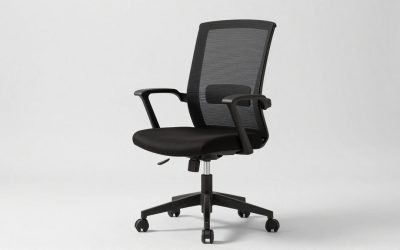
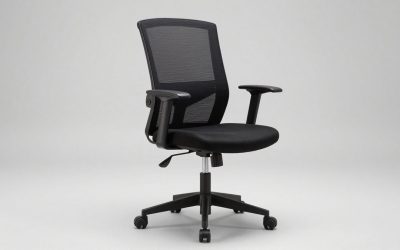
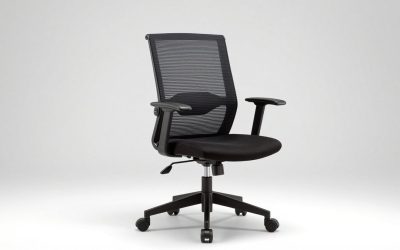
The WorkPro Momentum Ergonomic Mesh Active High Back Chair is a mid-range ergonomic task chair that fits best for users between 5’4″ and 6’2″ who need all-day breathability, adjustable lumbar depth, and a multi-position recline without moving into a premium executive price tier, usually $300–$600 in 2026.
Who Should Buy the Momentum and Who Should Skip It
This high-back design is built around active sitting, meaning it encourages micro-movements rather than locking you in one upright posture. That approach works well if you shift positions frequently, alternate between typing and reclining for calls, or run warm in a mesh-averse office.
- Best for: Remote workers logging 6-10 hours a day, warm offices or non-air-conditioned home offices, users with mild to moderate lower-back tightness who need tunable support rather than fixed lumbar.
- Good fit for renters and small offices: The mesh frame keeps visual weight low and the footprint is compact for a high-back chair.
- Skip it if: You want deep, plush cushioning like a padded executive chair, you are under 5’2″ and need a very shallow seat pan without modification, or you prefer a headrest for full neck support — this model does not include one.
Core Dimensions and Real-World Fit
Listing specs tell you the range, but not how it actually sits in a room or at a desk. Here are the numbers that affect daily use:
| Measurement | WorkPro Momentum Spec | What It Means at Your Desk |
|---|---|---|
| Seat Height (from floor) | 17.5″ – 21.5″ | Aligns with standard desks 28″–30″ high; leaves 6″–10″ clearance for thighs if you are 5’4″ to 6’1″ |
| Seat Depth (adjustable) | 18″ – 20″ (2″ slider range) | Critical for leg support — see breakdown below |
| Seat Width | 20.5″ | Accommodates most builds up to ~250 lb comfortably without side-pressure |
| Back Height | 23.5″ (high-back) | Supports to shoulder blades for users up to ~6’2″; no headrest |
| Overall Footprint | 26″ W x 26″ D | Needs 36″ x 36″ minimum to roll and recline; fits a 10×12 ft home office with a 60″ desk and still leaves a 30″ walkway |
| Arm Height (from seat) | 7″ – 10″ (height adjustable) | Adjusts to keep elbows at 90 degrees for desk heights 27″–30″ |
| Weight Capacity | 275 lb | Standard for mesh task chairs in this tier; not a big-and-tall rated frame |
| Recline Range | ~90° to 120°, 3 lock positions | Upright for typing, mid-recline for reading, full recline for calls |
For doorway and moving context: the boxed chair ships at approximately 55–60 lb and 30″ x 27″ x 24″. It fits through any standard 28″–30″ interior doorway when boxed, and assembled it rolls easily through 29″ doorways without disassembly.
Seat Depth Adjustments: Why the 2-Inch Slider Matters
Seat depth determines whether your back can touch the backrest while leaving 2–3 fingers of space behind your knees. The Momentum uses a seat slider that moves the pan forward and back by 2 inches, from 18″ to 20″.
- At 18″ depth: Best for users 5’4″–5’8″ or anyone with a shorter inseam (approx. 28″–30″). You can sit fully back without pressure behind the knees, which reduces numbness during long sessions.
- At 19″ depth: Sweet spot for 5’9″–5’11”. Maintains thigh support while keeping lumbar contact.
- At 20″ depth: Needed for 6’0″–6’2″ or longer femurs. Gives full thigh contact; shorter users will feel the front edge digging in if left at this setting.
Unlike fixed-depth mesh chairs in the same price bracket, this adjustment prevents the common problem where a tall chair forces shorter users to perch forward, losing lumbar support entirely. If you are under 5’4″, even the shallowest 18″ setting may still feel deep — pairing with a footrest to raise knee angle can help.
Seat Cushion vs. Mesh Trade-Off
The Momentum uses a mesh seat and back, not foam. Mesh distributes weight evenly and avoids the heat trap of foam, but it has a firmer sit with less initial sinking. Users who prefer a cushioned, enveloping feel often find mesh too taut for the first week until the tension settles.
Mesh Breathability and Temperature Control
The open-weave mesh on both the seat and backrest is tensioned across a frame, creating airflow that foam and faux-leather chairs cannot match. In a 72–78°F room, mesh typically runs 3–5°F cooler on the contact surface than upholstered foam.
Practical implications:
- No heat buildup during 4+ hour sessions; you won’t get the sticky-back feeling common with bonded leather.
- Requires occasional vacuuming — dust and pet hair cling to the weave more visibly than on vinyl.
- Mesh does not absorb spills like fabric, but liquid passes through to the floor. Blot quickly and the frame wipes clean.
The trade-off is durability at the edges. On any mesh chair, the highest stress points are where the mesh wraps the frame. That edge tension can soften slightly after 2–3 years of daily use, creating a small hammock effect. Rotating the tension is not possible; replacement means reupholstering or replacing the seat frame.
Lumbar Support: How It Actually Adjusts
The Momentum’s lumbar is not a fixed bump. It offers two-way adjustment:
- Height adjustment: ~3 inches of vertical travel, so you can align the support with your natural lumbar curve (typically 6″–10″ above the seat pan).
- Depth adjustment: Dial-controlled forward pressure that pushes the mesh outward 0.75″–1.25″. This controls how aggressively the lumbar pushes into your lower back.
This is more useful than the single-height sliders found on many budget mesh chairs. If you have a pronounced lordosis or sit very upright, increase depth. If you recline often or have a flatter back, reduce depth to avoid overextension. The lumbar is integrated into the mesh, so there is no separate pad to shift or squeak, but also no option to remove it entirely.
For users with diagnosed disc issues or chronic pain, this level of adjustability helps, but it does not replace a chair with independent, inflatable lumbar or a separate lumbar cushion for fine-tuned asymmetry.
Recline Range and Tilt Control
The chair uses a synchro-tilt mechanism where the back reclines at a greater angle than the seat. The range is approximately 90 degrees upright to 120 degrees reclined, with three lockable positions plus free-float.
- Position 1 ( ~90°): Tasking and typing posture. Keeps spine stacked over hips.
- Position 2 ( ~105°): Relaxed working angle for reading or video calls. Reduces spinal disc pressure compared to fully upright.
- Position 3 ( ~120°): Rest angle. Best paired with armrests supporting elbows and feet flat to avoid sliding forward.
Tilt tension is adjustable via a knob under the seat. Heavier users (200 lb+) will want higher tension to prevent sudden drop-back; lighter users (<130 lb) should reduce tension or the back will feel stiff to recline. The mechanism does not offer forward tilt, which some users want for perching at standing desks.
Material and Construction Trade-Offs
| Component | WorkPro Momentum Approach | Pros | Cons |
|---|---|---|---|
| Frame | Nylon-reinforced plastic + steel base | Lightweight, rust-proof, lower cost | Less rigid than full aluminum frame under max load |
| Seat/Back | Tension mesh over frame | Breathable, even pressure, easy to clean | Firmer sit, edge wear after years |
| Armrests | Height-adjustable, soft pad caps | Keeps elbows neutral, reduces shoulder shrug | No width or depth slide like premium 4D arms |
| Casters | Dual-wheel carpet casters | Smooth on low-pile carpet and hard floors | Can mark hardwood; consider rollerblade-style wheels for hard floors |
Compared to solid wood or metal guest chairs, mesh task chairs prioritize ergonomics over formal aesthetics. Compared to foam office chairs, they prioritize cooling and longevity of the sitting surface — foam compresses and holds body heat after 2 years, while mesh retains its shape longer but offers less plushness.
Assembly, Moving and Long-Term Durability
Assembly is straightforward for one person and typically takes 20–35 minutes with the included hex key. Steps are: attach casters to five-star base, insert gas cylinder, mount seat mechanism, bolt backrest to seat, add armrests. No drilling required.
Box weight around 58 lb means you will want help carrying it up stairs. Once assembled, the chair weighs roughly 38–42 lb — light enough to lift over thresholds but heavy enough to stay planted when reclining.
What wears first on this class of chair:
- Year 1–2: Arm pad surface develops shine and light compression where forearms rest.
- Year 2–3: Mesh edge tension softens slightly; gas cylinder may lose 0.5″ of max height if regularly at upper range.
- Year 3–5: Caster rolling resistance increases on carpet; tilt mechanism may develop slight play if recline is used hard daily.
To extend life, vacuum mesh monthly, keep the chair out of direct sunlight to prevent mesh UV fading, and avoid sitting on the armrests.
Decision Matrix: Which Situation Points to the Momentum
| Your Situation | Is Momentum a Good Match? | Why |
|---|---|---|
| Small apartment / 10×10 ft room | Yes | 26″ x 26″ footprint plus breathable mesh keeps the room visually open |
| Kids and pets at home | Moderate | Mesh resists spills but traps pet hair; no fabric to claw, but claws can snag mesh if pets jump on it |
| Back pain and need strong lumbar | Yes, if adjustable is enough | Height + depth tunable lumbar covers most needs; severe cases may need a chair with independent lumbar bladder |
| Renter who moves yearly | Yes | Disassembles to 3 main parts with 4 bolts; easy to move vs. bulky executive chairs |
| Tall user over 6’2″ or over 275 lb | Consider alternative | Exceeds rated height/weight; look for big-and-tall models with 300–350 lb rating and deeper seat |
| Want to lean back and nap | No | 120° recline and no headrest is not a lounger |
Bottom Line for Long Workdays
For long workdays in a home office, the WorkPro Momentum Ergonomic Mesh Active High Back Chair justifies its price through adjustability that is usually reserved for higher tiers: seat depth slider, two-way lumbar, and three-position recline with tension control. Its limitations are intentional — firmer mesh instead of foam, height-only arms instead of 4D, and no headrest — which keep the footprint compact and the temperature down. If your priorities are breathability, fit tuning for your leg length and lower back, and a chair that disappears visually in a small room, it is a practical choice. If you need plush cushioning, a headrest, or a higher weight rating, a padded big-and-tall or executive task chair will serve you better.