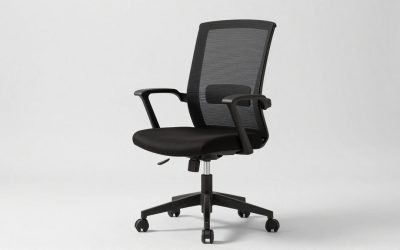
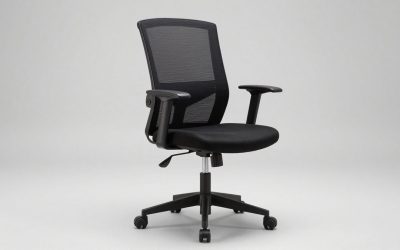
Our Top Picks


Black Friday is the one time of year the office chair market actually moves on price. A chair that’s normally $450 drops to $300, and the $150 mesh chairs that are mediocre year-round sometimes dip to $90, which is close to disposable territory. The trick is knowing which discounts matter and which are just markdowns on chairs that weren’t worth full price to begin with.
What’s actually on sale
Three tiers show up every November. Budget mesh chairs ($80-150 normally) get the deepest percentage cuts, sometimes 40% off, because margins there are already built for volume. Mid-range ergonomic chairs ($300-500) see the most meaningful dollar discounts, often $100-150 off, because brands use Black Friday to clear previous-year models. High-end chairs ($700+) rarely drop more than 15-20%, and when they do, it’s usually a bundle deal or a refurbished unit rather than a straight price cut.
If you’re replacing a chair that’s actively hurting your back, the mid-range tier is where the sale actually changes your decision. At full price a $400 chair with real lumbar adjustment competes with a $150 chair that has none. At Black Friday pricing, that same $400 chair might land at $280, and now it’s competing with chairs that were never going to fix your posture problem anyway.
What to check before you buy
Ignore the marketing copy and check four numbers directly:
Seat depth adjustment range. If you’re under 5’4″ or over 6’2″, a fixed seat pan will either cut into your knees or leave your back unsupported. Look for at least 2-3 inches of seat depth travel.
Lumbar adjustment type. A static lumbar bump is better than nothing but won’t match your spine’s curve precisely. Height-adjustable lumbar (that slides up and down) is worth paying for if you sit more than 6 hours a day. Pneumatic or dial-based depth adjustment on top of that is a bonus, not a requirement.
Weight rating and your actual weight. Most chairs list a max weight of 250-300 lbs, but they perform best at 60-70% of that rating. A chair rated for 275 lbs holding someone at 260 lbs will wear out its gas cylinder and tilt mechanism faster than the same chair holding someone at 180 lbs. If you’re near the top of a chair’s rated range, size up to the next tier rather than buying at the edge.
Warranty length as a quality signal. A 2-year warranty on a $150 chair is normal. A 2-year warranty on a $500 chair is a red flag, because it suggests the manufacturer doesn’t trust the mechanism past that point. Chairs built for all-day use typically carry 5-12 year warranties on the frame and mechanism.
Mesh vs. foam: the trade-off nobody explains clearly
Mesh backs breathe better and don’t compress over time, but they offer less contouring, so if you need firm, shaped lumbar support, mesh alone often isn’t enough. Foam seats and backs feel more supportive out of the box but compress over 2-4 years, especially cheaper molded foam that loses 20-30% of its loft under daily use. High-density foam (the kind used in $400+ chairs) compresses much more slowly, often lasting 7-10 years before you notice sagging.
If your office runs warm or you sweat through chair backs by midafternoon, mesh is worth the trade-off even with less contouring. If you run cold or want more cushioned support, foam with a separate adjustable lumbar piece is the better pick.
| Chair tier | Typical BF price | Lumbar support | Expected lifespan | Good for |
|---|---|---|---|---|
| Budget mesh ($80-150) | $50-100 | Fixed curve or none | 2-3 years | Light use, under 5 hrs/day, no existing back issues |
| Mid-range ergonomic ($300-500) | $220-350 | Adjustable height/depth | 5-8 years | Full-time desk work, mild to moderate back pain |
| High-end ($700+) | $550-650 | Fully adjustable, often dynamic | 10+ years | Chronic back issues, 8+ hrs/day seated |
When the cheap chair is actually fine
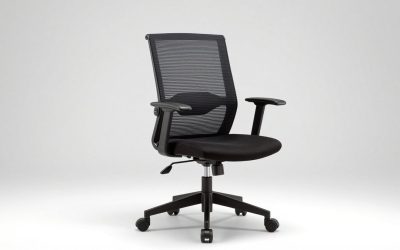
If you work from a desk fewer than 4 hours a day, or you already stand and move frequently, a $90-120 mesh chair with basic tilt and height adjustment does the job. The failure mode on these chairs isn’t usually comfort, it’s mechanical: gas cylinders that sink over 12-18 months, armrests that loosen, casters that crack on hard flooring. None of that matters much if you’re not in the chair long enough to need rock-solid lumbar support. For that use case, browsing mesh office chairs with adjustable lumbar support during the sale and picking anything with decent reviews and a 2-year warranty is a reasonable call.
Where cheap stops being fine is chronic pain. If you’ve already got lower back issues, a $90 chair’s flat lumbar pad won’t do anything for you no matter how good the Black Friday price looks. That’s the situation where it’s worth spending the saved money from a sale on a chair in the mid-range tier instead of pocketing the discount on a budget model.
Specialty picks worth the search
Two categories get overlooked during Black Friday because they’re not the chairs on the homepage banner. If you have a diagnosed back condition, kneeling or saddle-style ergonomic chairs change your sitting posture entirely rather than just supporting it, and they’re worth looking at through ergonomic kneeling chairs for back pain. If your main problem is a chair that’s structurally fine but lacks support, a standalone lumbar cushion is a $25-40 fix that often solves 70% of the problem without replacing the chair at all, and those are easy to find under lumbar support cushions for office chairs.
Before adding anything to cart, check the return window on the listing specifically for Black Friday. Some sellers shorten the standard 30-day return policy to 14 days during the sale period, which matters a lot for a chair you need to sit in for a week before you know if the lumbar position actually fits your spine.