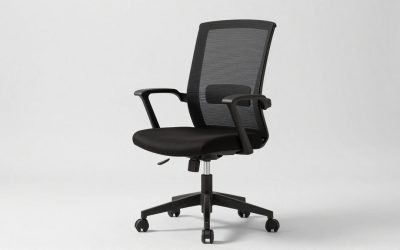
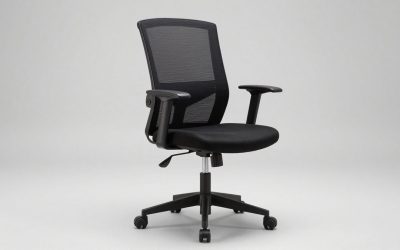
Our Top Picks
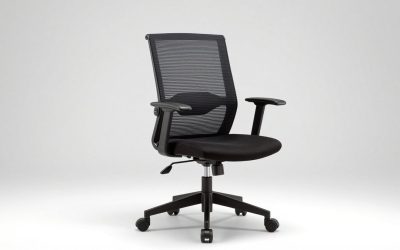
 Herman Miller Embody Ergonomic Office Chair28D x 27W x 38.25H in28 x 27 x 38.25 inches51 poundsCheck on Amazon
 Herman Miller Classic Aeron Task Chair: Highly AdjSize B (Medium)17 x 27 x 42 inches48 poundsCheck on Amazon
A computer chair with keyboard tray is usually not worth buying as an all-in-one unit, because a truly ergonomic chair-mounted tray adds weight, restricts movement, and forces you into a fixed posture that is worse for your wrists and back than a separate under-desk tray or lapboard.
If you are searching for this combo to save space, reduce desk costs, or create a reclined computing setup, you will get better ergonomics, durability, and value by pairing a standard ergonomic office chair with the right tray solution for your situation. Here is why attached trays are so rare and what to choose instead.

Herman Miller Classic Aeron Chair - Size B, Posture Fit
Chosen because it specifies Size B and Posture Fit.
View on AmazonHerman Miller Embody Ergonomic Office Chair | Fully Adjustable Arms and Carpet Casters | Black Rhythm
Chosen because it specifies Fully Adjustable Arms and Carpet Casters and Black Rhythm.
View on Amazon
Herman Miller Aeron Ergonomic Chair - Size B, Graphite
Chosen because it specifies Size B and Graphite.
View on AmazonHerman Miller Classic Aeron Task Chair: Highly Adj w/Lumbar Pad - Tilit Limiter w/Seat Angle Adj - Fully Adj Vinyl Arms - Carpet Casters
Chosen because it specifies Tilit Limiter w/Seat Angle Adj and Fully Adj Vinyl Arms.
View on AmazonWhy You Almost Never See a True Computer Chair With Keyboard Tray
Major office furniture brands like Herman Miller, Steelcase, and Secretlab do not sell mainstream office or gaming chairs with an integrated, swing-away keyboard tray, and there is a practical engineering reason for that.
A keyboard tray needs to be stable, level, and at elbow height to be ergonomic. Mounting it to a chair creates three problems:
- Stability and weight: A tray large enough for a full-size keyboard and mouse (at least 25-28 inches wide) acts as a lever arm. To prevent tipping, the chair would need a much heavier, wider five-star base and a locking mechanism, adding 8-12 lbs and making the chair hard to roll and swivel.
- Posture lock-in: An attached tray moves with you when you recline or rotate. That sounds convenient, but it means your wrists, elbows, and shoulders have no independent reference point. You cannot push the keyboard away to change posture, stand, or tuck the chair fully under a desk.
- Durability failure point: The pivot arm or swing mechanism takes constant load and torque. On cheap integrated models, this joint is the first part to loosen, sag, or crack, often within 12-18 months of daily use. Replacement parts are rarely available.
What you do find marketed as a “computer chair with keyboard tray” is typically one of two things: a recliner-style theater chair with a small, tablet-sized flip-up surface, or a niche industrial task chair with a tiny side-mounted tray for barcode scanners or medical devices – neither is designed for 6-8 hours of typing.
The 3 Options Compared: Chair-Mounted vs. Under-Desk vs. Lapboard
For comfortable, neutral-wrist typing, your keyboard height should allow your elbows to rest at 90-110 degrees with wrists straight and forearms parallel to the floor. For most adults, that means a keyboard surface height of 26 to 29 inches from the floor when seated.
| Feature | Integrated Chair Tray | Under-Desk Slide-Out Tray | Lapboard / Lap Desk |
|---|---|---|---|
| Typical Keyboard Height | 26-30 in, fixed to chair height | 26-27.5 in, adjustable and independent of chair | 27-29 in, depends on chair height + cushion thickness |
| Elbow & Wrist Alignment | Poor – tray moves when you recline, hard to keep 90-degree angle | Excellent – keeps wrists neutral, frees desk surface | Moderate – good for reclined use, poor for upright desk work |
| Stability for Mouse Use | Low – narrow, bouncy, often too small for low-sensitivity mousing | High – 26-30 in wide, solid slides rated for 15-35 lbs | Low to Moderate – shifts on legs, limited mousing space |
| Range of Motion | Locked to chair, cannot push away | Can slide in/out, swivels on some models | Fully portable, but must balance on lap |
| Desk Clearance Needed | Needs 30+ in open space, cannot tuck under standard desk | Requires 1.5-2 in under-desk clearance + 24 in knee space | Needs 0 in – works with any chair, couch, or recliner |
| Durability | Low – pivot arm loosens quickly | High – steel slides last 5+ years if not overloaded | Moderate – cushion compresses, board can warp |
| General Cost Range | Usually $250–$500 for low-quality combos | Usually $40–$150 for tray + $300–$600 for good chair | Usually $40–$90 |
Key Ergonomic Measurements Most Listings Skip
Before buying any tray solution, measure these three clearances:
- Seat height to floor: Standard office chairs adjust from about 17 to 21 inches. Your ideal keyboard surface should be 1-2 inches above your seated elbow height. If your desk is a fixed 29-30 inch height (standard for most desks), and you are shorter than 5’6″, you will almost always need a tray that lowers the keyboard by 2-4 inches to avoid shrugging your shoulders.
- Knee clearance: You need at least 24 inches of clear depth under the desk and 27 inches of height from floor to underside of the desk/tray for comfortable leg movement. A thick under-desk tray that drops too low can reduce this to 25 inches and cause knees to hit.
- Room fit in a 10×12 ft room: In a typical 10×12 ft home office, a standard desk (60×30 in) plus an ergonomic chair (26 in wide) with 36 inches of push-back space consumes about 30 sq ft. An integrated chair-tray unit often needs an extra 10-12 inches of side clearance for the swing arm, making it harder to place near a wall or in a corner.
What to Buy Instead: Picks by Situation
Do not search for the unicorn chair-tray combo. Choose the tray type that matches how and where you actually compute.
1. For Daily Desk Work and Back Pain: Under-Desk Keyboard Tray
This is the best choice for anyone working 4+ hours a day at a desk who wants to fix wrist strain or shoulder tension.
An under-desk tray installed on a solid desk drops the keyboard to the correct ergonomic height and lets you maintain a neutral spine while keeping your feet flat. Look for a tray that is at least 25 inches wide, has steel ball-bearing slides, height and tilt adjustment of -15 to 0 degrees, and a separate mousing area. Clamp-on models are ideal for renters or solid-wood desks you do not want to drill, while screw-mounted models are more stable on engineered wood desks.
Pair it with a mesh or foam ergonomic chair that has adjustable seat height, lumbar depth, and armrests that can drop below desk height. The tray, not the chair, should set your keyboard height.
2. For Recliners, Small Apartments, or No Desk: Lapboard
Choose a lapboard if you work from a recliner, couch, or small apartment where a permanent desk will not fit. A good lapboard has a hard, flat top (bamboo or high-pressure laminate), a wrist rest, and a bottom cushion that distributes weight without cutting off circulation.
Limitation to know: Lapboards are not ideal for upright posture. They encourage slouching and raise your elbows slightly higher than ideal. Limit continuous use to 1-2 hour sessions and use a chair with good lumbar support underneath.
3. For Temporary or Renter-Friendly Setups: Clamp-On or Fold-Away Tray
If you cannot modify furniture, a C-clamp keyboard tray that attaches to the desk edge without tools gives you 80% of the benefit of a permanent tray. It installs in minutes, leaves no holes, and can move with you. Just check that your desk edge is 0.75 to 1.5 inches thick and can support 15+ lbs without bowing.
Decision Matrix: Which Option Fits You Best?
| Your Situation | Best Choice | Why |
|---|---|---|
| Small apartment / no dedicated office | Lapboard + ergonomic task chair | Zero footprint, fully portable, no installation |
| Renter who cannot drill into desk | Clamp-on under-desk tray | No damage, removable, corrects high desk height |
| Back, neck, or wrist pain from high desk | Screw-mounted adjustable under-desk tray | Most stable, best height/tilt adjustment for neutral posture |
| Kids and pets at home | Under-desk tray with slide-in lock | Tray hides away, keeps keyboard out of reach and dust-free |
| Want to compute fully reclined | Lapboard with built-in mouse pad | Only option that moves naturally with a recliner |
| Need to free up desk surface for writing/drawing | Under-desk tray | Reclaims 4-5 sq ft of desk space permanently |
Materials, Construction, and What Wears Out First
Understanding construction helps you avoid a tray that sags or a chair that fails early.
| Component | Material Options | Trade-Off |
|---|---|---|
| Keyboard Tray Surface | MDF with laminate vs. Bamboo / Solid Wood vs. Phenolic Resin | MDF is cheap but sags under 20+ lbs and swells with moisture; bamboo is stiff and light; phenolic resin is most durable and easy to clean |
| Slide Mechanism | Plastic friction slides vs. Steel ball-bearing slides | Plastic wobbles and sticks within months; steel slides support 30+ lbs and glide smoothly for years |
| Chair Frame | Engineered wood / Plastic vs. Steel / Aluminum base | Plastic bases flex and crack at 250 lbs; steel/aluminum bases are rated to 300-350 lbs and last longer |
| Cushion Foam | Low-density foam (<1.5 lbs/cu ft) vs. High-density molded foam (>1.8 lbs/cu ft) | Low-density foam compresses and bottoms out in 6-12 months; high-density retains shape for 3-5 years |
For lapboards, avoid pure MDF boards without edge sealing – they warp with humidity. For under-desk trays, check weight limits and avoid overloading with heavy keyboards, wrist rests, and phones beyond 30 lbs.
Assembly, Moving, and Durability Realities
An integrated chair with a tray is the most difficult to live with long-term. Expect a shipping box weight of 55-70 lbs and a doorway clearance need of at least 28-30 inches to maneuver the assembled unit. The arm mechanism cannot be easily removed, so moving it through tight hallways or up stairs is awkward.
By contrast, a quality ergonomic chair ships in a 40-50 lb box and an under-desk tray ships flat at 10-18 lbs. Assembly for a clamp-on tray is 10-15 minutes with no drilling; a screw-mounted tray takes 20-30 minutes and requires a drill, measuring tape, and checking for pre-existing desk hardware underneath.
What fails first: On chair-tray combos, the tilt pivot and swing hinge loosen and develop play. On under-desk trays, the slide screws can strip out of particleboard desks if overloaded – use through-bolts or reinforcement plates on engineered wood. On lapboards, the bottom cushion foam flattens and the fabric cover pills. All three should be inspected every 6 months for tightness and wear.
Bottom Line: How to Spend Your Budget Wisely
Do not pay a premium for a gimmick chair with a built-in tray. You will get far better comfort and longevity by splitting your budget: invest in a proven ergonomic office chair with adjustable height, lumbar, and armrests (usually $300–$600 for a durable model) and add a $40–$150 under-desk tray or lapboard that matches your space and posture needs.
If your desk is too high and you have wrist or shoulder pain, an under-desk tray is the fix. If you have no desk or prefer to work reclined, a lapboard is the practical answer. Neither requires you to compromise on the chair itself – which is where long-term comfort really comes from.