Our Top Picks
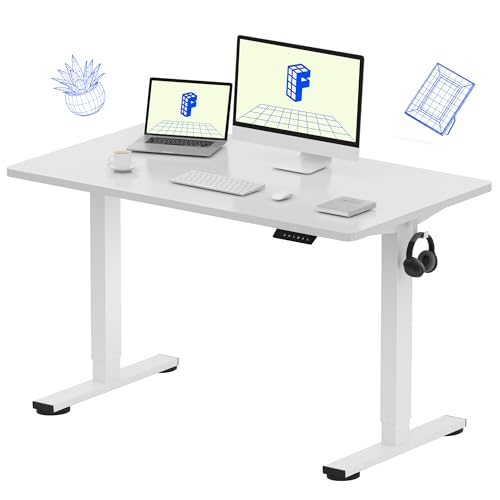 FLEXISPOT EN1 48"x24" One-Piece Standing Desk47.2 x 23.6 in48 x 24 x 28 inches44.1 PoundsCheck on Amazon
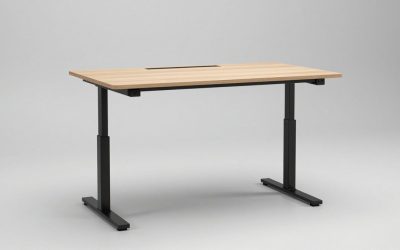
The Steelcase Solo sit to stand desk is a single-motor electric standing desk with a height range of 27 to 47 inches, four top sizes from 48 to 72 inches wide, a 200-pound lifting capacity, and a travel speed of about 1.4 inches per second, which makes it a good fit for users between about 5’0″ and 6’3″ who need a compact, quiet desk for a small home office.
Steelcase Solo Specs at a Glance
Unlike dual-motor desks built for heavy multi-monitor setups, the Solo is designed for simplicity, lighter loads, and smaller footprints. It uses a single column motor and a streamlined C-leg base to keep cost and depth down while still offering Steelcase’s commercial-grade warranty and stability.
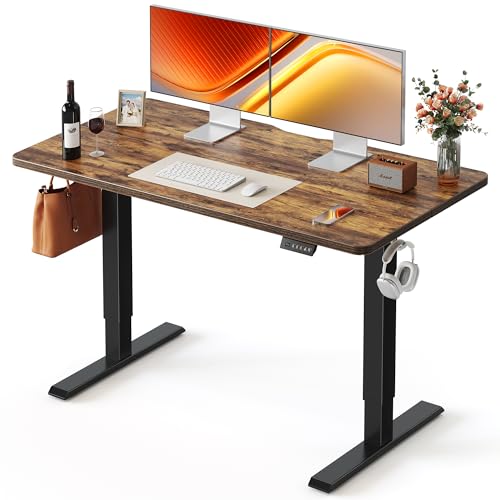
FEZIBO Standing Desk 48 × 24 Inch Electric Height Adjustable, Rustic Brown
Chosen because it specifies Rustic Brown.
View on Amazon
ErGear Height Adjustable Electric Standing Desk, 48 x 24 Inches Sit Stand up Desk, Memory Computer Home Office Desk, Vintage Brown
Chosen because it specifies 48 x 24 Inches Sit Stand up Desk and Memory Computer Home Office Desk.
View on AmazonFLEXISPOT EN1 48"x24" One-Piece Standing Desk, White
Chosen because it specifies White.
View on Amazon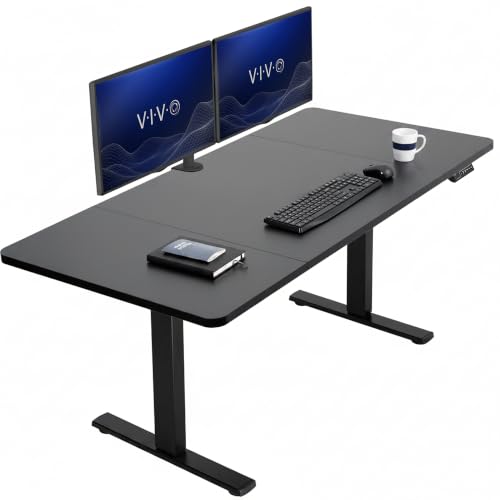
VIVO Electric Standing Desk, Solid 1-Piece 60" x 30" Black Top | Holds 220 lbs, Extra Deep Top, Single Motor, Height Adjustable, Home Office, 4 Memory Presets, Black Frame, DESK-KIT-1B6B-30
Chosen because it specifies DESK-KIT-1B6B-30.
View on Amazon| Specification | Steelcase Solo Sit-to-Stand Desk |
|---|---|
| Height Range (without top) | 27″ to 47″ (add 1″ for top thickness = 28″ to 48″ work surface height) |
| Travel Speed | 1.4 inches per second |
| Lifting Capacity | 200 lbs total (including top) |
| Top Sizes Available | 48″W x 24″D, 60″W x 24″D, 60″W x 30″D, 72″W x 30″D |
| Top Thickness | 1″ laminate |
| Base Width Range | Adjusts to match 48″, 60″, or 72″ tops |
| Foot Depth | 24.5″ |
| Noise Level | Under 45 dB during adjustment |
| Controller | Up/down paddle with 3 programmable presets |
| Power Draw | Standard 120V outlet, integrated cable management tray optional |
Height Range: Who It Actually Fits
The 27″ to 47″ base height translates to a 28″ to 48″ work surface height once the 1-inch top is installed. That 20 inches of travel covers both seated and standing ergonomics for most adults without needing a keyboard tray or footrest for basic use.
Seated and standing fit by user height
- 5’0″ to 5’4″: Seated elbow height is typically 23″ to 25″. The 28″ lowest setting will be slightly high for barefoot sitting. Plan on a footrest and setting your office chair to 17″–18″ seat height to reach the desk comfortably.
- 5’5″ to 6’0″: Ideal range for the Solo. Seated elbow height of 25″ to 28″ aligns perfectly with the 28″–30″ seated range, and standing elbow height of 40″ to 45″ is well within the 41″–46″ standing range.
- 6’1″ to 6’3″: Standing elbow height is around 46″ to 48″. You will be at the top of the range. Works well with flat shoes or low-profile shoes, but if you are 6’4″ or taller and want to stand with elbows at 90 degrees, you may need a taller dual-motor desk that goes to 50″+.
- Wheelchair or low-seated users: The 27″ base minimum may be too high for a 26″ armrest clearance. Check your chair’s arm height before choosing.
Motor speed matters for how you use presets. At 1.4 inches per second, moving from a 29″ seated height to a 44″ standing height takes about 11 seconds. It is smooth and quiet enough for calls, but not instant. The three memory presets make that transition one-touch instead of holding the paddle.
Top Sizes and How Much Space You Really Get
Solo tops are 1-inch laminate in Steelcase finishes, not solid wood. The depth choice changes usability more than the width:
- 48″W x 24″D: Fits a single 27″ monitor and laptop side-by-side, but leaves only 6″–8″ of depth in front of the monitor for notebooks. Best for tight corners or as a secondary desk.
- 60″W x 24″D: The small-office sweet spot. Room for dual 24″ monitors on a stand plus a laptop, but 24″ depth feels shallow if you use a monitor arm clamp and want to push the screen back.
- 60″W x 30″D: Same width but 6 inches deeper. This gives you the recommended 20″–26″ viewing distance from eyes to screen and space to place a monitor at the back while keeping the keyboard at the ergonomic edge. Most people who work 6+ hours at the desk prefer this depth.
- 72″W x 30″D: Full workstation. Handles dual 27″ monitors, speakers, and room to spread out paper. Requires more wall length and floor clearance.
All tops have a 200-pound total capacity, but the top itself weighs 45 to 70 lbs depending on size. That leaves roughly 130 to 155 lbs of usable lifting capacity for equipment. A typical load of two monitors (20 lbs), a desktop PC (25 lbs), and accessories (15 lbs) is about 60 lbs, well under the limit. Problems only arise if you add heavy storage, large printers, or solid wood accessories on top.
Desk Depth and Wall Clearance You Need to Plan For
The spec sheet lists the top depth, but the footprint is larger because of the feet, cable clearance, and chair movement.
- Actual floor footprint: Feet are 24.5″ deep. With a 24″ top, the feet sit flush. With a 30″ top, the top overhangs the feet by about 2.75″ at the front and back.
- Wall clearance: Leave 1″ minimum between the back edge and the wall to prevent pinching cables when raising and lowering. If you route power through a wall outlet behind the desk, leave 2″–3″ for the plug and cable tray.
- Chair clearance: You need at least 36″ from the wall behind you to the desk edge when seating is pushed back. For a 30″ deep desk, that means the total depth from wall to wall is 30″ (desk) + 36″ (chair roll) + 2″ (wall gap) = 68″ minimum.
- Side clearance: Allow 24″ on at least one side for the base to travel without hitting a lateral file or bookshelf, and 30″ if you need to roll the chair sideways to a second surface.
Will it fit in a 10×12 ft home office?
A 10×12 ft room is 120 square feet, but doors, windows, and closets reduce usable wall length to about 9 to 11 feet per side. Here is how each Solo size fits:
- 48″ x 24″ in 10×12: Leaves 72″ of wall length remaining on a 10-foot wall. You can add a 30″ wide filing cabinet beside it and still have a 42″ walkway. Total floor use is about 8 sq ft, or 7% of the room.
- 60″ x 30″ in 10×12: Uses half the 10-foot wall. With the 68″ depth requirement, you still have about 76″ of open floor depth remaining in a 12-foot long room, enough for a small guest chair or storage behind you. This is the largest size that still feels open in a 10×12.
- 72″ x 30″ in 10×12: Fits only if that wall has no door swing or closet. It leaves 48″ on a 10-foot wall, which is tight for anything else. It also blocks natural light if placed under a window. Better for an 11×12 or larger room, or when the desk floats in the center instead of against a wall.
If your office is under 100 square feet or doubles as a bedroom, choose 60″ x 24″ and mount monitors on an arm to reclaim depth. If the room is dedicated and you keep reference materials on the desk, the 60″ x 30″ is worth the extra 6 inches.
Decision Matrix: Which Solo Size Should You Choose?
| Your Situation | Best Solo Size | Why |
|---|---|---|
| Small apartment, desk in living room or bedroom corner | 48″ x 24″ or 60″ x 24″ | Narrow 24″ depth keeps walkways clear; 48″ width tucks into an alcove without dominating the room |
| Dedicated 10×12 home office, 1–2 monitors, 6+ hours per day | 60″ x 30″ | 30″ depth gives proper eye-to-screen distance and room for ergonomic keyboard placement |
| Tall user (6’1″+) who stands most of the day | 60″ x 30″ or 72″ x 30″ | Deeper top keeps monitors stable at full height; height range tops out at 48″, so avoid if you are over 6’4″ |
| Renter who moves often, upstairs apartment | 48″ x 24″ or 60″ x 24″ | Lighter top (45–55 lbs vs 65–70 lbs for 72″) and narrower base are easier through 29″–30″ doorways and tight elevators |
| Shared home office with kids and pets | 60″ x 24″ with laminate top | Laminate resists scratches and wipes clean better than wood veneer; smaller top reduces climbing or bumping risk |
| Need space for large paperwork, drafting, or dual 27″+ monitors | 72″ x 30″ | Extra width prevents monitor crowding; only choose if you have at least 80″ of clear wall |
Assembly, Moving, and Durability Realities
Product listings rarely mention what happens after delivery. For the Solo, expect two boxes: one for the base (about 70 lbs) and one for the top (45 to 70 lbs depending on size). The base box is long and narrow and will not fit in a compact car. You need a 30-inch wide doorway and a clear 6-foot length to lay out the legs during assembly.
Assembly is typically 45 to 75 minutes with two people. The single motor means fewer cables than dual-motor desks, but you still need to attach the feet, crossbar, and controller, then flip the desk upright. Do not assemble alone for the 60″ and 72″ tops; the flip step is awkward at over 100 lbs combined weight.
For materials, the top is high-pressure laminate over particleboard, not solid wood or plywood. That trade-off is intentional:
| Material | Pros | Cons | Best For |
|---|---|---|---|
| Laminate (what Solo uses) | Scratch and stain resistant, easy to clean, stable in humidity, lower cost | Cannot be sanded or refinished; edge banding can chip if hit hard | Daily computer work, kids and pets, renters |
| Solid Wood | Can be refinished, premium feel, long lifespan if maintained | Heavier, expands with humidity, higher price, needs coasters and oiling | Design-focused home office where desk is furniture first |
| Engineered Wood Veneer | Wood look for less money than solid wood | Veneer can peel with heat or moisture, less impact resistant than laminate | Occasional-use offices where aesthetics outweigh durability |
What wears first on the Solo is not the motor but the touchpoints: the edge banding where chair arms rub, and the cable tray if overloaded. The motor is rated for thousands of cycles and usually carries a 5-year warranty through Steelcase dealers. Keep the total load under 150 lbs for daily use to extend motor life and prevent slowdown at the top of the range.
In 2026, the Steelcase Solo usually sells in the general market range of $800 to $1,300 depending on top size and dealer, which places it above budget direct-to-consumer desks but below premium dual-motor models from Steelcase such as the Migration SE. If you need heavier lifting, faster travel, or a height range above 50 inches, consider stepping up to a dual-motor frame. If you need the smallest possible footprint and a reliable single-motor desk for a home office that must fit against one wall, the Solo’s 60″ x 30″ is the most versatile choice.
Frequently Asked Questions
Do you need a special outlet for the Steelcase Solo?
No. It plugs into a standard 120V wall outlet and draws minimal power when idle. Keep the power brick off the floor and in the cable tray to avoid dust buildup and accidental unplugging when the desk moves.
Can you put the Solo on carpet?
Yes, but on thick carpet or a plush rug the feet may settle unevenly. Use a low-pile rug or a hard floor mat under the base to keep the desk level and to make height adjustments smoother.
Is the Solo stable at standing height?
At 42″ to 47″, a single-motor C-leg will have slight wobble if you lean on it or type aggressively, which is normal for this class. The 30″ deep top improves stability over the 24″ top. If you need rock-solid stability for heavy monitors at full height, a dual-motor four-leg design will be more stable.