Key takeaways
- Single 27-inch monitor: comfortable, with 10 inches each side for speakers or a lamp.
- 34-inch ultrawide: fits, leaving about 6 inches each side. Curved ultrawides on stock stands use a lot of depth.
- Two 24-inch monitors: they fit (about 42 inches combined) but with no side space, and bezel edges will hang close to the desk ends.
- Two 27-inch monitors: about 48 inches combined; too wide unless angled inward on a dual monitor arm, and even then tight.
- PC tower: a mid-tower on the top eats 8–9 inches of width and pushes monitors off-center. On a desk this size, the floor beside the desk (on a stand to keep it off carpet) is usually better.
The Eureka Ergonomic Z1-S is a compact, fixed-height gaming desk, about 44 inches wide, with Z-shaped steel legs, a carbon-fiber-texture top, an RGB LED edge strip, and built-in extras like a cup holder and headphone hook. It suits a single-monitor or small dual-monitor setup in a bedroom or dorm; it is the wrong desk if you need height adjustment, deep space for large screens, or a surface for a full-size tower plus two 27-inch monitors.
This review focuses on fit and real-world trade-offs: what the footprint holds, how the Z-frame affects legroom and stability, what to expect from the lighting and accessories, and who should buy something else.

EUREKA ERGONOMIC Gaming Desk, 60 Inch Computer Desk with RGB LED Lights
Chosen because it specifies 60 Inch Computer Desk with RGB LED Lights.
View on Amazon
EUREKA ERGONOMIC Gaming Desk, 60 Inch Computer Desk with Full Mouse Pad
Chosen because it specifies 60 Inch Computer Desk with Full Mouse Pad.
View on Amazon
EUREKA ERGONOMIC Gaming Desk, 60 Inch L-Shaped Black Glass Computer Desk
Chosen because it specifies 60 Inch L-Shaped Black Glass Computer Desk.
View on AmazonKey Facts at a Glance
| Feature | Z1-S | What it means for you |
|---|---|---|
| Width | About 44 in (compact class) | One 27–32 in monitor, or two 24 in monitors edge to edge |
| Depth | Compact-desk depth, roughly 24 in class | Keep monitors about 20–24 in from your eyes; arms help reclaim depth |
| Height | Fixed, standard desk height (around 29–30 in) | Fits users roughly 5’4″–6’1″ with a standard chair |
| Frame | Steel, Z-shaped side legs | Open legroom; side-to-side rigidity depends on crossbar and tightened bolts |
| Top | Engineered wood with carbon-fiber-texture laminate | Hides scratches well; edges are the vulnerable point |
| Extras | RGB LED strip, cup holder, headphone hook | Convenience; none affect desk structure |
| Typical price range | Roughly $100–$200 depending on version and sales | Mid-budget gaming-desk territory |
What Fits on a 44-Inch Gaming Desk
Width is the first thing to check against your gear. Monitor widths (without stand) are roughly: 24-inch 16:9 about 21 inches, 27-inch 16:9 about 24 inches, 34-inch ultrawide about 32 inches.
- Single 27-inch monitor: comfortable, with 10 inches each side for speakers or a lamp.
- 34-inch ultrawide: fits, leaving about 6 inches each side. Curved ultrawides on stock stands use a lot of depth.
- Two 24-inch monitors: they fit (about 42 inches combined) but with no side space, and bezel edges will hang close to the desk ends.
- Two 27-inch monitors: about 48 inches combined; too wide unless angled inward on a dual monitor arm, and even then tight.
- PC tower: a mid-tower on the top eats 8–9 inches of width and pushes monitors off-center. On a desk this size, the floor beside the desk (on a stand to keep it off carpet) is usually better.
Depth and eye distance
With a compact-depth top, a 27-inch monitor on its stock stand sits roughly 18–20 inches from your eyes once a keyboard is in front of it. That is on the close side for 27 inches. A clamp-on monitor arm lets you push the screen to the back edge and reclaim several inches. Check the desk edge thickness and the space behind the desk before buying an arm, since clamps need clearance and the Z-frame affects where they can grip.
The Z-Frame: Legroom and Stability
Z-shaped legs put the floor contact point behind the top’s front edge and slant the leg forward, which opens up legroom compared with four straight legs. You can usually stretch out without hitting a crossbar at knee height.
The trade-off is lateral sway. Any desk with two side frames and a top can wobble side to side when you type hard or bump it, and compact gaming desks are no exception. What reduces it:
- Tightening every frame bolt fully after assembly, then again after a week of use.
- Adjusting leveling feet so all four contact points carry weight on uneven floors.
- Placing the desk against a wall so the back edge has something to rest against.
- Keeping heavy items (monitors, speakers) centered rather than at one end.
RGB Lighting and Accessories
The LED strip along the edge is the desk’s main visual feature. Expect several color and effect modes controlled with a small controller or remote. Practical notes:
- Power: the strip needs an external power source, so plan a free USB port or outlet and route the cable along a leg.
- Durability: adhesive-mounted LED strips are the part most likely to peel or fail first on any gaming desk. They are generic and replaceable if it happens.
- Cup holder and headphone hook: handy, but they add to the effective width on the side where they mount. In a tight alcove, measure with those attached.
Assembly and Moving
- Time: plan 30–60 minutes for one person. A second person helps when attaching the top to both side frames.
- Box: compact desks like this typically ship in a single flat box under about 50 lb, small enough to carry up stairs alone.
- Fasteners: engineered wood tops hold screws well the first time, poorly after repeated removal. If you move often, avoid fully disassembling the top; remove the legs only.
- Doorways: assembled, a 44-inch desk tilted on its side passes through a standard 30-inch door easily.
Where the Z1-S Falls Short
- No height adjustment: users much shorter than 5’4″ may need a footrest; users taller than about 6’2″ may find knee clearance tight with thick chair arms.
- Limited width for dual large monitors: it is a single-screen-first desk.
- Edge wear: laminate edges on engineered wood chip if hit by a chair arm. Set chair armrests lower than the desk underside.
- Cable management: basic. Adding an under-desk cable tray or adhesive clips makes a noticeable difference.
Who Should Buy It and What to Consider Instead
| Your situation | Z1-S a good fit? | Better alternative type |
|---|---|---|
| Bedroom or dorm, one monitor, console or laptop | Yes | n/a |
| Two 27 in monitors, full tower | No | 55–63 in gaming desk or 60 x 30 in standing desk |
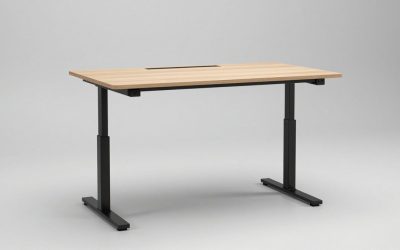
| Want to stand part of the day | No | Electric standing desk in the 48 x 24 in class |
| Corner of a room | Partly | L-shaped gaming desk (Eureka and others make them) |
| Want RGB look on a budget | Yes | n/a |
Verdict
The Eureka Ergonomic Z1-S makes sense for a compact gaming corner where looks matter and the setup is one main screen. Its open Z-frame legroom and integrated extras are genuine conveniences, while fixed height, compact depth and typical engineered-wood edge wear are the trade-offs. If your gear list already includes two large monitors or you want to alternate sitting and standing, size up rather than squeezing it onto this desk.