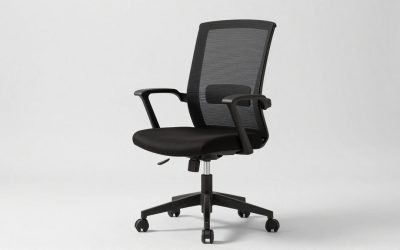
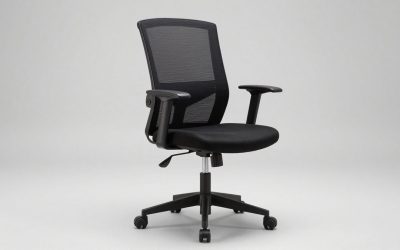
Our Top Picks
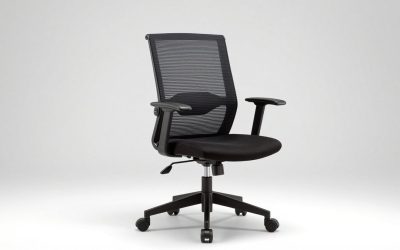
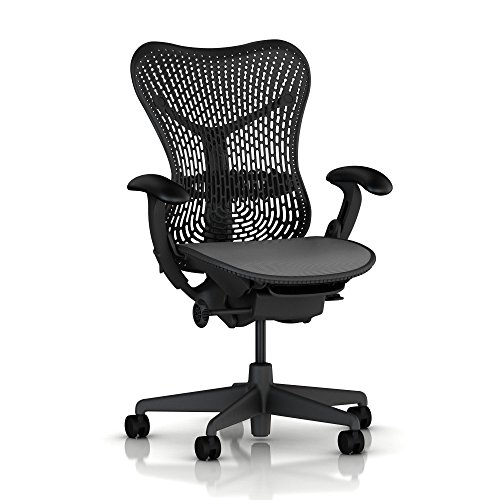 Mirra Chair by Herman Miller: Fully Featured w/Forward21 x 22 x 24 inches54.45 poundsCheck on Amazon
The best desk chair for petite person has a seat height that adjusts down to 15-16 inches, a seat depth of 16-17.5 inches, and lumbar support that can be positioned low enough to hit your lower back, not your mid-back, so you can sit with feet flat and thighs parallel without needing a footrest.
Most standard office chairs are scaled for a 5’8″ to 6’0″ user. They start at 17.5-19 inches at their lowest height and have 18.5-20 inch deep seats. For someone 5’4″ and under, that pushes you to perch on the edge or let your feet dangle, which cuts off circulation behind the knees and forces you to slouch to reach the backrest. The fix is not a thicker cushion, it is a smaller frame.
Mirra Chair by Herman Miller: Fully Featured w/Forward Tilt - Adjustable Arms - FlexFront Seat - Tilt Limiter - Lumbar Support - Hard Floor Casters - Graphite Frame/Graphite Seat
Chosen because it specifies Adjustable Arms and FlexFront Seat.
View on Amazon
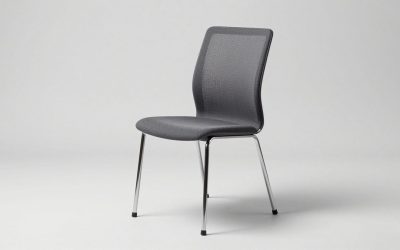
Herman Miller Celle Chair - Adjustable Lumbar Support, Seat Height, Depth, Adaptive Armrest, Tilt Tension - Repackaged Ergonomic Office Chair, Comfortable Desk Seating
Chosen because it specifies Adjustable Lumbar Support and Seat Height.
View on AmazonWhat to Check Before You Buy: The 4 Petite-Fit Measurements
Use these numbers against the spec sheet, not the marketing photos. If a chair does not list them, it likely is not designed for smaller frames.
1. Minimum Seat Height: 15″ to 16.5″
With shoes off, most people 5’0″ to 5’4″ need a seat pan 15.5″ to 17″ from the floor to keep knees at 90 degrees with feet flat. Standard office desks are 29″ to 30″ high. If your chair will not go low enough, your desk will feel too high and you will shrug your shoulders to type. Look for a low-cylinder option. Some models like the Herman Miller Aeron Size A and Steelcase Leap offer a lower cylinder that starts at 15.25″.
2. Seat Depth: 16″ to 17.5″ and Adjustable
Seat depth is measured from the front edge to the backrest. For petite users, under 18″ is critical, ideally 15.5″ to 17.5″. You should be able to sit with your back fully against the backrest and have 2-3 fingers of space between the seat edge and the back of your knees. If the pan is too deep, you will either slouch forward or feel pressure on the calves. Sliding seat pans are essential because they let you shorten depth without losing back support.
3. Lumbar Height Range, Not Just Lumbar Depth
Many chairs offer adjustable lumbar firmness but not height. For a 5’2″ user, the lumbar curve should sit roughly 6″ to 9″ above the seat pan. If the lumbar is fixed at 10″+, it will hit above your natural curve and push your upper back instead. Choose chairs where the lumbar pad or backrest height slides vertically.
4. Backrest Height and Armrest Width
A shorter backrest (around 19″ to 21″ high) prevents the shoulder area from pushing your head forward. Armrests should adjust narrow enough that your elbows stay close to your sides and low enough that shoulders do not elevate. Look for arm width adjustment or flip-up arms if you are narrow-shouldered.
Best Desk Chairs for Petite Adults Compared
These types consistently offer the low height range and shallow depth petite users need. Specifications are based on manufacturer data for 2026 models and may vary slightly by cylinder and fabric option.
| Chair Type | Min Seat Height | Seat Depth Range | Lumbar Adjustment | Weight Capacity | Best For |
|---|---|---|---|---|---|
| Herman Miller Aeron Size A | 14.75″ | 15.75″ | Adjustable PostureFit, height-fixed but positioned low for small frame | 300 lbs | Smallest frame, precise fit, mesh keeps cool |
| Steelcase Leap (with low cylinder) | 15.5″ | 15.75″ – 18.75″ (sliding seat) | Height + depth adjustable (4″ vertical range) | 400 lbs | Maximum adjustability for 5’0″ – 5’4″ |
| Haworth Fern (small back option) | 16″ | 17″ (with slider) | Height-adjustable lumbar | 325 lbs | Back pain, needs flexible, cradling backrest |
| Branch Ergonomic Chair | 16″ | 17″ | Height-adjustable lumbar (3 positions) | 275 lbs | Budget-friendly without going too tall or deep |
| HON Nucleus with petite seat | 16.25″ | 16.5″ – 18.5″ (sliding seat) | Depth-adjustable only | 300 lbs | All-day task work, easy to find in office supply ranges |
| SIHOO M18 Small Frame | 16″ | 16.5″ | Height-adjustable lumbar | 264 lbs | Compact apartment, light and low-profile |
All of these chairs typically sit in general market ranges from usually $350–$650 for mesh task chairs to usually $900–$1,600 for premium ergonomic models like the Aeron and Leap. Low-cylinder versions sometimes cost the same but must be requested at purchase.
Which Chair Type Matches Your Situation
Use this matrix to avoid over-buying features you do not need.
| Your Situation | Priority Feature | Recommended Pick Type | Why |
|---|---|---|---|
| 5’0″ – 5’2″, feet do not reach floor in standard chairs | Lowest seat height under 16″ | Aeron Size A or Steelcase Leap with low cylinder | Only cylinders that start at 14.75″ – 15.5″ let you sit flat-footed at a 29″ desk without a footrest |
| 5’3″ – 5’4″, thighs hit seat edge / legs fall asleep | Sliding seat depth to 16″ – 17″ | Steelcase Series 1, HON Nucleus, Haworth Fern | Shallow, adjustable depth removes pressure behind knees while keeping back support |
| Small apartment or 10×12 ft home office | Compact footprint and armless or flip-up arms | Small-frame mesh chair (SIHOO M18, Branch Ergonomic) | Typical footprint 25″ W x 25″ D vs 28″ W x 30″ D for large executive chairs; needs 36″ clearance behind desk to recline |
| Lower back pain, need lumbar to hit correctly | Vertical lumbar height adjustment | Steelcase Leap, Haworth Fern, Branch Ergonomic | Lumbar slides 3-4 inches vertically to match shorter torso length |
| Renter / moves often, assembly and doorways | Light weight, simple assembly | Mesh task chair under 40 lbs box weight | Fits through 28″ doorways assembled; solid-wood executive chairs often ship 55-70 lbs and need 32″ clearance |
Real-World Fit: Desks, Rooms, and Clearance
Specs alone do not tell you if a chair will work in your space.
- Desk height vs. chair height: With a 29″ high desk, your elbows should be at 90 degrees with the seat at 16″ to 17″. If your desk is 30″ high and your chair only goes down to 17″, you will need to raise the chair and use a footrest. For fixed-height desks, prioritize the lower cylinder.
- Under-desk clearance: Measure from floor to the underside of your desk apron or drawer. You need at least 27″ of vertical clearance for your knees and thighs when seated at 16.5″. Pedestal desks with center drawers often provide only 24″ – 25″.
- Room size: In a 10×12 ft room with a 48″ x 24″ desk against the wall, a full-size executive chair needs a 60″ x 60″ turning and recline zone. A compact petite-scale chair reduces that to about 54″ x 54″, leaving room to open a closet or file cabinet. Allow 18″ between the chair’s arm and side wall to slide in and out.
- Weight limits and durability: Most petite-scale mesh chairs are rated 250-300 lbs, which is sufficient and often more durable long-term than oversized leather chairs rated for 275 lbs but with thicker foam that compresses faster. Steel and aluminum frames outlast plastic bases in daily recline use.
Material and Construction Trade-Offs for Small Frames
| Material | Pros for Petite Users | Cons | What Wears First |
|---|---|---|---|
| Mesh (pellicle / elastomeric) | No thick seat foam to add height; stays thinner and cooler; conforms without extra depth | Less plush feel; can feel firm if you are under 110 lbs | Mesh sag after 5-7 years if constantly sun-exposed |
| Fabric over high-density foam (50-55 kg/m3) | Soft sit, good for bony sit bones | Adds 1-2″ of seat height; low-density foam (under 40 kg/m3) compresses within 2 years | Foam flattening and fabric pilling at seat edge |
| Faux leather / bonded leather | Wipes clean, looks executive | Traps heat, adds seat depth with extra padding, peels in 3-4 years | Surface cracking and peeling at armrests and seat edge |
| Metal frame (aluminum / steel) | Thinner profile, allows lower seat height, long lifespan | Heavier to move, usually $200-$400 more | Gas cylinder (replaceable, usually 5-10 year life) |
| Plastic / nylon frame | Lightweight (often 30-38 lbs total), easy for renters | Flexes more, may creak, lower rigidity for recline | Arm joint and base cracking under heavy recline |
For petite adults under 130 lbs, foam density matters more than thickness. A 2″ layer of 50 kg/m3 foam will support better and keep seat height low, while a 4″ low-density pillow-top will raise you up and then sink unevenly, undoing the height advantage.
Assembly, Moving, and Long-Term Durability Realities
- Box weight and delivery: Premium mesh chairs ship at 45-55 lbs in a 30″ x 28″ x 14″ box. Budget mesh ships at 32-40 lbs. If you live in a walk-up, check box dimensions against elevator and stairwell width.
- Assembly time: Most task chairs take 15-30 minutes with an included Allen key. Chairs with a separate back and seat slider need 6-10 bolts. Executive chairs with a heavy back recliner can need two people to align the back bracket.
- Doorway fit: An assembled chair is typically 25″ to 28″ wide. Standard interior doorways are 28″ to 30″ wide. Chairs with fixed wide arms may not pass without turning sideways. Flip-up or narrow arms solve this for tight apartments.
- What fails first: The gas cylinder loses pressure, then arm pads compress, then casters wear on hard floors. On mesh models, the mesh itself rarely tears before the cylinder fails. On foam chairs, foam compression at the front waterfall edge is the first comfort loss, often within 18-24 months on low-density foam.
- Floor protection: Hard casters on hardwood can dent floors under a petite user less than a heavier user, but still add a chair mat or soft rollerblade-style wheels. They reduce rolling resistance and floor noise, especially important if your chair is low and you scoot frequently.
How to Set Up Your Chair So Feet Stay Flat
Once you have the right scale, setup is what makes it feel correct.
- Sit with your back against the backrest and adjust seat height until feet are flat and the underside of your thighs is parallel to the floor with no pressure from the seat edge.
- Slide the seat pan until you have 2-3 fingers between the edge and the back of your knees.
- Raise or lower the lumbar until you feel gentle support in your natural low-back curve while maintaining a slight recline of 100-110 degrees, not bolt upright at 90 degrees.
- Set armrests so elbows rest lightly at your sides with forearms parallel to the desk surface. If arms are too high, they will lift shoulders; if too wide, they will force you to lean.
- If your desk is still slightly high after lowering the chair fully, add a thin, firm keyboard tray (1.5″ drop) rather than raising the chair and losing foot contact.
Frequently Asked Questions
Can I just use a footrest with a standard chair?
You can, but a footrest does not fix a seat that is too deep. If the pan is 19″+, your back will still be unsupported unless you perch on the edge. A footrest is a workaround for desk height, not for depth. For daily 6+ hour use, a properly scaled chair is better for circulation.
Do I need an Aeron Size A if I am 5’4″?
Not necessarily. At 5’4″, many people fit a Size B or other medium frames if the chair has a seat slider and low cylinder. Size A is ideal if you are under 5’2″ or have a very short inseam under 28″. At 5’3″ to 5’4″, prioritize depth adjustment over the smallest frame.
Are armless chairs better for petite users?
Armless or flip-up arms help if your desk has a narrow 47″ width or you tuck the chair fully under the desk to save space. If you do arm-intensive work, height- and width-adjustable arms reduce shoulder strain more than armless. Choose narrow arm width range (15″ – 18″ between arms) over wide-set executive arms (19″+).