Our Top Picks
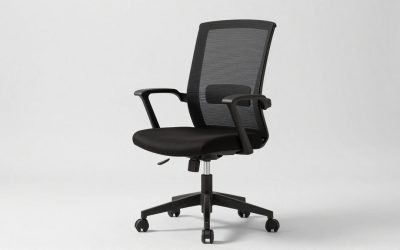
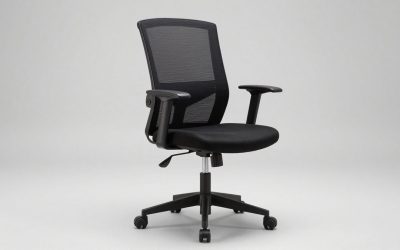
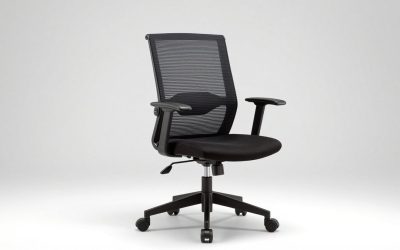
 Marsail Ergonomic Office Chair: Office Desk Chair with46.9" x 24.8" x 24.4"46.9 x 24.8 x 24.4 inches30.42 PoundsCheck on Amazon
Pros & cons
- 3D armrests adjust for multiple working postures
- Supports up to 330 pounds for a wide user range
- Adjustable lumbar moves to match height and body shape
- At over 30 pounds, it is heavier to move around
- Multiple adjustment points add setup complexity

“Staff chair” is the catch-all term you’ll see on office furniture sites for the mid-range task chairs that fill most of a workplace: not the executive leather chair in the corner office, not the £80 mesh special from a budget retailer, but the chairs that sit between them. If you’re buying one or several online, the practical questions are what adjustability actually matters, how to judge quality from a product listing, and when it’s fine to just buy the cheap one.
What “staff chair” actually means when you’re shopping
There’s no technical definition. In furniture catalogues it usually signals a chair built for 7-8 hour daily use, as opposed to a “visitor chair” (occasional use, minimal adjustment) or a “manager/executive chair” (higher-end materials, often fixed-arm or minimal recline). Staff chairs typically come with a gas lift, some back adjustment, and basic arms. The spec sheet is where the real differences show up, and it’s also where online listings get vague on purpose.
Three numbers matter more than the marketing copy:
- Weight rating – most staff chairs are rated for 100-120kg (around 16-19 stone). If you need more, check explicitly; the gas cylinder and base are the parts that fail first under excess load, usually within 6-12 months rather than catastrophically on day one.
- Seat height range – a typical range is 43-53cm. If you’re under 5’4″ or over 6’2″, check this before anything else, because no amount of good lumbar support fixes a chair that puts your knees above your hips or your feet dangling.
- Warranty length – 2 years is standard for budget staff chairs, 5 years for mid-range, 10-12 for the better business-grade ones. Warranty length is a decent proxy for how confident the manufacturer is in the gas lift and tilt mechanism, which are the two things that wear out.
Where the money actually goes
On a staff chair budget (roughly £100-£400 / $120-$500), the price difference buys you three things in rough order of importance: mechanism quality, foam density, and base/castor material. It does not reliably buy you comfort on day one, because a firmer, better-built chair often feels less plush in a showroom test-sit than a softer cheap one that will sag within a year.
Foam density is the one people get wrong most often. Cheap chairs use low-density foam (under 30kg/m³) that compresses permanently within 12-18 months of daily use, leaving a visible dip in the seat pan. Mid-range chairs use 35-45kg/m³ foam, which holds shape for 5+ years. Listings rarely state density directly, but “high-density foam” or “cold-cure foam” in the description is a reasonable signal; vague “comfort foam” wording usually isn’t.
The mechanism (the box under the seat that controls recline and tilt) is the second place quality shows. A synchro-tilt mechanism, where the back and seat move at different ratios as you recline, is worth paying for if you spend a lot of time reclined while typing. A basic knee-tilt is fine if you mostly sit upright. Avoid cheap “tilt-lock only” chairs if the job involves long calls or reading, since locking the back upright all day defeats the point of a staff chair.
Three realistic staff chair tiers
| Tier | Typical price | What you get | Where it falls short |
|---|---|---|---|
| Budget | £100-£180 | Mesh or fabric back, basic height/tilt adjustment, 2-year warranty | Foam sags in 12-18 months; arms often not height-adjustable |
| Mid-range | £180-£320 | Adjustable lumbar, synchro-tilt, height-adjustable arms, 5-year warranty | Headrest usually optional extra; some models still use lower-grade castors |
| Upper staff / light-executive | £320-£450 | Higher-density foam, better base metal, 8-10 year warranty, often adjustable seat depth | Diminishing returns past this point unless you have a specific back condition |
For most people buying for an office or home office, the mid-range tier is where value peaks. Below it you’re buying a chair that will need replacing in 2-3 years; above it you’re often paying for brand and styling rather than function. If you’re outfitting a small team and want to compare current options at that mid tier, this search for ergonomic staff chairs with adjustable lumbar support is a reasonable starting point, since it surfaces chairs that disclose weight rating and warranty in the listing rather than burying it.
Lumbar support: built-in vs adjustable vs added later
Built-in fixed lumbar bulges work for a narrower range of body shapes than adjustable ones. If the chair’s lumbar support sits at the wrong height for your spine, it does nothing, and in some cases it can push your lower back forward awkwardly, which is worse than no support at all. An adjustable lumbar (height and/or depth) costs maybe £20-£40 more at purchase but fits a wider range of torso lengths, which matters if the chair will be used by more than one person over its life, such as a shared desk or a chair being bought for a growing teenager.
If you’ve bought a chair without adequate lumbar support and don’t want to replace it, a separate lumbar cushion is a legitimate fix rather than a compromise. It’s also the right call if your existing chair is otherwise in good condition and the only complaint is lower back fatigue after a few hours. Browsing a lumbar support cushion for office chairs is cheaper than replacing a perfectly good chair, and it’s reversible if it doesn’t help.
Arms, headrests, and castors: the parts people ignore
Fixed-height arms are the most common cause of shoulder tension complaints in staff chairs, because desk height varies but the arms don’t. Height-adjustable arms add roughly £15-£30 to a chair’s cost and are worth it almost every time. Headrests matter mainly if you recline frequently; for upright desk work they’re mostly cosmetic and often get in the way more than they help.
Castors are a quiet failure point. Hard castors on carpet wear down and start sticking within a year or two; soft (rubber or polyurethane) castors on hard flooring mark the floor and wear faster than advertised. Check which flooring the castors are rated for before buying, and if you’re not sure, replacement castor sets are cheap and widely available, so it’s not worth avoiding an otherwise good chair over the wrong default wheels.
When the cheap chair is the right call
If the chair is for occasional use, under 4 hours a day, or for a role that moves around a lot (reception, hot-desking), the budget tier is genuinely fine. The failure modes of cheap chairs (foam sag, mechanism looseness) take months of sustained daily sitting to show up. Spending mid-range money on a chair that gets light use is money better spent on a second monitor arm or a better desk surface instead.