Our Top Picks


Most office chairs skimp on lower back support. Even chairs that look like they have a built-in lumbar curve often place it too low, too high, or too shallow to do much for a mid-sized adult spine. If you’re feeling that dull ache around 2pm, a separate lumbar support is usually a faster fix than replacing the whole chair.
Do you actually need one
Sit back in your chair and reach behind your lower back. If there’s a gap bigger than a fist between your spine and the chair back, you’re probably slouching to compensate, which rounds the lower back and loads the discs unevenly. That’s the main failure mode: not back pain from “bad posture” in the abstract, but hours of unsupported lumbar flexion. A cushion that fills that gap takes the load off the muscles that would otherwise be working all day just to hold you upright.
If your chair already has an adjustable lumbar knob or pad that you can push forward until it meets your back, you may not need to buy anything. Try adjusting what you have first. Only move on to an add-on if the built-in support doesn’t reach far enough forward or sits at the wrong height for your torso.
The three types worth considering
Lumbar supports fall into a few categories, and the right one depends more on your chair’s shape than on price.
Foam cushions with a strap are the simplest option. They’re a curved block of foam, usually memory foam or molded polyurethane, that straps around the chair back. They work on almost any chair, including mesh-back and dining-style chairs people use as desk chairs. The trade-off is bulk: a thick one can push you too far forward, especially in a chair with a shallow seat.
Mesh or fabric-covered supports with an adjustable strap are thinner and breathe better, which matters if you run warm or sit in a non-air-conditioned room. They give less aggressive support than foam, which is fine for mild discomfort but not enough if you have a diagnosed lumbar issue.
Rigid or semi-rigid supports with a contoured plastic or wood core, wrapped in thin padding, give the firmest, most consistent shape. They don’t compress over time the way foam does. They’re worth it if you’ve already tried foam and found it goes flat within a few months, which is a common complaint on cheaper cushions.
| Type | Best for | Watch out for | Typical price range |
|---|---|---|---|
| Strapped foam cushion | Most chairs, general discomfort | Flattens over 6-18 months | $20-$40 |
| Mesh/fabric adjustable | Hot rooms, mild support needs | Too soft for real lumbar issues | $25-$45 |
| Rigid/contoured core | Chronic discomfort, long-term use | Can feel too firm at first | $35-$60 |
If you want to browse what’s currently available in each category, searching lumbar support cushions for office chairs gives you a reasonable cross-section of foam and mesh options at different firmness levels.
Fit matters more than the product spec sheet
The single biggest mistake people make is buying based on reviews without checking two measurements on their own chair: the height of the lower back curve from the seat, and the depth of the gap between your back and the chair when sitting normally. Most adults need the support centered somewhere between 7 and 10 inches above the seat, roughly at the belt line, not higher up near the shoulder blades. A support that’s too tall ends up pushing on your mid-back instead of your lumbar spine, which doesn’t help and can make you sit stiffer than before.
Straps matter too. Buckle or clip straps hold position better over a full workday than hook-and-loop straps, which tend to slip down on mesh-backed chairs after a few hours, especially in warm weather when the mesh flexes more.
When the cheap option is genuinely fine
If your discomfort is mild, occasional, and goes away on weekends, a $20-25 foam strap cushion is not a compromise, it’s the right call. There’s no reason to spend $60 on a rigid orthopedic-style support for garden-variety end-of-day stiffness. Save the rigid, more expensive options for situations where you’ve already tried a basic cushion for a few weeks and it hasn’t moved the needle, or where you have a specific diagnosed condition like a herniated disc, where a physical therapist has actually recommended firmer, more targeted support.
Where spending more does pay off: if you’re in the chair 7+ hours a day, five days a week. The compression difference between a $20 foam pad and a $45 molded one becomes obvious after about four months of daily use, the cheap one noticeably flattens while the better one holds its curve.
Add-on support vs. a new ergonomic chair
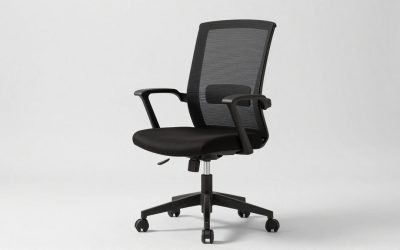
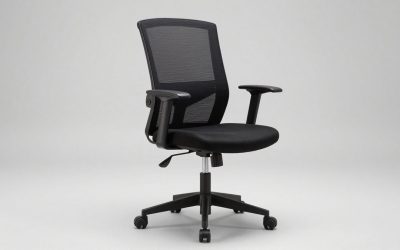
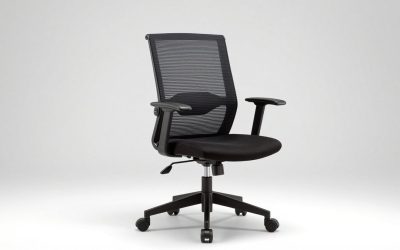
It’s worth being honest about when a cushion won’t fix the real problem. If your chair’s backrest doesn’t recline, has no height adjustment, or is simply too small for your frame, no lumbar pillow fixes that. In that case the money is better spent on a chair with a genuinely adjustable lumbar mechanism built in. Browsing ergonomic office chairs with adjustable lumbar support is the better move if you’re starting from a chair that’s fundamentally the wrong size for you, rather than one that just needs better support added on.
A rough rule: if your chair is otherwise comfortable and fits your height, add a lumbar support. If you’re constantly readjusting, sliding forward, or your feet don’t sit flat with the armrests at a usable height, the chair itself is the problem, and a cushion is just a band-aid on a sizing mismatch.
A few practical notes before you buy
Measure your chair back width before ordering if the listing gives dimensions. Supports under 12 inches wide can feel like they’re pinching rather than supporting on wider executive-style chairs. If your chair back is mesh, check that the straps are rated to hook onto mesh without stretching it out of shape over time, since mesh doesn’t recover the way fabric upholstery does. And if you share a desk or hot-desk, strapped cushions are easy to move between chairs, while rigid molded ones are not, so factor that into which type makes sense for your setup.