Our Top Picks
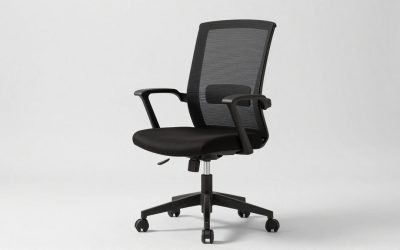
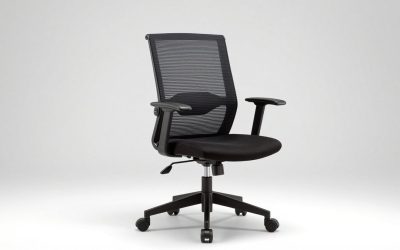
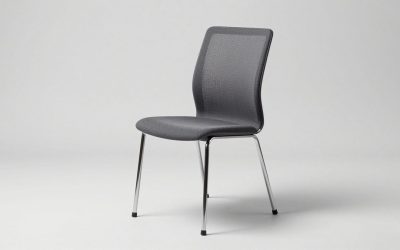
 Sweetcrispy Office Desk Chair16.33" x 18.11" x 34.25"16.33 x 18.11 x 34.25 Inches19.18 poundsCheck on Amazon

Small home offices create a specific chair problem that has nothing to do with ergonomics ratings or mesh quality. The chair has to fit through a door, tuck under a desk that’s probably 42 inches wide at most, and not eat the walking space in a room that might be 8×10 feet total. A chair that’s perfect in a showroom can make a tiny room feel like a storage closet.
I’ve set up three home offices in rooms under 100 square feet, and the lesson that stuck was this: footprint and armrest width matter more than lumbar adjustability for these spaces. You can live with a slightly worse backrest. You can’t live with a chair that blocks the door when you push back from the desk.
What actually matters in a small room
Three measurements decide whether a chair works in a tight space, and none of them show up on the spec sheet in bold.
Base diameter is the first. Most task chairs have a 5-caster base somewhere between 25 and 27 inches across. In a room where your desk is pushed against a wall and there’s maybe 30 inches of clearance behind it, that extra inch or two is the difference between rolling freely and clipping the baseboard every time you turn.
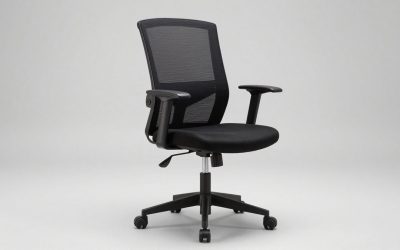
Armrest width is the second, and it’s the one people miss. A chair with flip-up or no armrests can be 4-6 inches narrower overall than one with fixed arms. If your desk is under 48 inches wide, that width difference determines whether the chair tucks fully under the desk or sticks out into the room when you’re not using it.
Back height is the third. Tall-back chairs with headrests look serious and supportive, but they’re visually heavy in a small room and they’re harder to slide under a low desk. A mid-back chair that stops around shoulder height does the same ergonomic job for most people and reads as less bulky.
Armless, flip-up, or fixed arms
This is the real decision point for small spaces, more than brand or price tier.
| Type | Typical width | Tucks under desk | Trade-off |
|---|---|---|---|
| Armless | 22-24 in | Yes, fully | No arm support for breaks; some people miss resting elbows |
| Flip-up arms | 24-27 in (flipped: 22-24 in) | Yes, when flipped | Added mechanism can loosen or squeak after a year or two |
| Fixed arms | 26-29 in | Often not fully | Best wrist support, worst fit under shallow desks |
If your desk has at least 2 inches of clearance under the front edge and your chair’s armrests are low enough to pass under it, fixed arms are fine. Measure before you buy, not after. If you’re not sure, an armless desk chair removes the guesswork entirely and is usually $30-60 cheaper than the same chair with arms.
Mesh vs. fabric in a small room
This matters more in small spaces than people expect, mostly because of heat and visual bulk. Fabric and foam chairs look chunkier and tend to run warmer, which is noticeable in a small room with the door closed and a laptop running hot on the desk. Mesh-back chairs breathe better and visually take up less space because you can see through the backrest to the wall behind it, which sounds minor but actually makes a cramped room feel less closed-in.
The trade-off is support. Cheap mesh sags within a year or two and loses tension across the lower back. Cheap fabric foam compresses but doesn’t sag the same way, so it degrades more gracefully even if it starts out less comfortable. If you’re buying under $150, I’d lean fabric for durability. Above $200, mesh from a decent brand holds up fine and I’d take the airflow and visual lightness.
Footprint vs. comfort: where to not cheap out
Seat depth is the one spec I wouldn’t compromise on to save space. A seat that’s too short leaves your thighs unsupported and you’ll feel it within an hour, every day, for years. A seat that’s too deep cuts into the back of your knees. Neither is fixable with a smaller base or flip-up arms. If you’re under 5’4″ or over 6’1″, check seat depth specifically (ideally with some adjustability, 16-19 inches) rather than assuming a “small space” chair will also fit your body.
Everything else — headrest, adjustable lumbar pad, 4D arms — is genuinely optional for most people working 6-8 hour days. I’ve used a $90 mesh task chair for two years in a home office with no complaints beyond mild stiffness after very long sessions, which a $20 lumbar cushion fixed. Don’t let a sales page convince you that a small room needs a premium chair; it needs a well-sized one.
Rolling and clearance checks before you buy
Before ordering, do this five-minute check: measure the clear floor space behind your desk chair position, and compare it to the chair’s base diameter plus about 6 inches of swing room for pushing back and standing. If that number doesn’t fit, look at compact chairs under 24 inches wide, which exist specifically for apartments and small offices — search compact office chairs for small spaces and filter by base width in the product details, since it’s rarely in the title.
Also check caster type against your flooring. Standard hard casters on hardwood will roll quietly but can scratch over time; on carpet they’ll feel sluggish and may need a chair mat. If you’re on hardwood or tile, swap to soft rubber casters, which cost about $15-20 for a set of five and solve both the noise and scratching problem in one move. It’s a small fix that matters more in a small room, where the chair rolling across the floor is close enough to hear and see clearly from every corner.