Our Top Picks
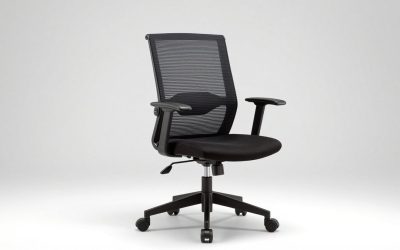
 Herman Miller Embody Ergonomic Office Chair28D x 27W x 38.25H in28 x 27 x 38.25 inches51 poundsCheck on Amazon
 Herman Miller Classic Aeron Task Chair: Highly AdjSize B (Medium)17 x 27 x 42 inches48 poundsCheck on Amazon
The most comfortable chair for long hours is not the softest one you sit in for 30 seconds, but the one that lets you adjust seat depth, lumbar height, and tilt so pressure stays off your thighs and lower back after hour four. If you are looking for the most comfortable desk chair for long hours of computer work, prioritize fit and movement over extra padding.
Why First-Sit Comfort Fails at Hour Four
A showroom chair feels comfortable because thick, low-density foam and deep recline distribute weight instantly. That same foam compresses within 90 to 120 minutes, creating pressure points under your sit bones and cutting circulation behind the knees. A truly comfortable work chair for long hours does the opposite: it feels slightly firmer at first but keeps spinal alignment and blood flow stable for an 8-hour day.

Herman Miller Aeron Ergonomic Chair - Size B, Graphite
Chosen because it specifies Size B and Graphite.
View on AmazonHerman Miller Embody Ergonomic Office Chair | Fully Adjustable Arms and Carpet Casters | Black Rhythm
Chosen because it specifies Fully Adjustable Arms and Carpet Casters and Black Rhythm.
View on Amazon
Herman Miller Classic Aeron Chair - Size B, Posture Fit
Chosen because it specifies Size B and Posture Fit.
View on AmazonHerman Miller Classic Aeron Task Chair: Highly Adj w/Lumbar Pad - Tilit Limiter w/Seat Angle Adj - Fully Adj Vinyl Arms - Carpet Casters
Chosen because it specifies Tilit Limiter w/Seat Angle Adj and Fully Adj Vinyl Arms.
View on AmazonAfter hour four, three problems decide comfort:
- Seat pan pressure: If the seat is too deep, the front edge presses into the back of your calves. Too shallow, and your thighs carry weight without support.
- Lumbar drift: If lumbar support is fixed, it will sit too high for short torsos and too low for tall torsos, forcing you to slouch.
- Static posture: Without tilt movement, your discs and hip flexors stay loaded in one position, no matter how much cushion you have.
4 Measurable Specs That Predict Eight-Hour Comfort
1. Seat Depth Adjustment Range: 15 to 19 Inches
This is the single most important fit spec for the most comfortable computer chair, yet most listings hide it. Seat depth is measured from the backrest to the front edge of the seat.
You need 2 to 3 inches of clearance between the seat edge and the back of your knees when your back is against the backrest. For the common height range in an office or home office:
- A 5 ft 2 in person typically needs a 15 to 16-inch seat depth
- A 5 ft 9 in person typically needs a 16.5 to 17.5-inch seat depth
- A 6 ft 4 in person typically needs an 18 to 19-inch seat depth
Look for a seat slider that offers at least 2.5 to 3 inches of travel. A fixed 18-inch-deep seat will fit a 6-foot frame well but will force a 5 ft 3 in user to perch forward with no back support. For shared home offices, an adjustable depth is non-negotiable. Ideal seat height range for desk compatibility is 16 to 21 inches from floor to seat top, which pairs correctly with a standard 28 to 30-inch desk height and allows your feet to rest flat with knees at roughly 90 to 100 degrees.
2. Foam Density vs. Mesh Tension: How Pressure Is Managed
A comfortable desk chair for long hours will use either high-density foam or suspended mesh, and they manage pressure very differently. Extra-soft, thick padding is not an advantage past two hours.
| Material / Construction | Typical Spec | Pressure Distribution | Heat Buildup | What Wears First |
|---|---|---|---|---|
| Low-Density Foam (<1.5 lbs/cu ft) | 2-3 inches thick, soft feel | Good for 1-2 hours, then bottoms out and concentrates pressure on sit bones | High – traps heat and moisture | Foam compression, fabric pilling at edges |
| High-Density Molded Foam (1.8-2.2 lbs/cu ft) | 1.5-2.5 inches thick, firm-responsive | Even support for 6-8 hours, holds shape for years | Moderate | Fabric or vinyl cover, not the foam itself |
| 8-Way Suspended Mesh (e.g., elastomeric weave) | Tension adjustable, no foam layer | Very even, hammock-like distribution, no pressure peak at thighs | Very low – airflow through seat/back | Mesh tension, frame where mesh anchors |
| Mesh + Thin Foam Pad Hybrid | Mesh base with 0.5-1 inch foam insert | Balances breathability with slightly softer initial feel | Low | Foam insert compresses before mesh |
If you run hot or sit in a room above 72°F, mesh will keep you noticeably cooler than any foam chair. If you prefer a solid, planted feel and work in a cooler room, high-density foam with a waterfall seat edge is the better call. Avoid any chair that does not list foam density or mesh type – “high-density” without a number usually means 1.2 to 1.5 lbs/cu ft.
3. Lumbar Support: 4 Inches of Vertical Travel Minimum
Your lumbar curve sits between the top of your pelvis and the bottom of your ribcage, but its exact height changes by 3 to 5 inches depending on your torso length. A fixed lumbar pad almost never aligns correctly for more than one body type.
For a chair to work for a household with different users, look for:
- Height adjustment: At least 4 inches of vertical travel (e.g., 6 to 10 inches above the seat pan)
- Depth / firmness adjustment: At least 0.5 to 0.75 inches of forward push or a tension dial, so you can increase support without shoving your whole spine forward
- Shape: A narrow, pronounced support zone rather than a full-height back bulge, which pushes the thoracic spine instead of the lumbar
Chairs with a flexible, height-adjustable lumbar bar or two separate pads will fit both a 5 ft 2 in and a 6 ft 4 in frame. Chairs with a single stitched-in lumbar bump will not.
4. Why Forward Tilt and Armrest Width Beat Extra Padding
Two features matter more than an extra inch of foam for long-day posture:
Forward seat tilt (0 to -5 degrees): A slight forward tilt opens your hip angle to 95-105 degrees. This reduces hamstring pull on your pelvis and helps you maintain a neutral lumbar curve while typing, especially if you are taller or have tight hips. Without it, you end up sitting on your tailbone and rounding your lower back. Look for a synchronous mechanism where the back reclines 2:1 to the seat, plus a forward-tilt lock.
4D armrests with width adjustment: Armrests that only move up and down force narrow-shouldered users to wing their elbows out and broad-shouldered users to pinch inward. Both create neck and shoulder fatigue by hour five. True long-hour comfort comes from armrests that adjust in four ways: height (7-11 inches above seat), width (at least 1 inch per side), depth (forward/back slide), and pivot. Your elbows should rest with upper arms vertical and shoulders completely relaxed.
Pick by Your Situation: Decision Matrix
The most comfortable chair for long hours depends on your room, body, and work style. Use this to narrow the category before you compare models.
| Your Situation | Best Chair Type | Key Spec to Demand | Room and Fit Note |
|---|---|---|---|
| Small apartment / 10×12 ft bedroom office | Compact mesh task chair without bulky headrest | Overall footprint under 26″ W x 26″ D; 5-star base 24-25″ diameter for clearance | Needs 30-36″ behind desk to recline; armless or flip-up arms save 8″ width for getting through 28-30″ doorways |
| Kids, pets, daily heavy use | High-density foam seat + metal frame + stain-resistant woven fabric or vinyl | Foam density 1.8+ lbs/cu ft; weight capacity 300+ lbs tested to BIFMA standard | Dark fabric hides wear; avoid light mesh that snags claws |
| Renter who moves often / upstairs apartment | Mesh chair under 40 lbs boxed weight | Box dimensions under 30″ x 26″ x 14″ to fit elevators and hallways; simple assembly (under 15 minutes, 8-10 bolts) | First thing to break in moves is armrest attachment – choose models where arms bolt to seat frame, not to plastic back |
| Back pain or long static typing (6+ hours) | Mesh or foam with synchronous tilt, forward tilt, and 4D arms | Lumbar travel 4″+, seat slider 2.5″+, tilt lock at 3-4 positions | Recline range 95° to 125° lets you shift load every 30-45 minutes without leaving the chair |
| Tall frame (6 ft 2 in +) or large build | Big-and-tall rated frame with wider seat pan | Seat width 21-22″, seat depth 19-20″, cylinder rated to 350-400 lbs | Check cylinder class: Class 4 gas lift required for higher weight limits and durability |
Assembly, Moving, and Durability Realities
Product listings rarely mention what changes after delivery. For any comfortable work chair for long hours in the usual $300 to $600 range and premium models usually $700 to $1,400, expect this:
- Box weight and assembly: Most ergonomic mesh and foam chairs ship at 35 to 55 lbs. Assembly is typically base + cylinder + seat + back + arms. A chair with the back pre-attached to the seat saves 10 minutes and is less likely to wobble later. Budget 20 to 35 minutes and a second person to hold the back while bolting.
- Doorway and floor clearance: The chair will fit through any standard 30-inch interior door, but the box may not. Measure your hallway turn and elevator before delivery. On carpet, you need a 36-inch chair mat or hard casters rated for carpet; soft casters on carpet increase leg fatigue because you push harder to move.
- What wears first: On foam chairs, the front seat edge and arm pads compress and crack first (2 to 4 years with daily use). On mesh chairs, the mesh itself lasts 5 to 8 years, but the tilt mechanism and cylinder loosen first. Replaceable arm pads and cylinder extend life by years.
- Weight limits explained: A 250-lb limit usually means the cylinder and base are standard Class 3. A 300 to 350-lb limit indicates a stronger Class 4 cylinder and reinforced base. If you are near the limit, choose the higher rating even if you never recline hard – it keeps the height adjustment from sinking.
What to Check Before You Buy
Use this short checklist when comparing any model marketed as the most comfortable desk chair for long hours. If a listing does not provide the number, ask the manufacturer:
- Seat depth range with slider, not just overall depth
- Seat height range and whether it suits your desk (16-21 inches covers 28-30 inch desks)
- Lumbar adjustment directions and travel distance
- Armrest adjustments: 2D vs 4D, and width travel
- Tilt type: single tilt, synchro-tilt, or synchro with forward tilt
- Warranty on mechanism and cylinder vs. fabric/mesh (good warranties are 5-10 years on mechanism, 2-3 years on upholstery)
Frequently Asked Questions
Is mesh or foam more comfortable for 8 hours straight?
For heat and pressure distribution over a full workday, mesh usually wins because it spreads weight evenly and breathes. For people who prefer a firm, stable sit and work in cool rooms, 1.8+ lbs/cu ft molded foam is equally comfortable for long hours if it has a waterfall edge and a slider. Low-density soft foam is the least comfortable after hour three regardless of thickness.
Do I need a headrest for long hours?
Only if you recline to 110 degrees or more to rest. For upright typing at 90 to 100 degrees, a headrest is unused and can push your head forward if poorly placed. For mixed work and calls where you lean back, an adjustable headrest with 3 to 4 inches of height and angle travel is useful.
What is the most common fit mistake?
Buying a chair that is too deep. If you have to slide forward so your feet touch the floor, your lower back loses all support and discs take more load. Always size by seat depth first, then by lumbar height, then by cushion feel.