Our Top Picks
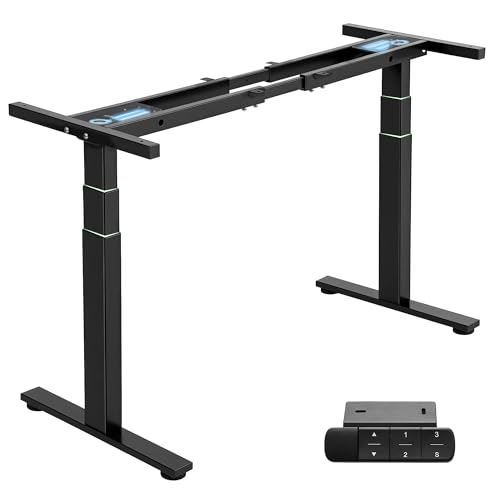

Why glass tops exist on standing desks
Glass desktops are a style choice first. Tempered glass (usually 8-10mm) looks clean, doesn’t show scratches the way laminate does over years of use, and wipes down easier than wood veneer. Some people also like that it doesn’t absorb moisture or warp, which matters if your desk sits near a window with temperature swings or you’re prone to leaving a wet water bottle on it. That’s the real case for glass. Everything else is trade-offs.
The trade-offs are not minor. Glass is heavier than MDF or laminate at the same thickness, which pushes up the total weight the lifting motors have to move. It’s also noisier in daily use (keys, mugs, laptop lids all click against it), it shows fingerprints and dust constantly, and it’s cold to rest your wrists on. If you’ve ever used a glass-top desk in an office, you know the squeak-and-slide problem: anything without rubber feet migrates across a glass surface when the desk tilts even slightly, which matters more than it sounds because sit-stand desks flex a little at full height.
Weight capacity: the number that actually matters
A glass desktop in the 55-60 inch range at 8mm thickness typically weighs 35-45 lbs on its own, before you add a monitor arm, PC, or anything else. Compare that to a laminate top of the same size, which is usually 25-30 lbs. That 10-15 lb difference eats into your usable weight capacity, which matters because most budget dual-motor frames are rated for 150-220 lbs total, and that rating includes the desktop itself, not just what you put on it.
If you’re buying a frame separately and pairing it with a glass top, check the capacity rating against actual combined weight, not just “what’s on the desk.” A frame rated for 200 lbs with a 45 lb glass top only has 155 lbs left for monitors, a dock, books, and whatever else ends up there. People underestimate how fast that adds up: a 32-inch monitor on an arm is 15-20 lbs, a tower PC is another 20-25 lbs, and two monitors without an arm can be 25-30 lbs combined.
| Desktop material | Typical weight (55-60″) | Scratch resistance | Noise from objects | Price premium |
|---|---|---|---|---|
| Laminate/MDF | 25-30 lbs | Low-moderate | Low | Baseline |
| Bamboo/solid wood | 30-40 lbs | Moderate | Low | +15-25% |
| Tempered glass | 35-45 lbs | High | High | +20-40% |
Does the extra weight actually wear out the motors faster?
Yes, measurably, though not dramatically on a well-built frame. Dual-motor lifting columns are rated with a duty cycle, usually something like 10% (meaning 2 minutes of movement per 20 minutes of rest). Pushing a frame near its max rated capacity on every cycle shortens the practical life of the motors and strain gauges, and it’s also when you start hearing the frame struggle: slower lift speed, more motor noise, and occasionally one side lifting slightly out of sync with the other before the anti-collision sensor corrects it.
This isn’t unique to glass, any heavy desktop does it, but glass is the material most likely to put you near the ceiling of a budget frame’s rating without you realizing it, because the top itself is doing more of the work than you’d guess. If you want a glass top, it’s worth sizing up to a frame rated 220 lbs or higher rather than buying the cheapest dual-motor frame and assuming you have headroom.
Wobble and the glass-specific stability problem
All sit-stand desks wobble some at full height, that’s physics, not a defect, longer lever arm from the floor means more sway at the top. With a wood or laminate top this is just felt as motion. With glass, it’s felt and heard: you’ll get a faint rattle from anything resting on the surface, and on cheaper frames you may notice the glass flexing very slightly at the corners if the top isn’t secured with enough mounting points.
Check how the top attaches before buying. A glass desktop that’s only screwed in at four corner brackets will transmit more flex than one with a full mounting plate or crossbar support. If you’re buying frame and top separately, this is where it’s worth reading the actual spec sheet rather than guessing from photos.
What to actually buy
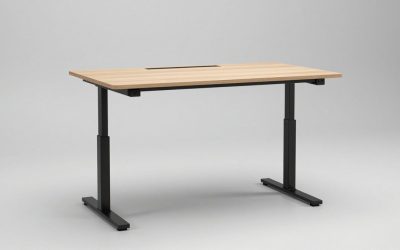
If you want the glass look, buy a glass top paired with a frame rated comfortably above your real combined weight, not just barely above it. Look at dual-motor standing desk frames rated 220 lbs or more if you’re adding a glass top plus a monitor arm and a PC. Pair it with felt or rubber pads under anything that sits on the glass, a anti-slip pad or mat solves the sliding problem for keyboards and mice without covering up the look you paid for.
If weight capacity or motor longevity is your main concern rather than looks, a laminate or bamboo top on the same frame buys you 10-15 lbs of headroom for free, and it’s quieter day to day. That’s the honest trade: glass costs more, weighs more, and is louder, in exchange for looking better and resisting scratches longer. Neither choice is wrong, but know which one you’re optimizing for before you spend the extra money.
One more practical note: glass desktops ship heavier and more fragile, so check the return policy and shipping damage protection before ordering, cracked corners on arrival are the most common complaint in reviews for glass-top desks, more so than with any other material.