Our Top Picks
 VIVO Manual Height Adjustable Standing Desk Converter32"31.5 x 31.5 x 31.3 inches26 poundsCheck on Amazon
Desk height sounds like a solved problem until you sit down at the wrong one. Too high and your shoulders shrug up toward your ears every time you type. Too low and you hunch, which is how you end up with a sore neck by Thursday. There’s a real number to aim for, and it’s not the same for everyone, so here’s how to actually find yours instead of guessing.
The standard, and why it fails half the people who use it
Most fixed-height desks are built at 28 to 30 inches, which is a holdover from office furniture standards set decades ago for an “average” seated adult. If you’re between 5’8″ and 5’10”, that range probably works fine. If you’re outside it, you’re compensating with chair height, which then throws off your feet and knees.
The better reference point is elbow height, not a fixed number. Sit in your chair with shoulders relaxed and upper arms hanging straight down. Your forearms should be roughly parallel to the floor when resting on the desk, elbows at about 90 to 110 degrees. Measure from the floor to the bottom of your elbow in that position, and that’s your target desktop height. For most adults this lands somewhere between 22 and 30 inches, which is a wider spread than furniture makers assume.
Quick reference by height
This isn’t exact for everyone, torso-to-leg ratio varies, but it’s a solid starting point if you don’t want to measure your own elbow angle right now.
| Your height | Desk height (sitting) | Chair seat height |
|---|---|---|
| 5’0″–5’3″ | 22–24 in | 15–17 in |
| 5’4″–5’7″ | 24–26 in | 16–18 in |
| 5’8″–5’11” | 27–29 in | 17–19 in |
| 6’0″–6’3″ | 29–31 in | 18–20 in |
| 6’4″+ | 31–34 in | 19–21 in |
If your feet don’t touch the floor once the chair is at the right height for your desk, that’s not a desk problem, that’s a footrest problem. Don’t raise the desk to fix it.
Standing height is a different number entirely
If you’re using a sit-stand setup, the standing position needs the same elbow-angle logic applied while standing: shoulders relaxed, elbows at roughly 90 degrees, forearms level. For most people that’s 38 to 44 inches, taller than almost any fixed desk goes, which is exactly why fixed desks don’t work for standing use. This is really the only honest argument for a standing desk converter or a motorized standing desk converter: it’s not about health claims, it’s that one static height physically cannot serve both postures.
Monitor height needs to move with you too. Top of the screen at or just below eye level, whether sitting or standing. If you switch positions during the day and your monitor doesn’t move, you’re trading a wrist problem for a neck problem.
Fixed vs. adjustable: the real trade-off
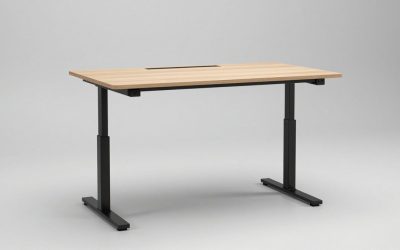
An adjustable-height desk solves the elbow-angle problem permanently and lets you alternate sitting and standing, which does help with the stiffness that comes from staying in one position for eight hours. But it’s not required to work comfortably, and it’s not a magic fix for back pain, that claim gets overstated constantly.
| Fixed-height desk | Adjustable-height desk | |
|---|---|---|
| Cost | $80–250 | $250–700+ |
| Fixes elbow angle | Only if you’re near-average height | Yes, dial in exactly |
| Allows standing use | No | Yes |
| Cable management | Simpler, nothing moves | Needs slack for travel, more planning |
| Stability at height | Generally solid | Can wobble at full extension on cheaper motors |
If you’re close to average height and never plan to stand while working, a fixed desk at the right height is genuinely fine. Spending $400 on a motorized frame to solve a problem a $40 desk raiser already solves is just spending money. Where adjustable desks earn their price is for people outside the average range, people who alternate sitting and standing through the day, or shared desks used by more than one person.
Fixing a desk that’s the wrong height without buying a new one
Desk too high: this is the harder one to fix cheaply. Options are a chair with a higher seat plus a footrest, or desk risers that are honestly rare and often flimsy. Sometimes the real fix is accepting the desk isn’t right for you and budgeting for a new one.
Desk too low: easier. Bed risers or dedicated furniture risers under the legs add 2 to 4 inches cheaply. Just check the desk’s leg design first, four straight legs work, a center pedestal or angled legs often don’t sit flat on risers.
Keyboard too high relative to the desktop: an under-desk keyboard tray drops your typing surface by 2 to 3 inches without touching desk height at all, which is often the actual fix people need when they think they need a new desk.
One thing people forget: cable management changes with height
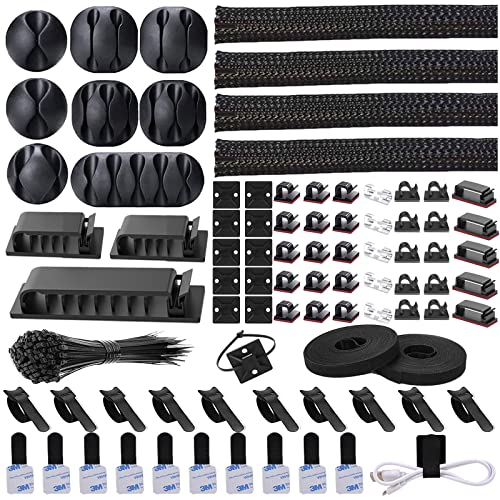
If you go adjustable, every cable running to the desktop needs enough slack to handle the full range of travel without yanking a connector loose or getting pinched in the frame mechanism. A vertical cable spine or a cable management sleeve that moves with the desk solves this; a cable just zip-tied to a fixed point on the wall does not, and you’ll find that out the first time you raise the desk and something pulls taut. Fixed desks don’t have this problem, which is one more point in their favor if cable routing is already a headache in your setup.