Our Top Picks
Pros & cons
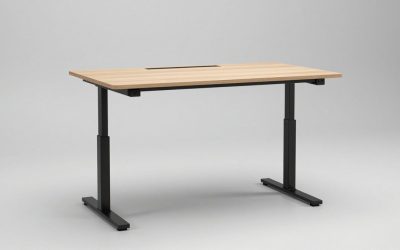
- Four memory presets simplify switching between heights
- Aerospace-grade lifting columns aim for long-term stability
- Low-VOC materials support a healthier indoor workspace
- 48 x 24 inch top limits room for larger multi-monitor setups
- At nearly 44 pounds, assembly needs some help


Why desk height matters more than people think
Most desk discomfort gets blamed on the chair. In practice it’s just as often the desk sitting 3-5 cm too high or too low, forcing your shoulders up or your wrists down for eight hours a day. A fixed-height desk that’s wrong for your body doesn’t announce itself as “wrong.” It shows up as tight shoulders by Wednesday and a sore lower back by Friday.
The standard off-the-shelf desk is 28-30 inches (71-76 cm) tall, built around average male height from decades-old office furniture standards. If you’re under 5’8″ (173 cm) or over 6’1″ (185 cm), that standard height is probably wrong for you, and no amount of chair adjustment fully fixes it.
The actual rule: elbow height, not a fixed number
Sit in your chair with feet flat on the floor and upper arms relaxed at your sides. Your elbows should bend at roughly 90-100 degrees, and your forearms should rest level with the desk surface, maybe tilted down a degree or two. That’s the correct desk height for you, full stop. Everything else is a guideline.
If you type and your wrists bend upward to reach the keyboard, the desk is too high. If your shoulders creep up toward your ears, same problem. If you’re hunching forward or your elbows drop below desk level, it’s too low.
Rough height targets by stature
This table is a starting point, not gospel. Chair height, armrest height, and whether you use a keyboard tray all shift the right number by a couple centimeters either way.
| Height (your height) | Suggested desk height | Notes |
|---|---|---|
| 5’0″-5’3″ (152-160 cm) | 22-24 in (56-61 cm) | Standard desks are almost always too tall; a keyboard tray or adjustable desk is close to mandatory |
| 5’4″-5’7″ (163-170 cm) | 25-27 in (63-69 cm) | Low end of standard desks works if chair goes low enough |
| 5’8″-5’11” (173-180 cm) | 27-29 in (69-74 cm) | Standard 28-30 in desks fit reasonably well |
| 6’0″-6’3″ (183-191 cm) | 29-31 in (74-79 cm) | Top of standard range, often still a bit short |
| 6’4″+ (193 cm+) | 31-33 in (79-84 cm) | Standard desks are reliably too low; adjustable height isn’t optional |
Fixed height vs. sit-stand: when each makes sense
If you fall in the 5’8″-6’0″ range and only ever sit, a decent fixed-height desk at 28-29 inches is genuinely fine. You don’t need to spend more to solve a problem you don’t have. I’d skip the adjustable desk in that case and put the money into a better chair or monitor arm instead.
Outside that range, or if you want to alternate sitting and standing, an electric sit-stand desk earns its cost. The failure mode with cheap crank or pneumatic standing desks is that people set it up once, find the crank annoying, and never adjust it again, which defeats the purpose. Electric desks with memory presets get used because changing position takes four seconds, not four minutes. If you’re shopping for one, look at electric standing desks with a stated height range that actually covers your sitting number from the table above, not just the standing one. A lot of budget models bottom out around 28 inches, which is useless if you need 24.
The cheap fix most people skip
Before buying a new desk, try a keyboard tray. If you’re shorter than average and stuck with a 29-30 inch desk you can’t replace (rental, shared office, whatever), a tray that drops the keyboard and mouse 5-8 cm below the desktop solves most of the wrist and shoulder problem for $30-50. It’s not elegant, but it works, and it’s the right call before spending $400 on a new desk if the desk itself is otherwise fine. Search under desk keyboard trays and check the weight rating if you’re using a mechanical keyboard, since the cheapest trays flex under heavier boards.
Don’t forget the monitor
Desk height and monitor height are linked and people fix one while ignoring the other. The top of your screen should sit at or just below eye level, roughly an arm’s length away. If you lower your desk to fix your wrists, your laptop or monitor on a stand might now be too low, and you’ll tilt your neck down to compensate, trading a wrist problem for a neck problem. A separate monitor arm decouples screen height from desk height entirely, which is cleaner than stacking books or buying a riser once you’ve already got the desk dialed in.
What to actually do
Measure your current elbow height against your desk tonight, not after you’ve already bought something. If you’re within 2 cm of correct, leave it alone and spend your budget on the chair or monitor arm instead. If you’re more than a few centimeters off and you’re outside the 5’8″-6’0″ range, that’s the signal to get an adjustable desk rather than tolerating it. And if you’re testing the waters on sit-stand before committing, a keyboard tray plus a monitor arm will get most people 80% of the comfort improvement for a fraction of the price, which is worth knowing before you drop money on a desk you’re not sure you’ll use standing anyway.