Our Top Picks
Pros & cons
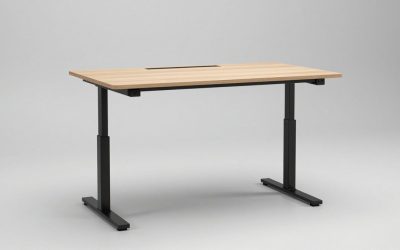
- Four memory presets simplify switching between heights
- Aerospace-grade lifting columns aim for long-term stability
- Low-VOC materials support a healthier indoor workspace
- 48 x 24 inch top limits room for larger multi-monitor setups
- At nearly 44 pounds, assembly needs some help


Why Desk Height Actually Matters
Most desks sold in the US and Canada land at a fixed 29 or 30 inches. That number comes from decades-old office furniture standards built around an “average” seated adult, which really means someone around 5’8″ to 5’10”. If you’re outside that range, a fixed-height desk is working against you every day, not just on bad posture days. Wrists bend up to type, shoulders creep toward your ears, or your knees jam into the underside of the desk. None of this shows up as acute pain right away. It shows up six months later as a stiff neck that won’t quit or numbness in your fingers.
The fix isn’t complicated, but it does require actual numbers, not guesswork.
The Actual Math for Sitting Height
Sit in your normal chair, in your normal posture, feet flat on the floor. Measure from the floor to the bottom of your elbow when your upper arm hangs relaxed at your side and your forearm is parallel to the floor. That measurement, plus about 1 inch for keyboard and wrist clearance, is your target desk height.
For most people that works out to roughly 1 inch below elbow height. Here’s how that plays out across different heights, assuming average proportions:
| Your Height | Elbow Height (seated) | Recommended Desk Height |
|---|---|---|
| 5’0″ | 23–24″ | 24–25″ |
| 5’4″ | 24–25″ | 25–26″ |
| 5’8″ | 26–27″ | 27–28″ |
| 6’0″ | 27–28″ | 28–29″ |
| 6’4″ | 29–30″ | 30–31″ |
Notice that even at 6’4″, the ideal sitting height is right around standard desk height, maybe a hair above. It’s the shorter end of the range that standard desks fail badly. A 5’0″ person at a 29-inch desk is reaching up to type, which is a slow-motion way to develop shoulder tension.
Standing Height Is a Different Number Entirely
If you’re using a sit-stand desk, don’t just add a fixed amount to your sitting number. Standing elbow height is higher relative to your sitting elbow height because you’ve lost the seat compression and your spine is more extended. Roughly:
| Your Height | Standing Desk Height (keyboard surface) |
|---|---|
| 5’0″ | 36–38″ |
| 5’4″ | 38–40″ |
| 5’8″ | 40–42″ |
| 6’0″ | 42–44″ |
| 6’4″ | 44–46″ |
This is why a cheap fixed-height standing desk is almost never worth it. The adjustment range you need between sitting and standing for one person is 10 to 14 inches, and that’s assuming you don’t share the desk with anyone else. A good adjustable base covers 22 to 48 inches or close to it, which gives headroom on both ends. If you’re shopping, look at electric standing desks rather than crank or pneumatic models — electric motors hold position better under load and don’t drift down over a few hours like some gas-lift versions do.
Fixed Height vs. Adjustable: When Cheap Is Fine
Not everyone needs a motorized desk. If you’re within an inch or two of average height (5’7″ to 5’10”) and you only sit, a solid fixed-height desk at 29 or 30 inches is genuinely fine. Spending $400+ on an adjustable base to solve a problem you don’t have is wasted money better put toward a good chair or monitor arm.
Where adjustability earns its cost:
- You’re notably shorter or taller than average and a fixed desk puts you in a bad angle no matter how you adjust the chair.
- You alternate sitting and standing through the day, which is the actual ergonomic benefit, not standing all day.
- Multiple people with different heights share the same desk, like a home office that doubles as a kid’s homework station.
If none of that applies, don’t let anyone talk you into a $600 standing desk you’ll leave at one height forever.
Your Chair Changes the Right Number
Desk height recommendations assume your chair is set correctly first: feet flat, knees roughly level with hips, lower back supported. If your chair seat is too high or too low, no desk height will feel right, because you’ll compensate by hunching or reaching. Fix the chair before you fix the desk. A chair with a seat height range of at least 16 to 21 inches covers most adults; if you’re under 5’3″, check that the seat goes low enough that your feet aren’t dangling, and use a footrest if it doesn’t.
Fine-Tuning Without Buying a New Desk
If your current desk is close but not quite right, you don’t need to replace it. A keyboard tray that mounts under the desktop can drop your typing surface by 2 to 4 inches, which solves the single most common complaint: desk is fine for monitor height but too tall for typing. Monitor risers or a basic stand solve the opposite problem, raising screen height without touching the keyboard surface at all. Before spending money on a new desk, check whether an under-desk keyboard tray or a stack of books under your monitor gets you to the right number for a fraction of the cost.
Measure first. Buy second. The desk height that looks right in a showroom photo has nothing to do with the one that’s right for your body.