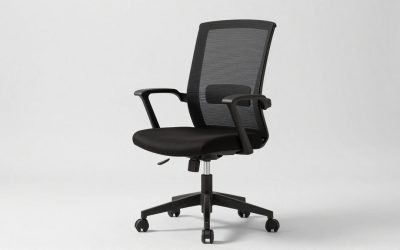
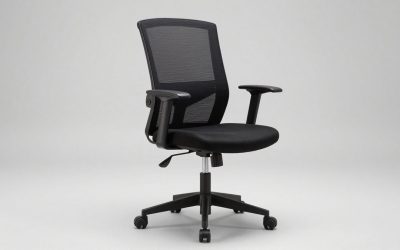
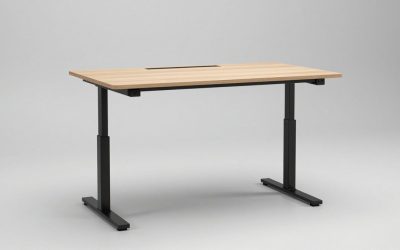
Our Top Picks


Most desk height advice is written for typing on a keyboard, not for gaming. That matters more than people think. A chair-and-monitor setup tuned for a controller and a 27-inch display 32 inches from your face is a different problem than one tuned for a keyboard, mouse, and a 34-inch curved ultrawide. Get the number wrong and you’ll feel it in your wrists, neck, or lower back within a few weeks, not your first session.
The actual number
For most adults sitting in a normal gaming chair, the right desk height lands between 28 and 30 inches (71–76 cm). That’s close to standard office desk height, which exists for a reason: it works for the middle of the population. If you’re under 5’6″ (168 cm), you’ll likely want 26–28 inches. If you’re over 6’2″ (188 cm), you’ll want 30–32 inches.
The test that actually matters: sit down, relax your shoulders, and let your arms hang naturally. Your elbows should bend at roughly 90 degrees when your hands rest on the keyboard or controller. If your shoulders are hiked up to reach the desk, it’s too high. If you’re hunching forward or your wrists bend upward at the desk edge, it’s too low.
Fixed height vs. sit-stand
A fixed-height desk is fine if only one person uses it and that person’s height doesn’t change. It’s also the cheaper and more rigid option — fixed frames flex less under mouse movement and controller mashing, which matters more for competitive play than people expect. A wobbly desk at 1000 DPI is annoying; at a LAN event with a crowd leaning on the table, it’s a real problem.
A sit-stand electric standing desk frame earns its cost in two situations: multiple people of different heights share the setup, or you game for long stretches and want to break up sitting time. Standing to game isn’t for everyone — mouse precision gets worse for most people when standing, controller play is unaffected. If you’re buying one purely for “ergonomics,” know that the health benefit of standing desks is mostly about movement variety, not standing itself being better than sitting.
| Setup | Height range | Best for | Trade-off |
|---|---|---|---|
| Fixed desk | 28–30 in (set once) | Single user, competitive FPS/MOBA play | No flexibility if household changes |
| Electric sit-stand | 24–50 in adjustable | Shared desks, long sessions, mixed work/gaming use | Costs more, slightly less rigid than fixed frames |
| Fixed desk + chair riser | Effectively 26–32 in | Budget fix for one-off height mismatch | Doesn’t fix monitor height, limited range |
Monitor height changes the math
Desk height alone doesn’t fix ergonomics if the monitor is wrong. Top of the screen should sit at or just below eye level, and the whole thing should be about an arm’s length away. If your desk is at the right height but your monitor sits flat on the desk, you’ll tilt your head down for hours, which causes more neck strain than almost any desk height mistake. A monitor arm mount solves this independently of desk height, and it’s often the fix people need instead of buying a new desk entirely. If you’re running a dual or triple monitor setup, arms also save you the desk depth that monitor stands eat up.
Controller players need a different setup
If you mainly play with a controller from a couch or a gaming chair with a reclined back, the desk-height conversation changes shape. You’re not resting wrists on a desk edge for hours, so the 90-degree elbow rule matters less and screen height/distance matters more. In that case, a slightly higher desk that just holds the monitor and PC, with the controller in your lap, is completely fine. Don’t let someone talk you into optimizing desk height for a use case you don’t have.
When the cheap option is fine
If you’re under budget pressure, a basic fixed-height desk at the standard 29-30 inch mark is the right call for most people, not a compromise. Standing desk motors, memory presets, and dual-motor lifting capacity matter for offices that use the desk 8 hours a day across different users. For a dedicated gaming setup used by one person, that complexity is often wasted money. Spend the saved budget on a proper chair or a monitor arm instead — both affect posture more directly than a motorized frame.
Where cheap desks fail: thin tabletops (under 0.75 inch) flex under aggressive mouse movement or when you lean on the desk to get up, and short/narrow desk legs can wobble if your PC case sits on the desk itself rather than the floor. Check load rating if you’re mounting a monitor arm — most clamp-style arms need at least 1 inch of usable desk edge thickness to clamp down properly, which some budget desks don’t have.
A 5-minute check before you buy anything
Sit in your actual gaming chair, at your actual height, and measure from the floor to your relaxed elbow. That number, minus about 1 inch, is your target desk height. Measure your current desk. If the difference is more than an inch, that’s your problem — not the brand of desk, not RGB, not the material. Fix that number first, then worry about monitor arms, cable management, and everything else.