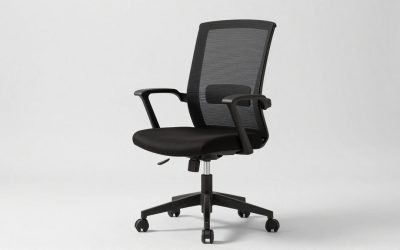
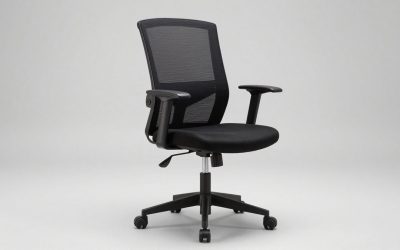
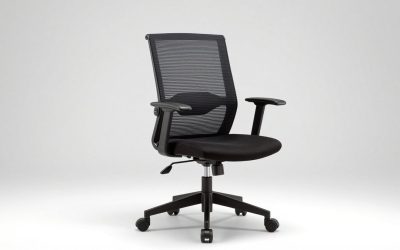
Fifty bucks does not buy you a good chair. It buys you a chair that does not actively hurt you for the first six months, which for a lot of desk setups is the actual bar. If you are sitting four or more hours a day, every day, you should be saving for something in the $150-250 range with real lumbar adjustment. But if this is a dorm room, a part-time WFH setup, a kid’s homework desk, or a chair that just needs to exist until you can afford better, under $50 is a legitimate category and not just a trap.
I have bought and worn out enough of these to know where the money goes missing. It is almost never the fabric or the color. It is the gas lift cylinder, the base, and the mechanism underneath the seat.
What actually breaks first
Three failure points show up again and again at this price:
The gas cylinder sinks. You sit down, the chair is at a reasonable height, and by month three it slowly drops a couple inches over the course of a workday. This is the single most common complaint on budget task chairs and it is basically unfixable without buying a replacement cylinder, which at that point costs almost as much as a new chair.
The casters crack. Cheap nylon or ABS wheels are fine on carpet and bad on hardwood or laminate. On hard floors they either squeak constantly or the axle pin snaps after a few months of rolling. If your desk sits on hardwood, budget for a $10-15 set of replacement rubber casters from the start, or buy a chair that already ships with them.
The mesh or fabric back tears at the frame seam, usually where it is stapled or clipped to the plastic frame, not in the middle of the material. This happens faster if the chair gets used by someone over about 220 lbs, since most sub-$50 chairs have a stated weight limit around 250 lbs and that number is optimistic.
None of this means skip the category. It means know what you are buying: 12-18 months of acceptable comfort, not a long-term chair.
Mesh, fabric, or foam padding
| Type | Comfort at hour 1 | Comfort at hour 6 | Durability | Best for |
|---|---|---|---|---|
| Mesh back | Good, breathable | Better than foam, less sweat | Tears at seams over time | Warm climates, no AC in the room |
| Fabric with foam seat | Very good, plush | Foam compresses, feels flatter | Foam flattens permanently by month 6-9 | Short sessions, casual use |
| PU leather/vinyl | Good, firm | Gets hot, sticks to skin | Cracks and peels within a year, worst offender | Avoid for daily use, fine for occasional use |
If I had to pick one for a daily-use budget chair, mesh wins. It ages the least badly. PU leather looks the nicest in photos and is the first thing I’d rule out if you’re sitting in it 5+ days a week, because the peeling isn’t a maybe, it’s a when.
What to check before you buy
Skip the star rating and go straight to the 2-3 star reviews, not the 1-star ones. The 1-star reviews are often shipping damage or user error. The 2-3 star reviews, six months in, tell you about sinking cylinders and squeaky casters, which is the real failure timeline.
Check the weight limit against the actual person using it, then mentally subtract 20%. A chair rated for 250 lbs is being tested under ideal lab conditions, not someone shifting their weight around for eight hours.
Look for tilt lock, even just a basic one. A huge number of sub-$50 chairs skip this entirely, which means the back free-floats whenever you lean back. That’s fine for ten minutes, tiring for a full workday.
If you want a reasonable starting point, browse mesh office chairs under $50 and sort by review count rather than price. A chair with 8,000 reviews at 4.3 stars has survived enough real households that the common failure modes are already known and discussed, which is more useful than a 5-star chair with forty reviews.
When the cheap chair is the wrong call
If you work from a desk 6+ hours a day, every day, the math stops favoring cheap. A $45 chair that sinks after four months and gets replaced three times in two years costs more than one $180 chair with a 5-year warranty and an actual lumbar mechanism, and you’ve also spent two years sitting in something your back is quietly unhappy about. Back pain is slow and cumulative; it does not show up as a dramatic failure the way a cracked caster does, which is exactly why it’s easy to ignore until it’s a real problem.
Kids’ desks, guest rooms, a second chair for a laptop you use twice a week — that’s the right use case for this price. Primary work chair for someone who sits for most of the day is not, no matter how good the reviews look.
Matching the chair to the desk
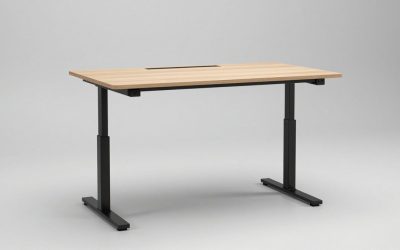
A cheap chair on a wobbly desk makes both problems worse, because you end up compensating for the desk’s instability by sitting rigidly, which defeats whatever adjustability the chair has. If your desk also needs an upgrade, it’s worth looking at small computer desks built with a steel frame rather than particleboard legs, since desk wobble is its own all-day annoyance that no chair fixes.
One more practical point: measure your desk’s clearance before ordering. A lot of sub-$50 chairs have armrests that don’t retract or adjust down, and if your desk height is on the low side, fixed armrests can hit the underside of the desktop and keep you from pulling the chair in properly. Check the armrest height spec against your desk’s clearance, not just the chair’s overall dimensions.